
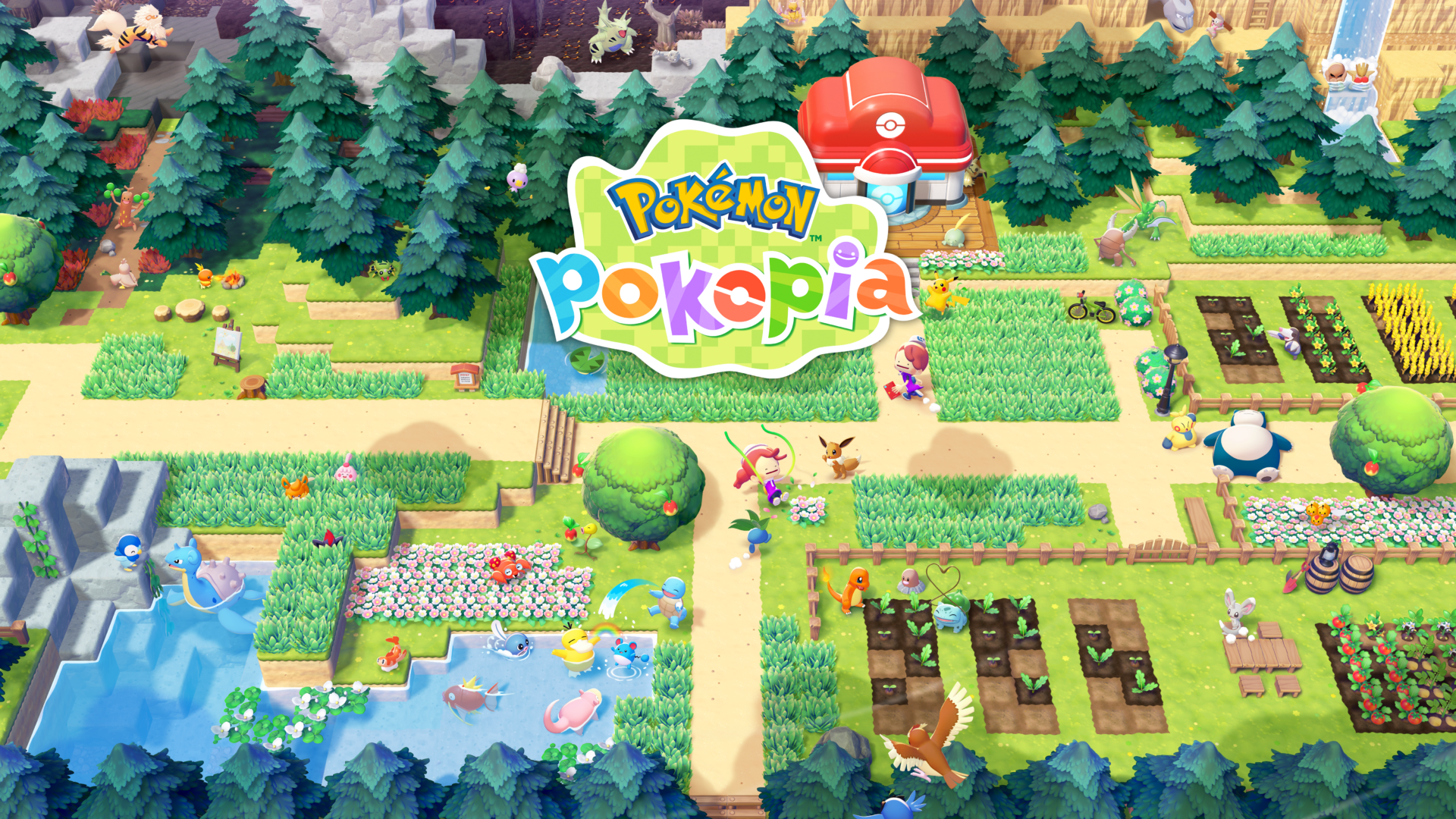
Six years ago, the Coronavirus pandemic hit the world. It was a strange and scary time – no school, no socializing, heck, for a while we couldn’t even go to Mass. As a result, myself and others had an unprecedented amount of time on our hands. What were we to do with it?
Well, humans are made to work, so many of us were searching far and wide for ways to occupy ourselves. Unsurprisingly, the gaming industry was booming, and Nintendo was one of the biggest benefactors. By (hopefully) sheer coincidence, they released Animal Crossing: New Horizons right in the same month that the world shut down. Needless to say, this was a good time to release a game that is designed to be played daily for hundreds of hours.
I have fond memories of building up a virtual Island home that I shared with my family. Every day, I’d wake up late and promptly pay a visit to my animal neighbors before completing my virtual chores (real-life chores came next). It’s quite a unique experience, and now Pokémon is giving it a shot. So, how’d they do?
Gameplay & Plot
Unlike the series’ mainline titles, you aren’t playing as a Pokémon trainer. Instead, you’re the Pokémon known as Ditto, awoken in a world in which humans and Pokémon seem to have disappeared. Ditto having the ability to transform itself into other creatures, it takes the shape of its former trainer – the best it can remember, at least.
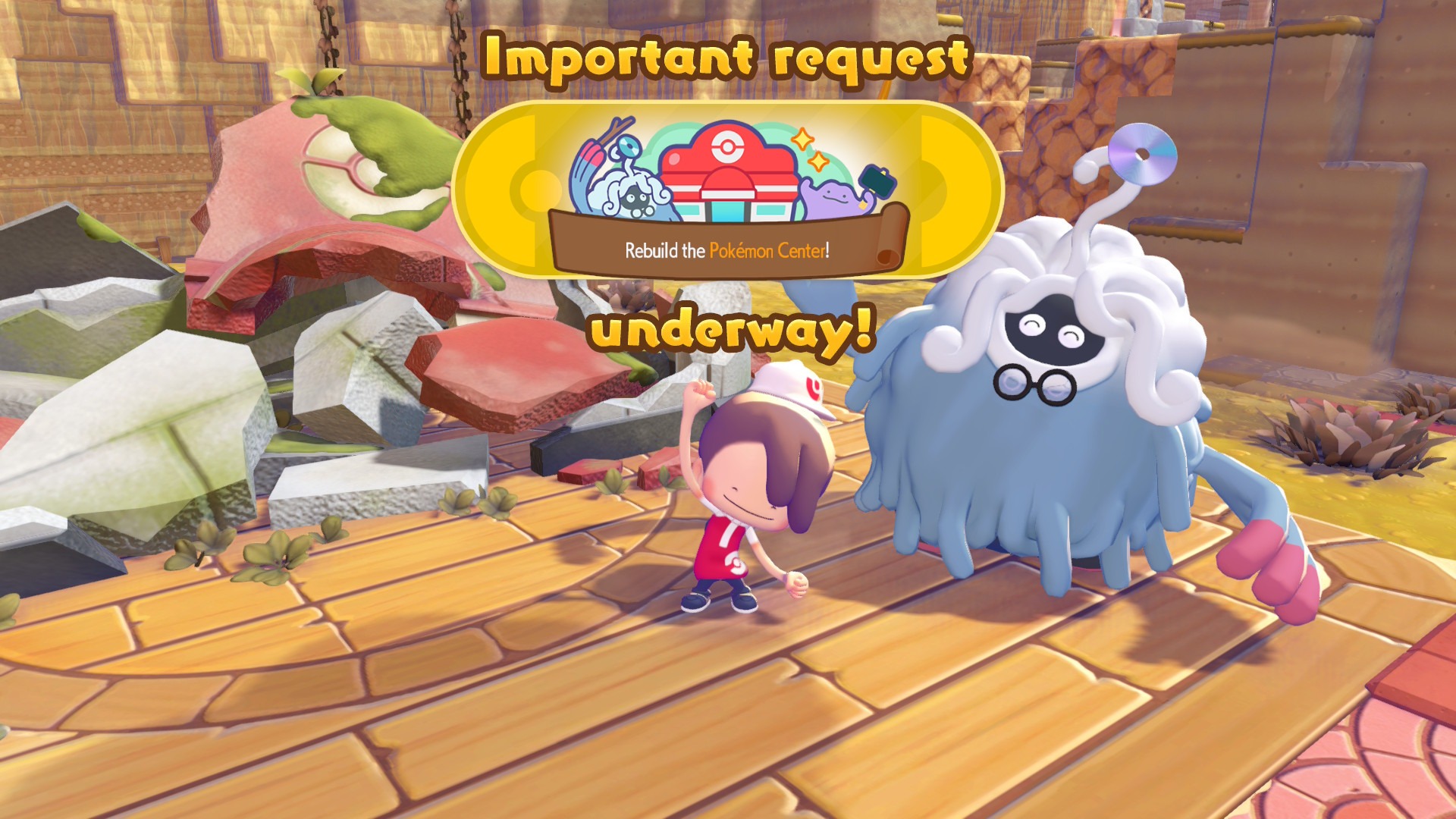
Fortunately, you quickly come upon another Pokémon known as Professor Tangrowth. Apparently, you’re the first other Pokémon he’s encountered in a long time! Utilizing Ditto’s many abilities, the two of you set out to rebuild the world in hopes that Pokémon and perhaps even humans will make a return.
Wow, that’s quite a plot for a game that’s being compared to Animal Crossing. Much more serious than I was expecting, but it’s just the right sort of thing to make the world interesting. As a result, I am much more motivated to explore a Pokémon world that’s different from the ones we’ve seen over the past 30 years.
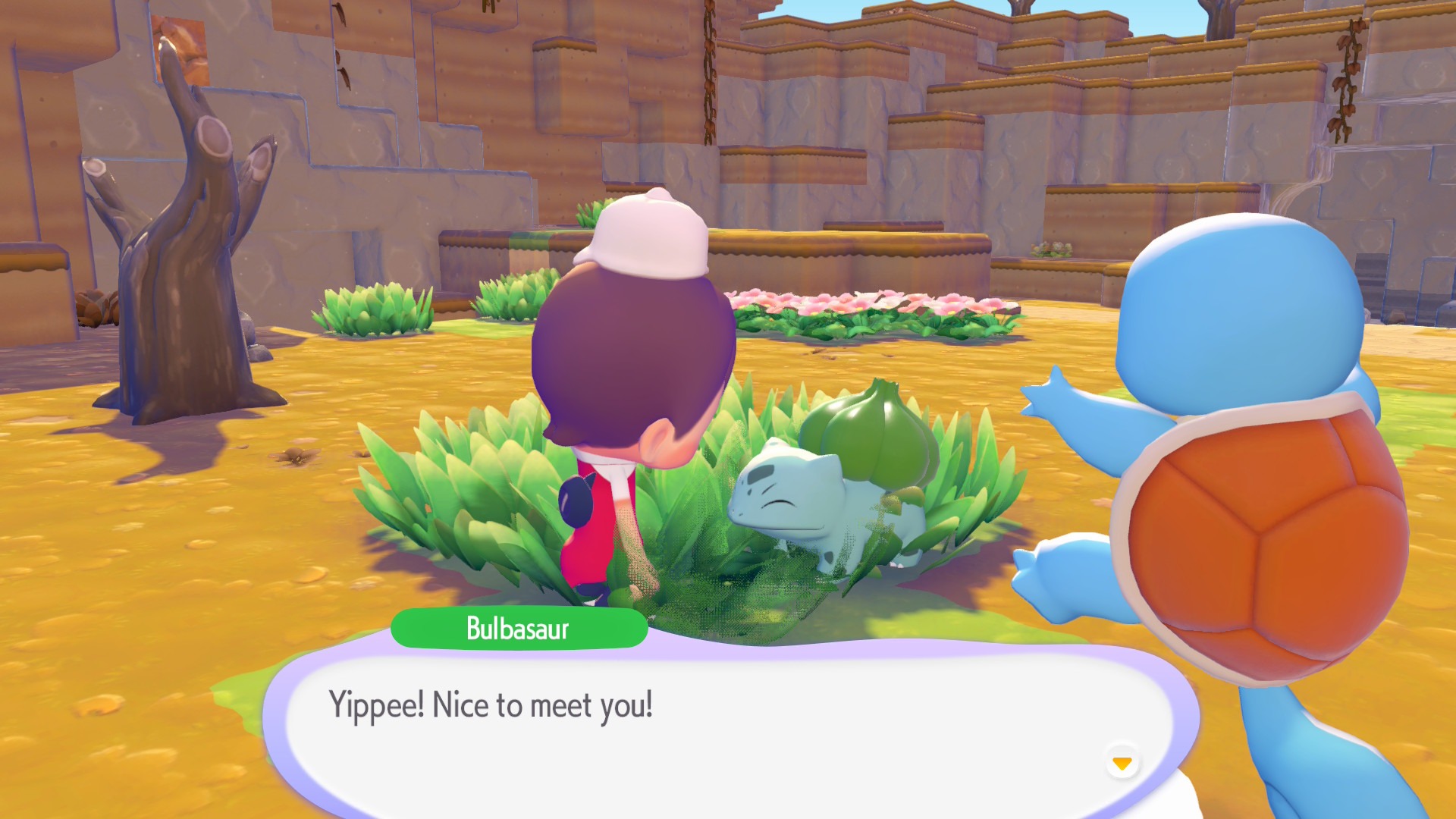
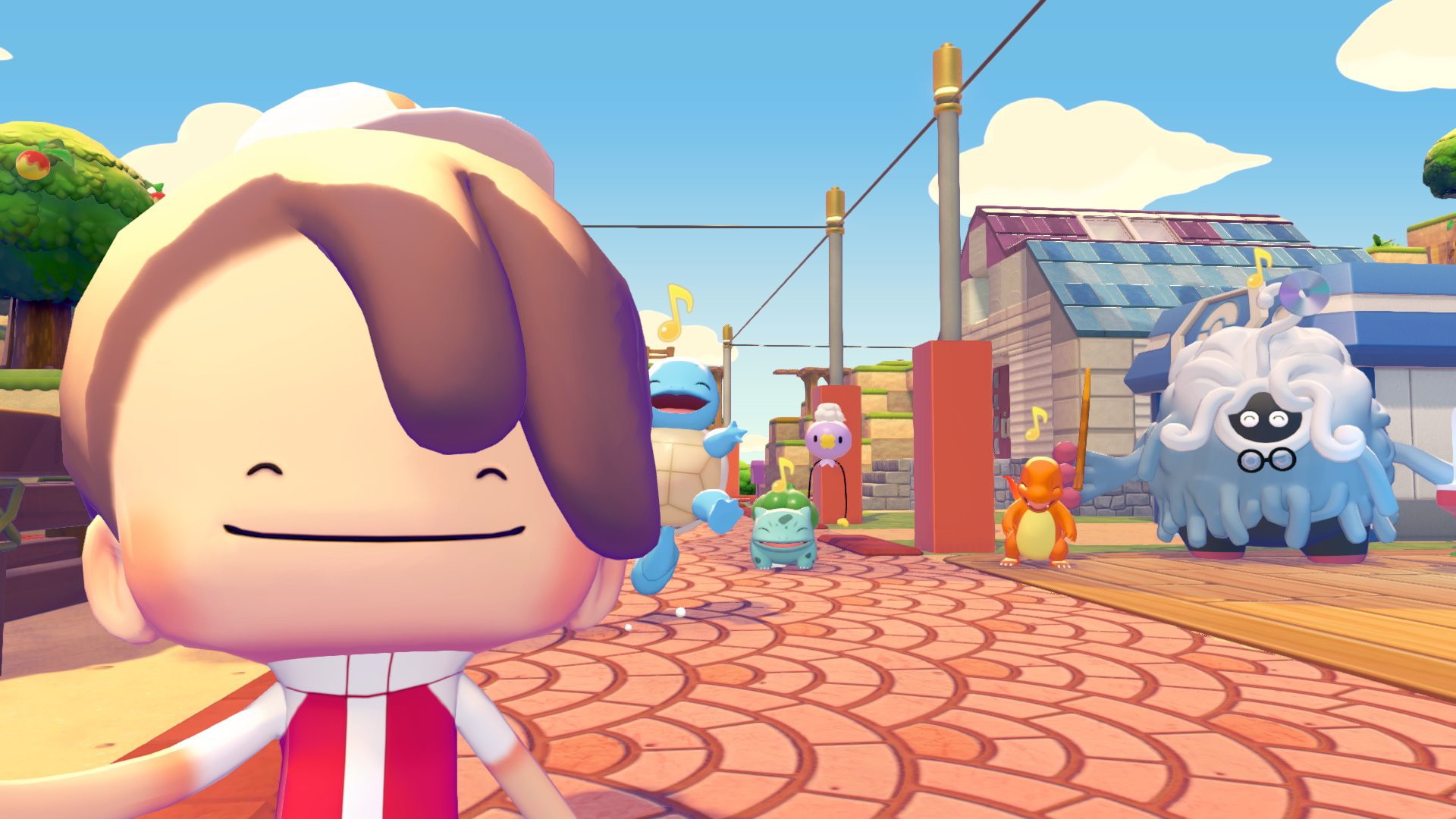
Such motivation comes in handy, because there’s lots of work to do in this game. Similar to Animal Crossing, you are building up a community living space. However, this time you are doing so with Pokémon’s needs and preferences in mind. They all require specific habitats: Bulbasaur needs grass to live in, Squirtle prefers water, and some stranger Pokémon like Drifloon need… three adjacent campfires to call home. Weird.
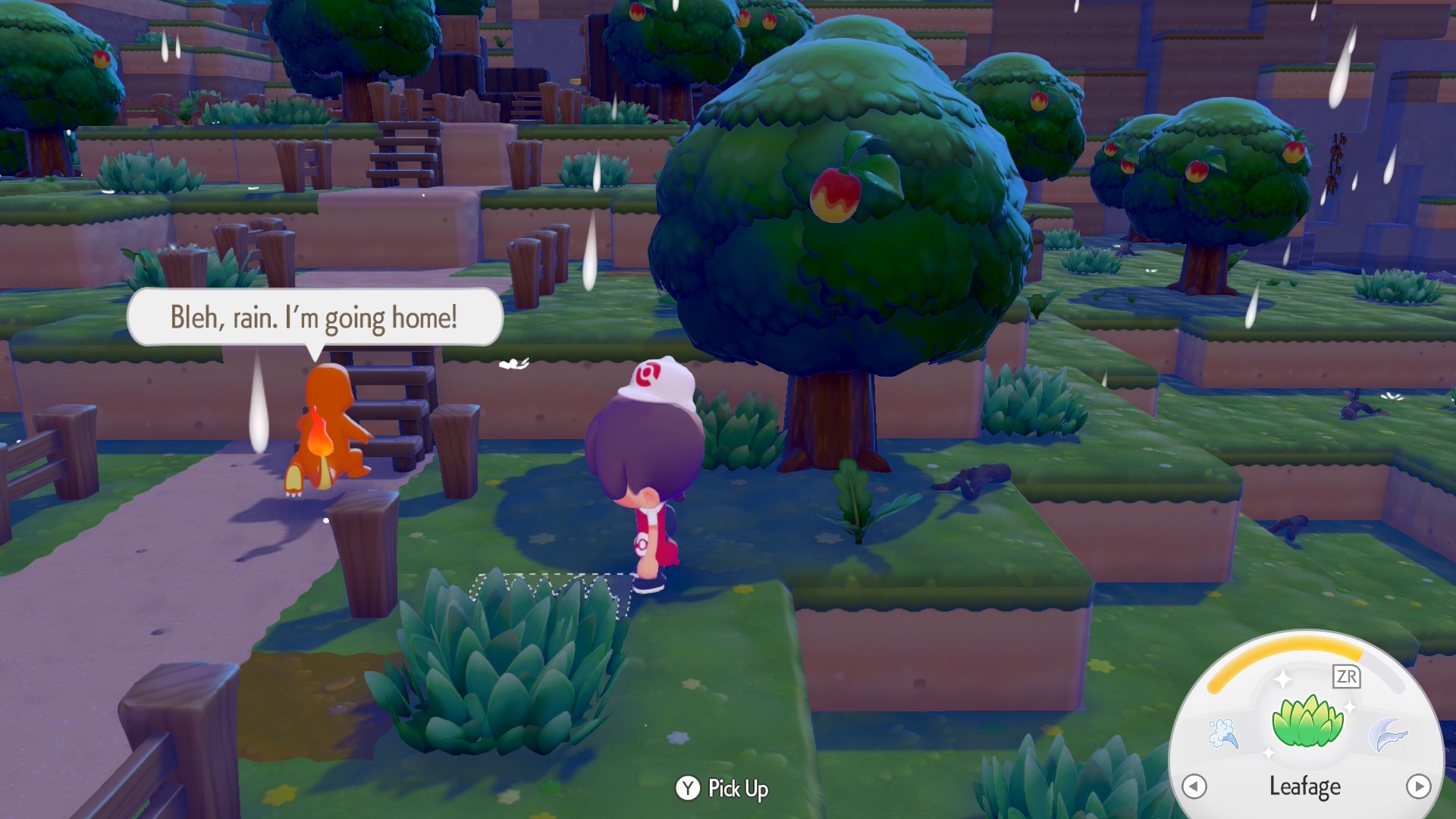
The developers even took an extra step and made the Pokémon react to the larger environment around their homes, too. Grass-type and water-type Pokémon will start complaining if the place is too dry, while fire-types will get upset if things are too humid, even going as far to rush inside when it begins raining.
What I really appreciate about this spin on things is that it encourages you to build in ways you might not have otherwise. A frequent pitfall I fall into when playing sandbox games is only building in styles that I am familiar with. This usually results in me utilizing only a small fraction of the possibilities offered to me, and getting bored faster. However, when I am required to build unique habitats that vary in theme, I find myself messing with new decorations that I’m usually not drawn to. With 5 differently themed areas to explore, you are further encouraged to experiment with different building styles.
Fortunately, because of how the areas are laid out, you aren’t always building from scratch. It is a post-apocalyptic world, after all. Many houses, buildings, roads, gardens and the like are damaged and incomplete, but enough pieces remain that you can usually reconstruct them quite easily. Players who take this route will be rewarded with quicker habitat construction, but you’re still free to tear everything down and start over if you’d like. I find this gameplay loop very refreshing and unlike what I’ve encountered in past games, although Pokémon Pokopia probably isn’t the first to do it. I thoroughly enjoyed putting together the different puzzle pieces to reconstruct things as I imagine they once were.
To help you move along, there are a variety of main and sub-quests that you are continually handed to learn the various gameplay mechanics and give a sense of progression. I did sometimes find that a few of the main quests went on a little too long, and I’d frequently think I was at the tail end of it just to find that I had to run off and do yet another thing before completion. This was probably implemented to slow people who like to rush through the main tasks instead of making their own goals, but there is so much to do in this game that this padding seems really unnecessary.
In fact, the sheer amount of things that there are to do in this game actually caused problems for me. It felt overwhelming, and I don’t think it was necessarily the fault of the genre. The most famous sandbox game, Minecraft, features an infinite world, but I don’t feel overwhelmed when playing it since it is not constantly showing me everything that I could be doing or exploring all at once. It allows you to go at your own pace, and doesn’t pressure you to do more. It doesn’t present you with a constantly growing list of requests.
Pokopia, on the other hand, despite technically having a MUCH smaller world often made me feel like I was missing out as I had to avoid fully exploring many features to actually complete the game (and I was taking my time!). Whenever I did actually stop and spend a couple hours messing with some newly discovered items or mechanics, I would question if it was the right move as it didn’t help me complete any quests.
The fact that each of the 5 areas are sectioned off from each other doesn’t help either. I would spend much time in one area, building it up and making new friends, only to venture to the next area and feel as though I was starting over again (which, in a sense, I was). This is made worse by the fact that it is not particularly easy to move large amounts of resources or Pokémon between areas.
Some people may not be quite so bothered by this – I’m basically complaining about the amount of content. But it affected my enjoyment of this game significantly. If you really want to get the most out of this game, be prepared to spend AT LEAST a hundred hours or more. I completed the game in 50 hours and didn’t even encounter half of the Pokémon.
To end this section on a positive note – the ending of the game is fantastic, far above those of other Sandbox games I’ve played. Most choose between a satisfying conclusion to the story (but then revert to your last save in order to let you keep playing) or forgo a concrete ending in order to let you continue without any hiccups. But Pokopia sacrifices neither of these while delivering an emotional and satisfactory ending to the story.
Graphics
It is interesting that this is a Nintendo Switch 2 game. Looking at screenshots, it doesn’t look like the sort of game that is “only possible on the Switch 2”, and I would actually agree with that. The world is built out of large blocks, with smaller items and decorations being stuck to a 3D grid, quite like Minecraft. The Pokémon’s models aren’t necessarily the most detailed, nor are any of the blocks and decorations. Even the render distance is surprisingly low.
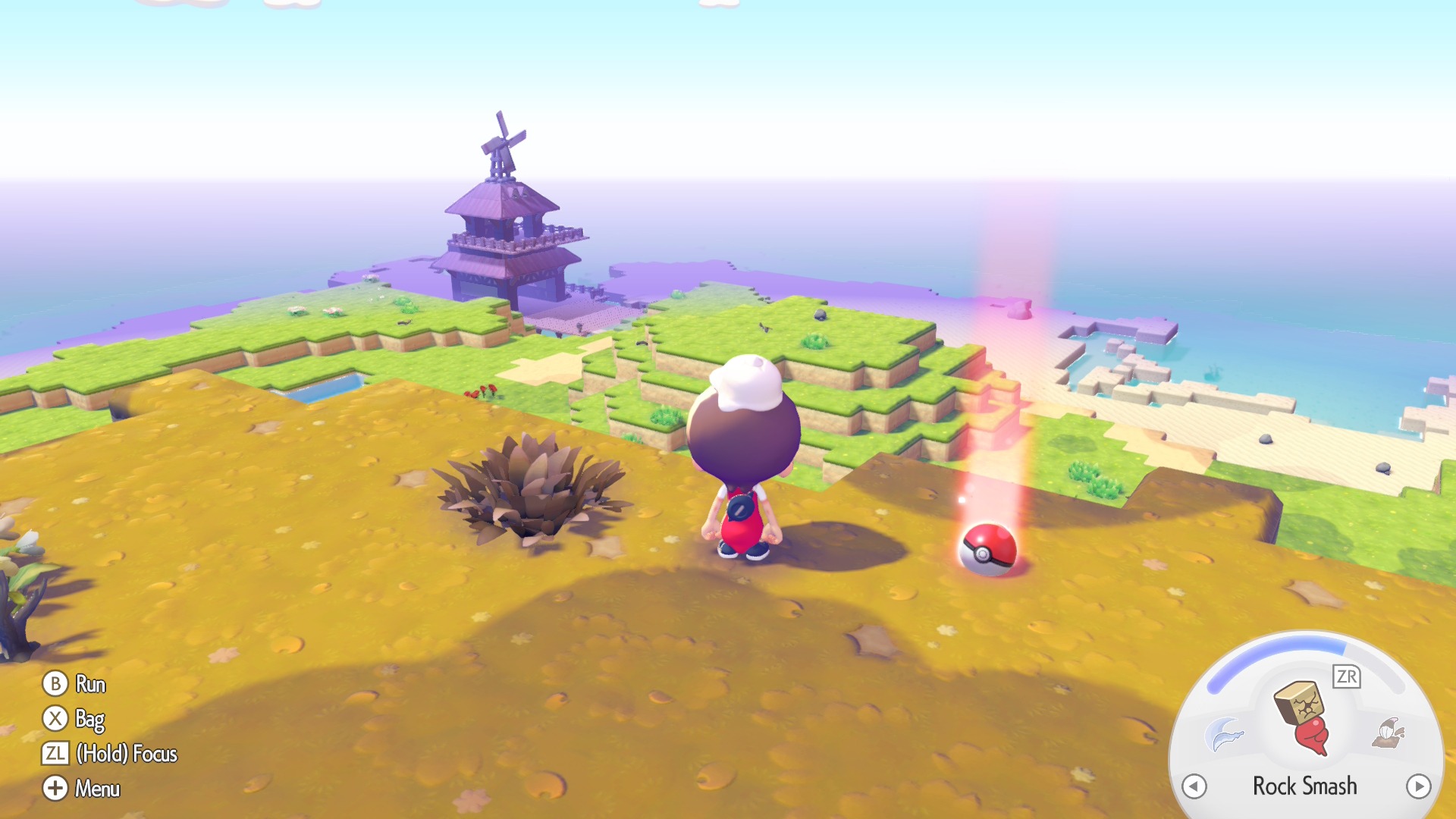
However, as a result, the game runs extremely well. It stays at a constant 60 FPS the vast majority of the time, at a consistently sharp resolution. Graphical oddities were few and far between. I think going for a simple look probably freed the developers up to focus on more than just raw visuals, such as being able to have large numbers of Pokémon walking around and interacting with each other. Thus, I won’t complain about this being a Switch 2 exclusive. The graphics are mostly just consistently good rather than amazing.
Music
Pokopia’s soundtrack was a surprise hit for me. Many classic Pokémon tracks have been remade to fit this game, and it’s always a pleasure to hear an old favorite come back when you least expect it. The music seems to change based on your progression in the game, so it can be a while before you hear all the tracks.
Another shock for me was the inclusion of music discs that can be found and played in-game. They contain classic Pokémon tracks that span the mainline games over the last 30 years. The discs even change appearance based on their origin game! I think there’s something like 50 in total, and while they aren’t all standouts to me (especially the Game Boy ones), there are some bangers in here. Route 10 from Pokémon Black and White is one such example.
My only complaint about the games’ soundtrack is that some of the environment themes can feel a bit repetitive, specifically those that play when you’re just starting in a new area. Even one of my family members in the room pointed it out while I was playing.
Faith Perspective
One of the biggest differences between Pokopia and Animal Crossing is the residents. In Animal Crossing, your neighbors mostly just exist to entertain you. Every so often they might get you a gift or something, but generally you are the one putting in the hard work to get things done. The town literally falls apart if you take a break.
However, in Pokopia, there is a big emphasis on teamwork. That is, many of the tasks require you to gather up a certain number of Pokémon to complete it. Furthermore, some require Pokémon with specific abilities, which encourages you to learn about each Pokémon and take note of where they live. Needless to say, this is much more similar to real life, and better reflects the realities of living in a society.
For a while now, modern culture has struggled to foster a healthy sense of community, further worsened by the digital age that makes it easier than ever to avoid others. I think game (and film) creators have taken note, as it seems like a lot of recent media has commented on this. I think of Mario & Luigi: Brothership, whose overarching premise was about the importance of connections & bonds. While Pokopia can technically serve as one of these distractions that draw us away from the real world, I think it can also be used for real-life lessons.
Going back to Animal Crossing, in that game you can generally build whatever sort of ‘Utopia’ you want, and the residents will still be happy. You rarely have to worry about who they are or even where they live, as it makes little difference to the gameplay. But in Pokopia, I was forced to design habitats around different Pokémon’s needs. I had to make sure that everyone was comfortable, and change my plans based on what residents requested of me. It’s a reflection of the truth: people are different, and living together requires us to sacrifice some of our desires for the needs of others.
Let the many oddly specific requests you’ll be tackling remind you of the necessity to serve others frequently, fully, and faithfully.
Conclusion
Pokémon Pokopia is a very well-executed attempt at a sandbox building game in the Pokémon series. It’s not quite perfect in terms of pacing, but overall I’d say the developers did a fantastic job, and this game can be enjoyed for many, many hours. However, if you’re not a big fan of building, you may find it difficult to make it to the end. As for content warnings, it’s about on par with other Pokémon games (see details below).
Scoring: 87%
Gameplay: 4.5/5
Graphics: 4.5/5
Music: 4/5
Morality/Parental Warnings
Magic/Occult: As typical for the series, many ghost-type Pokémon are said to be able (or actually do) things like bring back spirits from the dead, see the future, etc. For example, I stumbled across one of my ghost-type friends communicating with dead spirits (purple balls of fire) at a grave. Additionally, some Pokémon are said to be revered as deities.
Sex/Nudity: The Pokémon Volbeat makes some jokes about butts (likely because the Pokémon’s design is similar to that of a firefly).