
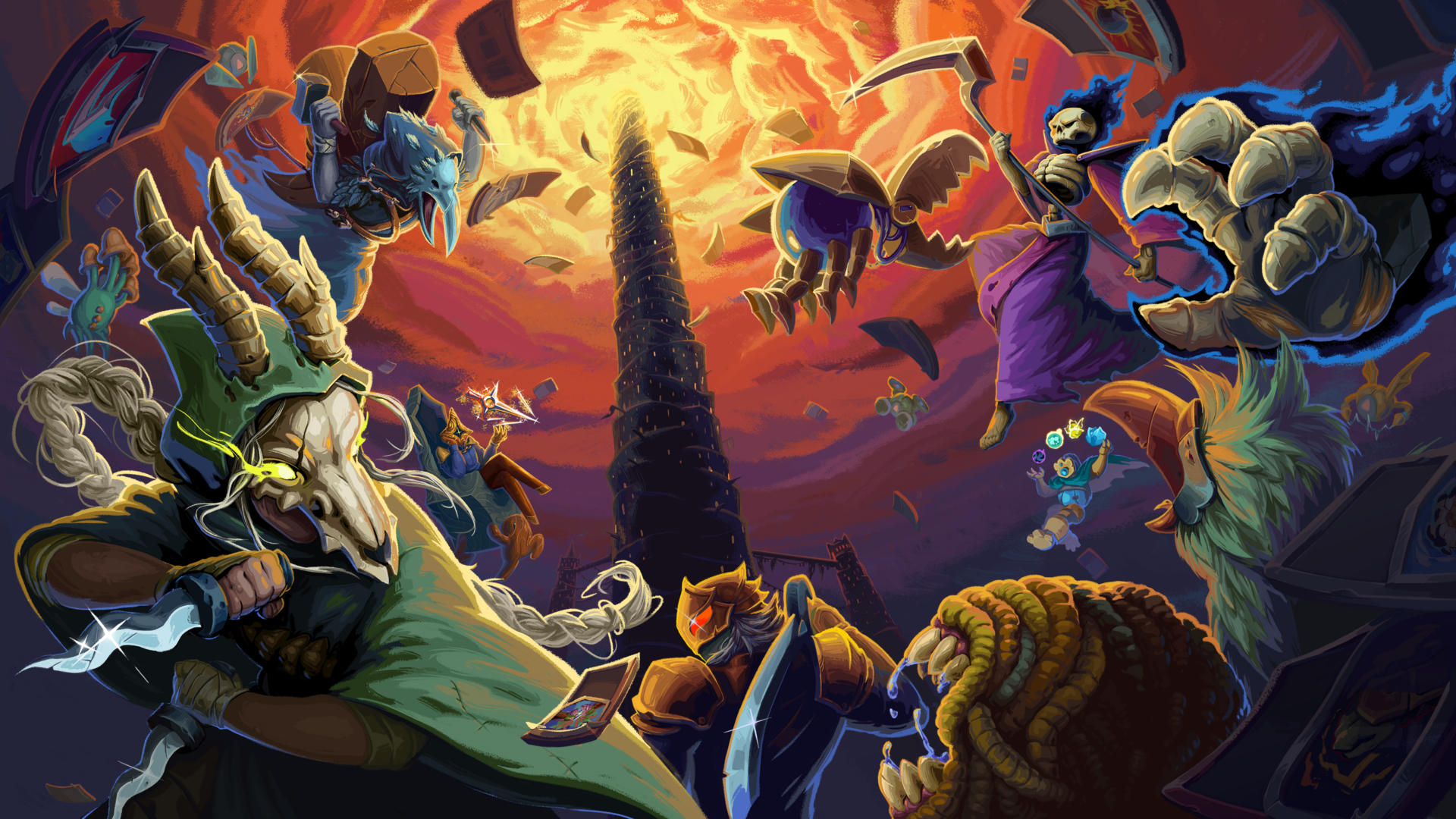
Small disclaimer. At the time of this review Slay the Spire 2 is in Early Access. The game will be going through many changes as it gets to its 1.0 release. Gameplay mentioned here might be different later on.
Slay the Spire 2 is one of my most anticipated games since its announcement. However, to set some expectations, I will not be talking about deep gameplay mechanics, I’ll mostly talk about the basics and one character available in the game, as it is my main character and most of my playtime has been with that particular one.
Released in early access on March 5, 2026, Slay the Spire 2 was a phenomenon. Not only did fans of the first game come back, but thousands more were drawn in by the excitement. It was a huge surprise for both developers and the Slay the Spire community. To put it into perspective the first game had its peak player count at 33k players in February of 2018. It was a hit game with dedicated and enthusiastic players of cardbuilding games, but none of it compared to what Slay the Spire 2 would achieve in its first week. Three days after release, Slay the Spire 2 had a peak player count of 574k players. Not even double of the original game. Its growth was 1,639.4%. Insane numbers. You might think: “how did all of this happen? What is this game about? Should I even play?”
Answer to all is. Yes. You should. But let me go question by question.
Slay the Spire 2 is developed by MegaCrit. This is a deckbuilding, roguelike game using the foundation of the first game and upgraded with a wealth of new cards, gameplay mechanics, and implementations like multiplayer. Essentially if you don’t know what deckbuilding or roguelike is, let me start with deckbuilding. The game starts you on a basic deck of 4 defence cards, 4 or 5 attack cards and 1 or 2 special cards, depending on the character you choose. Throughout the game, your job will be to transform your basic deck into a more efficient, powerful and synergetic deck that can defeat enemies no matter the cards dealt in each of your turns. It is a heavy decision making game. Every time you defeat an enemy you get to pick a new card from 3 random options. You can build your deck however you want. That deck is the duct tape to your DIYs. It is essential for your survival.
Now moving away from deckbuilding, let’s talk about the roguelike elements. Why does it matter? Well, Slay the Spire 2 is built on the principle of rinse and repeat. Every time you start a fresh run, when you die, you lose everything. You only get back your basic deck. This is where roguelike elements join the conversation, because your new run will not be the same as the previous one. Oh you got rewarded with an amazing card on the first encounter? Guess what, in your new run that card might not show up till later on in the game, if you survive long enough. Or you might never see it. Roguelike is a genre where each playthrough is different because levels, enemies, or items are randomly generated. The fun comes with the knowledge you acquire after each run. What worked, what didn’t, and so on.
Understanding the two most important and basic elements of Slay the Spire 2, by now you probably already know if this is a game you are interested in. Though you might think, “I hate restarting from zero after death.”, “It feels repetitive.” I’ll tell you. Don’t chicken out on it, yet! Even though it can sound frustrating or boring, the gameplay is anything but. (Well, it can be frustrating, but it is incredibly rewarding when you win through a test of card combinations that you never imagined could work together.
So, how do you play Slay the Spire 2? You start by picking a character. Currently the game has 5 options of characters to pick from. Each character plays differently. There is Silent, a character that wins through speed, card manipulation, and scaling damage. Or Necrobinder who builds power through a giant undead companion called Osty, execution mechanics, and resource cycling. Or the Regent whose whole identity revolves around banking power over multiple turns and then unleashing massive payoff turns. It all depends how YOU want to play. My favorite character is Ironclad. This character is all about focusing on raw power, survivability, and turning sacrifice into strength. Just like a honey badger.
Once you pick a character it is time to start your journey. A full run of Slay the Spire 2 is completed by defeating the main boss of three acts. Each act contains an amount of levels, and each level, depending what path you pick will dictate not only your strength but also the type of rewards you can collect. As I said previously, this is all about decisions. Any act of the game will have a different path in the shape of branches. Starting from a single point, you can go left, right, or middle, however once you pick, you can’t go back or switch ways. I’m terrible at describing, so have an image of how a map of what an act might look like.
Every act will contain monsters, events, elites, reward chest, rest sites, merchants and one boss at the end. All of them have their pros and cons. Monsters will give you three different types of rewards, potions, cards and money. Events or question marks will give a random event that can implicate you in any type of activity that requires decision making. It can give you cards, potions, relics, and remove or swap those same elements. It is the wild west where anything can happen. There are also elites. These are different from monsters because this type of enemies scale power quicker and thus become deadlier the longer you fight them. Fighting elites will test your deck. It will also reward you, if you defeat them with a special item called relics. Relics are important as they allow you to create power or synergy for your deck. Each act will also contain a one possible reward chest that contains relics. Rest sites are crucial as well, you can heal yourself or upgrade one card on your deck making it more efficient. It depends what you value more important at that moment. Finally, merchants in which you spend every gold you’ve acquired. You can buy cards, potions, relics or remove 1 card from your deck.
Your main priority is to build a strong deck. So deciding which path to take can be crucial. Not only to your deck’s potential but also your survivability. For example, Ironclad can heal 6 hp points after each combat making sustainability through an act easier, but when you take too much damage that can put you in danger if you picked a path without any rest sites. Or if you want to upgrade a card, having zero rest sites in your path can also hinder you. It is about finding balance between the NRG. Many players will say Slay the Spire is mostly luck or randomness, but once you understand the game you can make almost any run a success. It is all about good decision making.
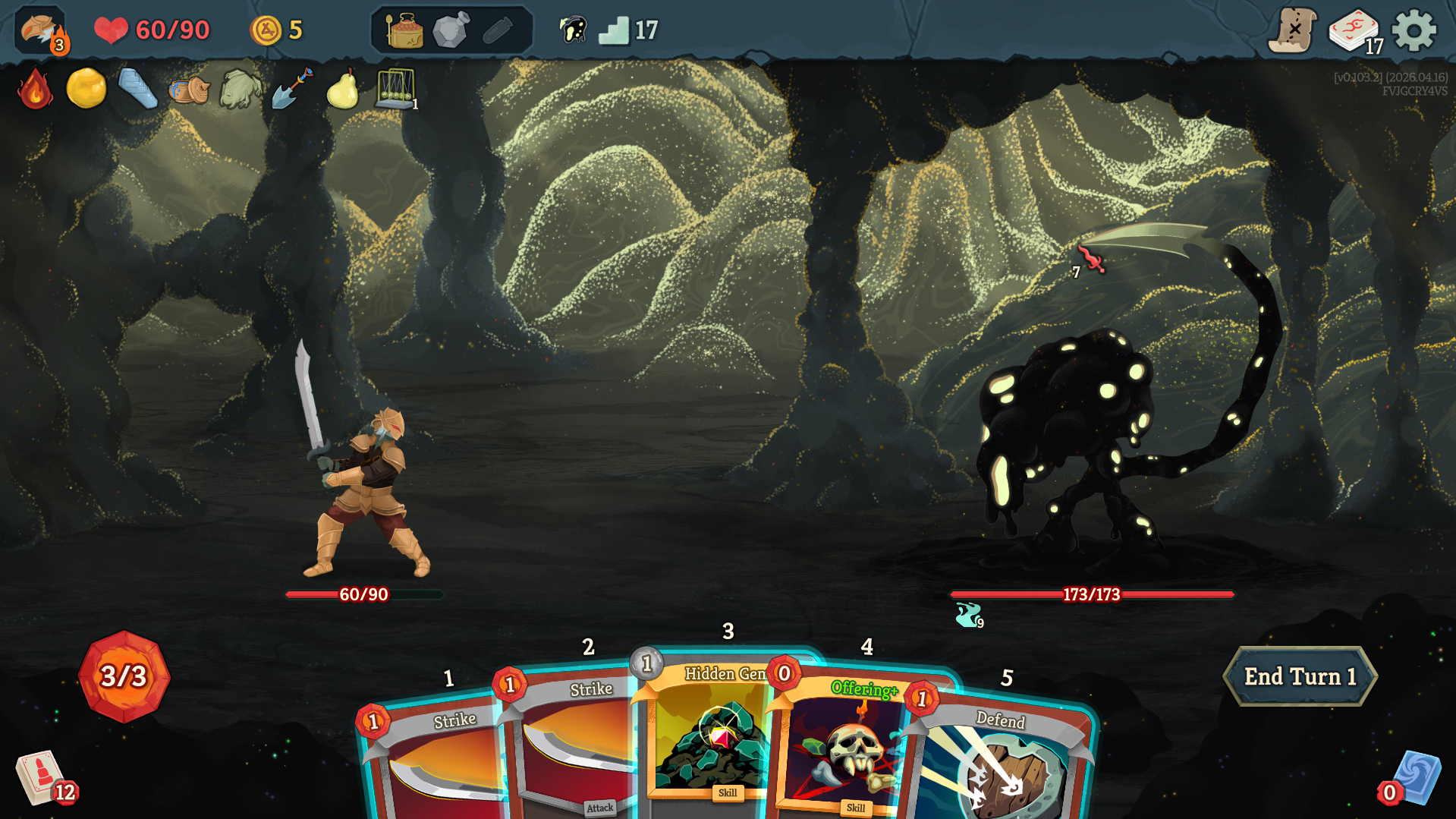
Now let’s talk about the main gameplay loop of playing your deck against monsters. Slay The Spire 2 is a turn based combat game. You have three things to consider when playing your deck. Your draw pile, the cards in your hand, and the discard pile. On your turn, you’ll first shuffle a number of cards to play. Each card has a different value of energy cost. On each turn you only have 3 energy to use. You have to be careful how you use the amount of energy available to you each turn. Though, however you use your turn will depend on what your enemy is planning to do. While the game is a turn based system, you have the opportunity to see what your enemy is planning to do on their turn and plan accordingly. For example, in your first turn your playable cards might be 4 attacks and 1 defence. But your enemy is planning to stun you or giving you a negative effect. In this case what you’ll want to do is to use all your attacks as you don’t have a need to protect yourself. Once a card is used they go to the discard pile. You don’t get to draw more as you use cards, unless you have a special card that enables you to call power or a relic. Relics are passive items that provide permanent or triggerable bonuses for the entire duration of a run. They shape deck strategy, and define build synergies.
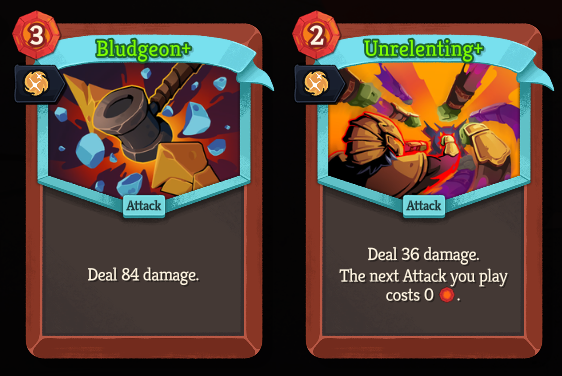
This combat system, while not a fast paced, mechanical combat system, don’t underestimate it, as it can be incredibly challenging if not paying attention or being careless with your turns. One mistake can cost you your entire run. This is where the most thrill comes from the game. As you progress through the run the enemies to defeat on each act increases in their power, but also does your deck. Building a deck powerful enough to one or two shots even enemies like elites or bosses is incredibly satisfying. It is the adrenaline shot that hooks you into the gameplay style of the game.
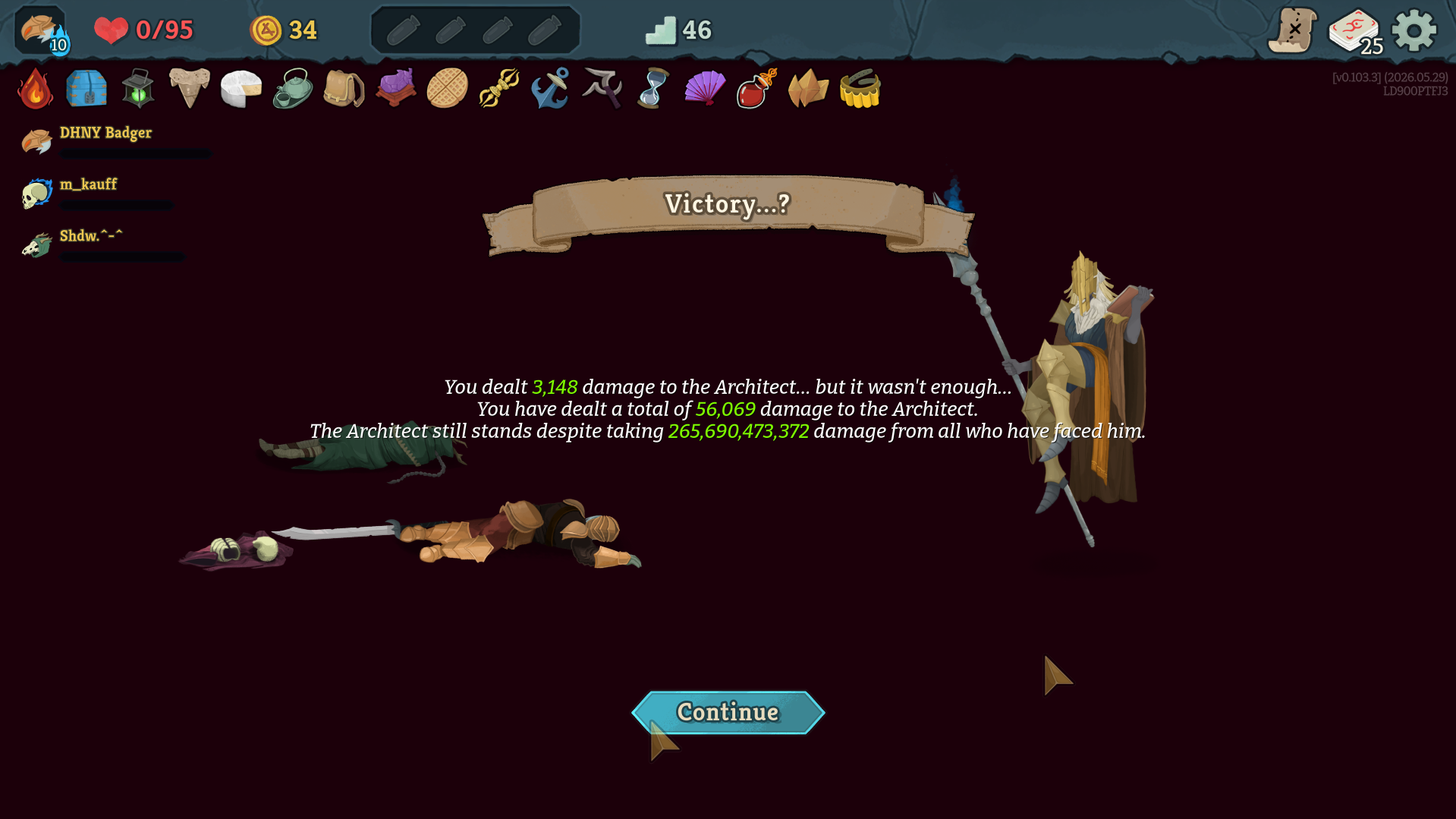
At the beginning of the review, I spoke about how its popularity skyrocketed when the game was released. This is thanks to a new mode of multiplayer. You can enjoy the game with another 3 players. The game only scales the amount of health and damage enemies do based on the amount of players. It isn’t tougher, but equally challenging. Though it can be a tiny bit more difficult if more than one person isn’t able to craft a decent deck as they won’t be able to deliver enough damage to defeat monsters in a quick manner. However this doesn’t take away from the fun factor. If anything, my playtime with friends has been infinitely better and more enjoyable than the single player experience. I get to teach new players, show them different strategies, and have a good laugh during our runs.
The fun of Slay the Spire 2 doesn’t end once you defeat a complete run the first time. Just as its predecessor, once you succeed finishing a run you unlock a new level of challenge known as Ascensions. Each ascension has a new element of change that makes runs tougher and truly tests your knowledge and capacity to adapt. When unlocking Ascension 1, the next run you’ll get a debuff. For example, rest sites won’t heal you 80% but 70%. Each ascension will be different in its debuff. This is where Slay the Spire 2 shines. It brings the game with tons of replayability. And, if you truly enjoy all of its characters you might want to complete all ten available ascensions with each of them. Originally, Slay the Spire had 20 ascensions, however in its current early access it only has ten. Though for some players that might be challenging enough.
Should Catholics consider giving it a twirl? Absolutely. It is a fun gameplay loop and if what I described is something you already enjoy or might be curious about, give it a shot. If anything this game has taught me a lot about myself, my own mental resilience and adaptability. It reminds me of confession, life and redemption. In a way, we go through life fighting our own vices and through the walk we fall, defeated by our weakness, our inadequate build of cards. Though we are not dead, it is not over, we can still continue, learn from our mistakes and progress to our ascension. Run it one more time. Whenever that day may come, there is always redemption if you seek it. In Slay the Spire 2, currently I’m still trying to get to Ascension 10 in my singleplayer runs with Ironclad, but in multiplayer I’ve already completed that summit. There are always new ways to play the game and discover new synergies of card combinations. Final notes, I’ll leave down below a couple of warnings.
Scoring: 92%
Gameplay: 5/5
Story: 3/5
Art and Graphics: 5/5
Music: 5/5
Replayability: 5/5
Morality/Parental Warnings
The game has several suggestive messages across spirituality, violence, and occult practices. Breaking it down it comes down to:
Violence is presented through card effects and animations rather than realistic action.
Gore enemies can be skeletal, monstrous, or grotesque, but there is no realistic bloodshed or dismemberment shown other than through the art of the cards.
Occult / Dark Fantasy Themes. The game contains curses, cultists, undead creatures, relics with supernatural powers, and dark fantasy imagery. Some items and events reference concepts like necromancy, curses, or eldritch entities, similar to the first game. It is present, but in a fantasy-fiction context. Likely, Slay the Spire 2 has similarity to fantasy games such as Diablo IV, Darkest Dungeon, or Hades, though Slay the Spire 2 is significantly less graphic and less focused on occult themes than those games.
Language. Minimal, if any.