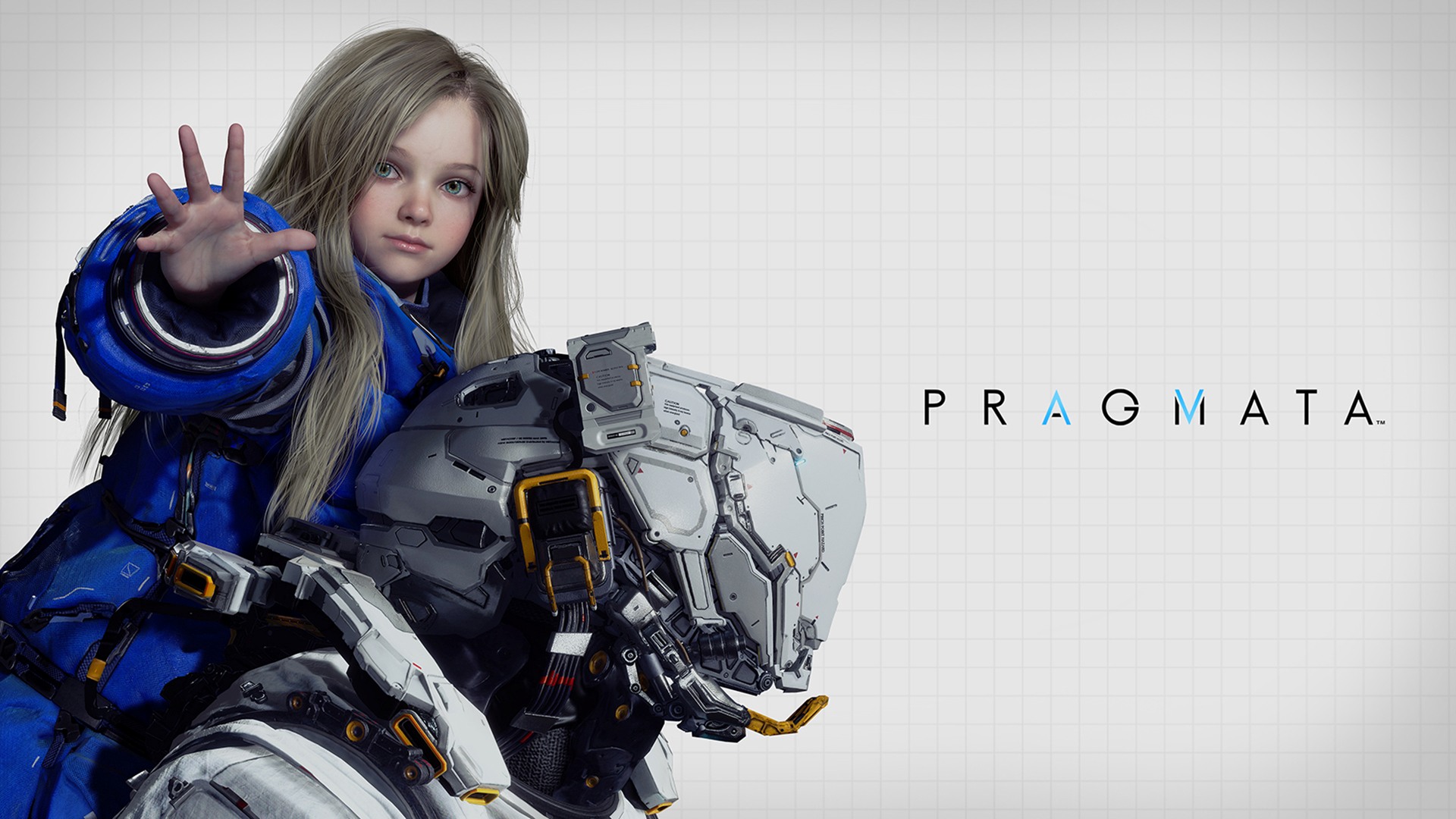
2026 is shaping up to be a big year for Capcom and it’s not even half over. Resident Evil Requiem was a smash hit, retro titles like Breath of Fire IV and Dino Crisis keep getting shadow dropped on Steam, and most recently they’ve released an intriguing new game which everyone seems to be talking about. As a veritable Capcom connoisseur I was aware of Pragmata ever since it was first announced in 2020, but the lack of marketing and multiple delays didn’t instill much interest during that 6 year gap. Then a few days before launch I saw a social media post showcasing the dynamic between the two main characters and thought it was adorable, which I mentioned to a friend who then surprised me with a gifted copy on launch day. I was shocked by this sudden turn of events, but also very grateful I had a brand new game to occupy my weekend.
Pragmata is set in the far future on a lunar research base and follows the story of Hugh Williams and Diana. Hugh is a technician whose team was sent to the moon to investigate a communications blackout, but they are branded as intruders and attacked by the base’s administrative artificial intelligence(IDUS), leaving Hugh the sole survivor. Diana is a little android girl with hazy memories who finds Hugh shortly after waking up from storage amid the chaos. Trapped on the moon and surrounded by deadly robots under the command of a rogue AI, Hugh and Diana team up to find out what’s going on and escape to earth.
As simple as the premise is, Pragmata’s story is easily a highlight of the experience. It’s fairly straightforward and takes itself seriously without the need for pretentious monologues or subversive twists. Hugh and Diana in particular are exceptional protagonists whose dynamic with each other is the heart and soul from which the rest of the game flows. I had grown so attached to these characters over the course of the story that the ending genuinely made me cry, something very few games have ever managed to do.
Visually, Pragmata is the biggest showcase of Capcom’s RE Engine we’ve seen thus far. Humans and Humanesque characters are rendered in great detail and the derelict halls of the lunar research base are littered with complex objects. Round things out with flashy combat particle effects and a slick, easy to read user interface and you’ve got an incredibly stylish game. If I had any critique of the visuals however, it’s the return of the “yellow paint” problem in which important objects or passageways are marked by a bright color to telegraph its importance, only in Pragmata’s case the color of choice is blue which is less obnoxious to look at, but still a bit of an insult to the player’s intelligence.
In the sound department, Pragmata also makes quite a strong showing. The sound effects on Hugh’s weapons and thrusters, Diana’s hacking abilities, and the actions of their robotic enemies are all snappy and powerful. The music leans heavily into orchestral instruments mixed with electronic sounds to match the science fiction setting, but it’s definitely more cinematic than melodic so don’t expect to be humming these tunes for hours on end. The voice acting is a bit uneven as the main characters are unsurprisingly well acted, but based on the few side characters that appear it’s pretty obvious most of the effort went into nailing Hugh and Diana.
Hack ‘n Shoot!
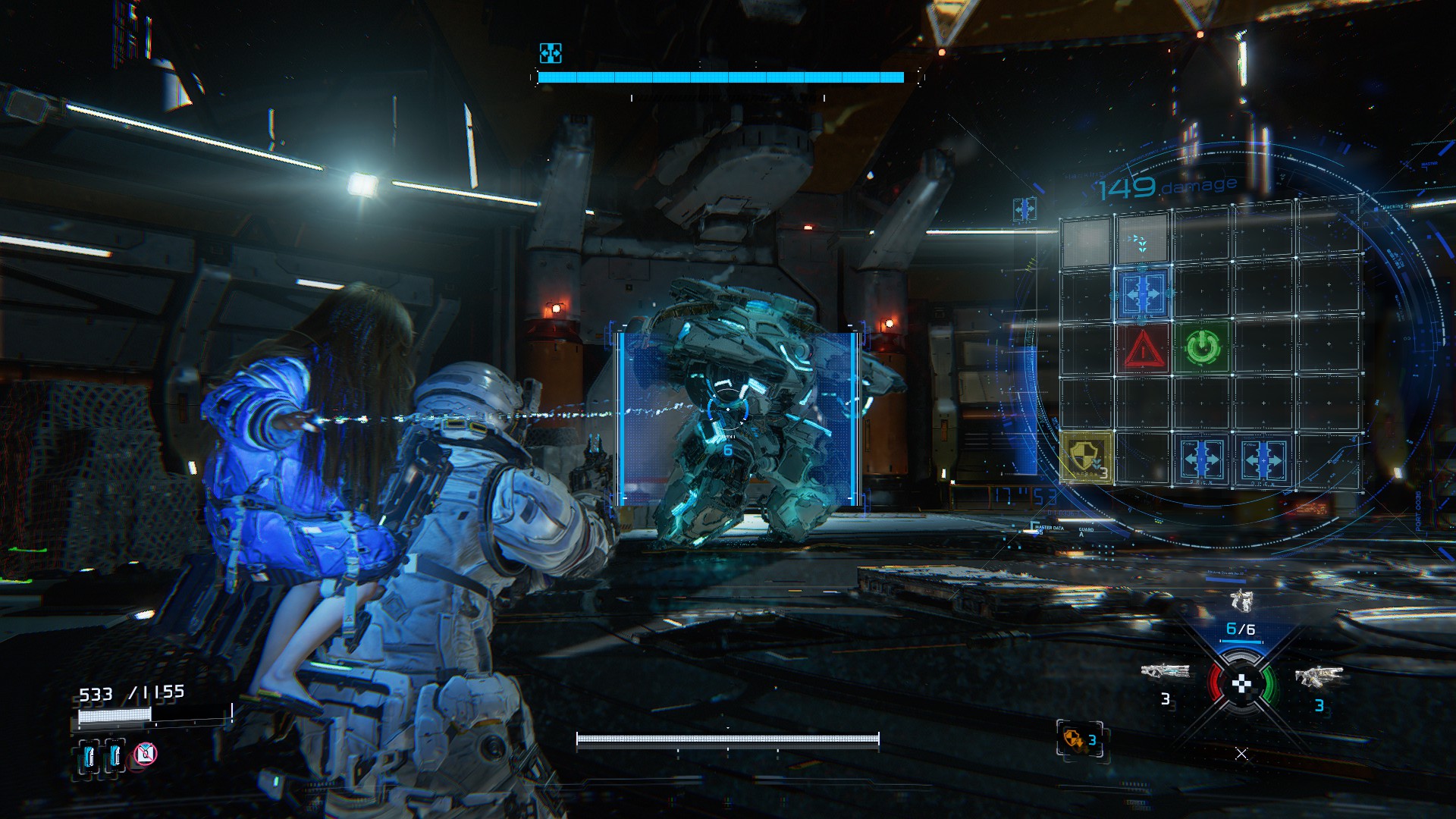
Pragmata’s gameplay reinforces the themes of the story by emphasizing teamwork between Hugh and Diana. Hugh uses his spacesuit’s thrusters to navigate over unstable terrain and dodge attacks while also utilizing a variety of guns to take down enemies. Diana rides on Hugh’s back and uses her hacking abilities to disable enemy defenses and open new pathways by unlocking doors and manipulating platforms. The game’s level design is very linear with tight corridors and battle areas which keep the player moving in the right direction. This isn’t a bad thing in my opinion, though it does highlight how excessive the blue paint can be at times.
Combat is the strongest part of Pragmata’s gameplay, because of the way it shakes up the typical 3rd person shooter formula. Hugh’s guns aren’t actually that effective against most enemies in the game, so the player needs to utilize Diana’s hacking mini-game in order to bypass their armor. Playing a hacking mini-game in the middle of a firefight might sound intimidating at first, but in practice it’s a brilliant system that helps Pragmata stand out as one of the most unique games we’ve seen from a big publisher like Capcom in years. That being said, the controls are a little awkward on keyboard and mouse(but thankfully not unconquerable) so definitely try playing the game on a console controller for the best experience.
Outside of combat, the lunar research base is littered with collectable items that can be taken back to the shelter to upgrade Hugh and Diana’s abilities. The player probably won’t get enough resources to fully upgrade everything on their first play through so investing in abilities that compliment his or her playstyle is a must. These collectables are also rewarded by training simulations that require the player to achieve certain objectives with limited tools, but some of them are quite difficult and will probably require multiple attempts to master. The most important feature of the shelter however, is giving Diana toys and games to bond over with Hugh. The player receives a token they can spend whenever they give Diana a gift, but frankly the ensuing character interactions between Diana and Hugh are so cute that I came to see that as the true reward.
On that note, the thing I deeply appreciate about Pragmata as a Catholic is its positive depiction of fatherhood. There are of course other popular games out there with themes of fatherhood like The Last of Us, God of War, and Death Stranding, but I never had much interest in those games for reasons Pragmata finally allows me to articulate. The aforementioned examples are so preoccupied with being dark and cinematic epics that the theme of fatherhood takes a very cynical perspective where being a father is noble, but ultimately a miserable and thankless vocation. Pragmata on the other hand dares to show how joyful being a father can be while still acknowledging the sacrifice that comes with the territory. The world needs more games like Pragmata which reclaim the joy and glory of fatherhood from a secular culture hellbent on demoralizing men(and women) who want to have children.
Such observations might sound brazen coming from a man who is yet to become a father himself, but anyone can appreciate Pragmata’s insights into fatherhood by virtue of our experiences as children through Diana. Personally I was constantly reminded of my own childhood in the ways Diana played and in the questions she would ask Hugh and often wondered if my father experienced something similar while he was raising me. If so, I just hope those moments were enough to take the edge off all the times I frustrated my father with my childish antics. We can also consider the perspective of God, our spiritual father, who loves us more deeply than we can possibly imagine and rejoices greatly when we take his words to heart and turn away from sin. If the endearment I experienced in the bond between Diana and Hugh is even a fraction of the love God feels for me, perhaps I’ve inched that much closer to better understanding the heavenly father.
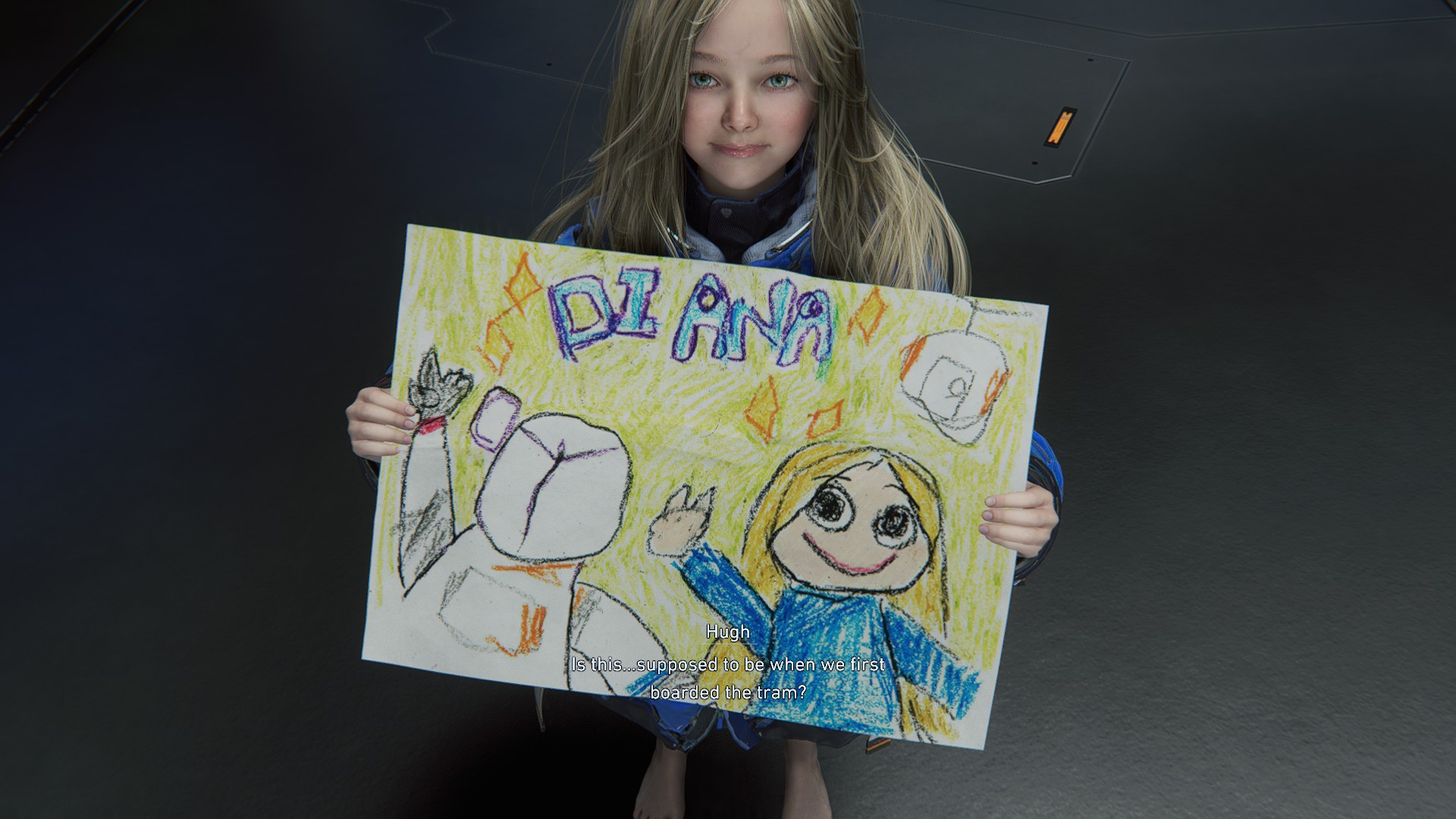
I am reaching levels of baby fever I never though were possible.
In conclusion, Pragmata is a game I’m very glad I was able to play. Mechanically it’s a fun twist on a 3rd person shooter on top of offering a heartwarming story of fatherhood that moved me to tears. I recognize my emotional response is probably a big reason I hold this game in such high regard, but I still absolutely recommend playing Pragmata if anything about it interests you. Now go home and be a family man.
Scoring: 96%
Gameplay: 5/5
Visuals: 5/5
Sound: 5/5
Story: 5/5
Replayability: 4/5
Morality/Parental Warnings
Violence: Pragmata is a 3rd person shooter with a variety of guns the player uses to defeat enemies. The game’s enemies are exclusively robots so blood and gore are completely absent.
Language: Swearing is present in the game’s dialogue.
Philosophy: In the conversations between Hugh and Diana, Diana questions Hugh if she has a soul despite being an android. Hugh hesitates to give Diana an answer, but later on decides she does have a soul based on her ability to think for herself and make choices. This definition of the soul is incomplete from the perspective of Catholic theology, which teaches souls exist in a hylomorphic union with the human body.