
Reviewing a trading card game is easily one of the toughest undertakings one can attempt. While there are certainly foundational elements which can be eternally true of any given game, the true measure of a TCG’s health and quality depends almost entirely on the snapshot in time during which you observe it. This makes static adaptations of these sorts of games all the more interesting, as it gives the genre a chance to simply offer a complete and self-contained experience for us to judge in perpetuity. So for today’s review, we’re going to be looking at one of the older single player TCG adaptation video games and see how it holds up. Special thanks to KMaximillian for requesting this review as a Patreon supporter of the website! Pokémon Trading Card Game was released for the Gameboy in 1998, and for this review was played on the Nintendo Switch via the Gameboy Nintendo Classics application. For the remainder of this review I’m going to use the game’s Japanese title of Pokémon Card GB, because I do not want to confuse readers who clicked on this looking for a review of the physical game.
Pokémon Card GB doesn’t really have any narrative content worth speaking about. There’s technically a story here about beating a set of gyms, elite four, and champion to receive legendary Pokémon cards, but there’s no substance to any of the proceedings. The whole story is basically what would happen if you took the original Pokémon Red and Blue games stories and cut out everything except the elements above and renamed the rival to Ronald. I’m not about to harshly criticize this game for not having a real narrative because it wasn’t trying to be that sort of experience, but I’m sure the game could have been more memorable if effort was put into this area.
Gameplay is about what you’d anticipate for a game like this. You go around different battle clubs, talk to the people there, and (usually) beat them in single combat. The core gameplay of the titular card game is unchanged from its physical counterpart, but a brief explanation is in order. Each player possesses a 60-card deck which usually contains a combination of Basic Pokémon, Evolved Pokémon, Energy, and Trainer cards. The game starts when each player puts a Basic Pokémon into play, optionally placing any additional Basics from their starting hand onto the bench, and setting aside a number (six in standard play) of random cards from their deck as prizes. The goal of the game is to achieve victory by one of three means: defeat enemy Pokémon to claim all of your prizes (1 KO = 1 prize), defeating all your opponents in-play Pokémon before they can replenish their bench, or by having the opponent run out of cards before you do. The later two methods are more like technical victories, but they can occasionally be played around. In order to attack opponents a Pokémon will need to be able to pay the cost of their moves, which is done by committing specific Energy cards to them. Energy can rarely be recovered for later use once attached to a Pokémon, so there’s a bit of strategy in making sure you don’t waste energy cards on monsters who are doomed to be blown to bits before you can get value out of their moves. Pokémon who have sat on the board for at least one turn can be freely upgraded by placing an Evolution on them, which have larger health pools and stronger moves at the cost of usually being more Energy intensive. Lastly, Trainer cards each provide a one-time effect such as drawing more cards, healing damage, switching an active Pokémon with a benched one (without the usual Energy cost for doing so), discarding enemy Energy, and just about anything besides dealing damage.
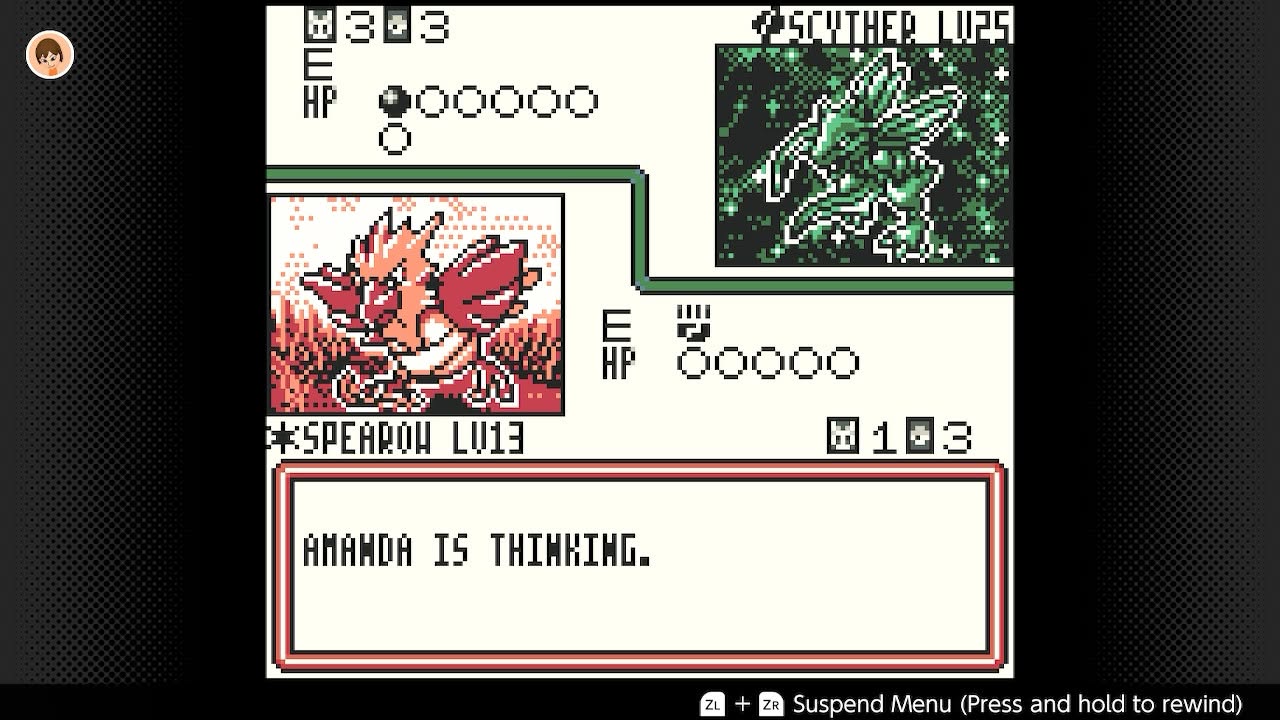
Perhaps the best thing about the design of the Pokémon Trading Card Game is how seamlessly it fits into the series’ multimedia project by reflecting the source material in its mechanics. The standard 6 prize cards and 5 bench slots are both references to the games’ party size, evolution is flavorfully implemented, persistent damage and status effects feel distinctly gamey, and the weakness and resistance mechanics are a nice nod to the type system. When these along with all of the other mechanics are brought together, it makes for a fairly enjoyable game of resource management and adaptation. This more flavor and casual-centric design however does lend the game to being especially volatile though. On one hand, between the plethora of Pokémon with moves that deal damage randomly in some way, the risks of hands being bricked with too many Energy or Pokémon cards, and the alternate win conditions, a novice player with a suboptimal deck is always within a remote chance of winning such that they may not readily learn the deeper theory of deck construction being about mitigating random factors. On the other hand, better players may quickly realize that since the game lacks a hand size rule they can stuff their deck full of draw options that significantly increase consistency and dizzy their opponents with well-rehearsed strategies. The gaps between levels of game sense is quite striking, and I do think the game might have benefitted from some teaching tools to help less experienced players learn more engaging patterns of play (though personally I took the best of both worlds and built a deck explicitly designed to high-roll). Beyond this, I do take issue with certain status effects being either over or underpowered, but otherwise this covers the basic framework of the game.
Within the world of Pokémon Card GB itself, many of the cards featured are actually unique to the digital version and feature designs and effects which are clearly built with the game’s automations in mind. My ace Pidgeot for example has moves which are explicitly about board disruptions, randomly striking Pokémon on the bench and randomly switching both players’ active Pokémon to keep the opponent from ever staying truly in control, and this heavy use of random targeting would be nightmarish on tabletop but manages to exist as a fun trickster card on Gameboy. In a bold twist however, the game retains the spirit of the physical collectibles by making each card in your collection exclusive, meaning that if you have four Goldeens for example then you can only have four Goldeens across all of your deck slots instead of jamming those Goldeens into every single deck you build. This makes collecting new booster packs from winning battles even more exciting, as the next one you receive could very well be the one to enable a new evolutionary line or make your collection big enough to handle multiple decks. Plus being digital mitigates the most unfair aspect of the original game: losing by default because of bad type matchups and being unable to afford another deck.
Presentation-wise, Pokémon Card GB holds up surprisingly well for such an old title. The main reason for this is the artwork of the Pokémon featured on the cards, which is some of the most detailed stuff I’ve ever seen on such old hardware. The use of color across the game is also quite good, setting the tone of the various environments very well in spite of the hardware limitations. Not every environment is compelling, but some of the standouts like the water and fighting clubs are very memorable. The music also makes a good showing despite how chiptune it is. I think it’s inherently disadvantaged when put up against the main series music because the later has been remixed to death such that our feelings towards mainline OSTs are complicated by long-term marination, but I think Card GB offers enough good music to suit its short runtime. The main battle theme could have been varied between clubs for a broader soundscape, but I’m not too upset.
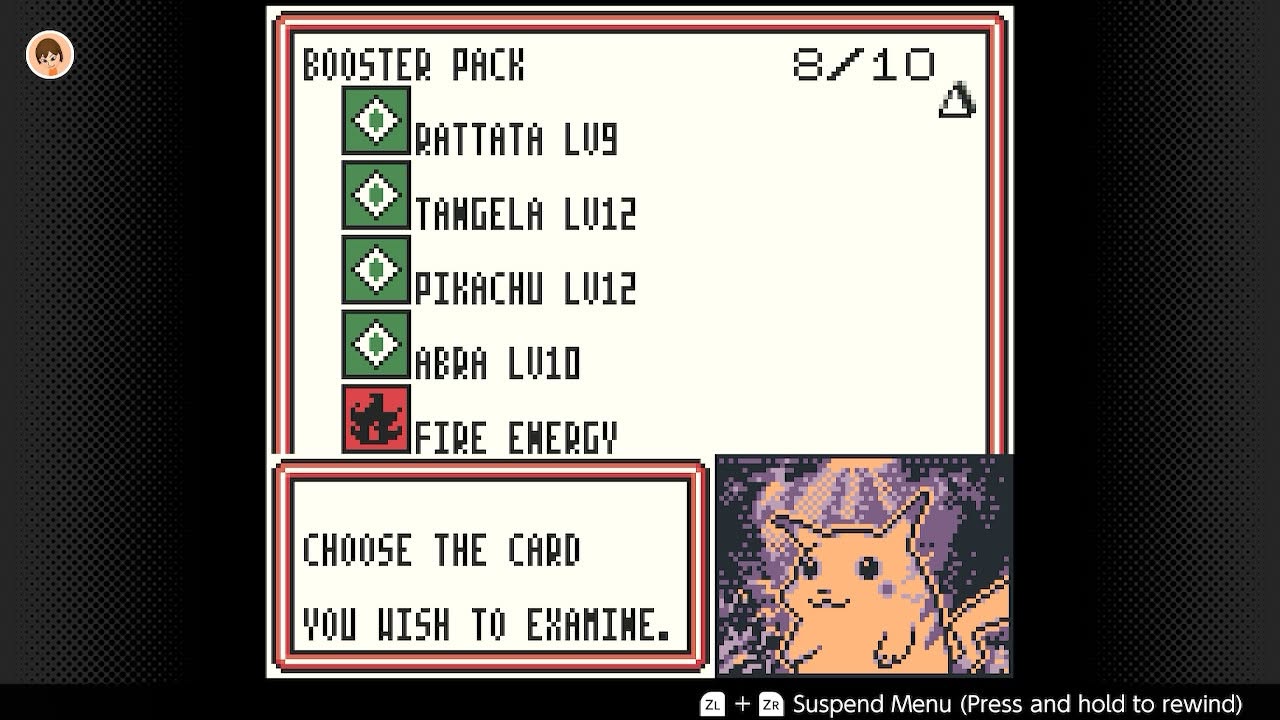
Finally for a Catholic take on the game, it’s a bit tricky to identify something unique to Pokémon Card GB when every possible theme I could draw from its story is probably just a worse version of something from Red and Blue, but I think there’s a lesson to take from the game’s progression systems. This is not a game interested in being a sandbox where you can throw together any deck you want right away. New cards are awarded only through defeating trainers and reading mail relevant to story progress, and until then you’ll likely have to stick with the starter decks. Even when you do manage to finally put together that perfect deck though, odds are you won’t have the exact number of copies per card that you’d ideally wish for and have to carefully tune its composition to function properly. All of this might seem obvious in a trading card game, but in our current world of ccgs with wildcard and dusting systems and tcgs with robust secondary singles markets it can be easy to forget this more organic and delayed method of engaging with the genre. A particularly noteworthy thing to forget, as life itself is much closer to that method than the modern ones. As a Catholic it can be difficult to see the meaning in any one event in our lives and how they relate to what God desires of us, because often these smaller experiences reveal their full meaning when taken in context of the path we’ve taken to reach that point. It takes courage to embrace this uncertainty and trust that even if our lives don’t seem all that beautiful or even intentional in the moment, God is using every moment to make something good out of them. Just like that joyful moment when you finally construct a deck all on your own and start tearing up the late game battles in a personal way, so too will we come out the other side of life as better and more complete versions of ourselves if we let God take us by the hand.
In conclusion, Pokémon Card GB is a small but well-executed adaptation of the popular card game, with solid presentation and fun card game to learn and master. It definitely has its chaotic luck-based silliness and there isn’t exactly enough story to leave you pondering the experience for too long, but if you’ve been wanting to enjoy the Pokémon Trading Card Game without having to compete against scalpers, then this is a solid little game which is great for short bursts of play. I quite enjoyed this time capsule from yesteryear, and if you have an NSO subscription it certainly doesn’t hurt to play through at least once. And please put Gambler in your deck over Professor Oak, the game is ten times better that way!
Scoring: 72%
Gameplay: 4/5
Story: 3/5
Art and Graphics: 4/5
Music: 4/5
Replayability: 3/5
Morality/Parental Warnings
As a card game simulator, Pokémon Card GB is not an especially worrying game beyond a few staple concerns of Pokémon as a whole. The Psychic type is themed around extrasensory powers and some of the trainers of the Psychic club speak of related mystical powers like foresight, but no real successful attempts at such things appear in game. The Ghost type Pokemon do appear in the game under the Psychic family of cards. Battles are just fights between cards with nothing graphic to speak of. The most you get is a few visual effects themed around the attack used like fire or wind. Due to the game’s lack of story, the game isn’t really able to unpack the poor sportsmanship of the rival character Ronald.