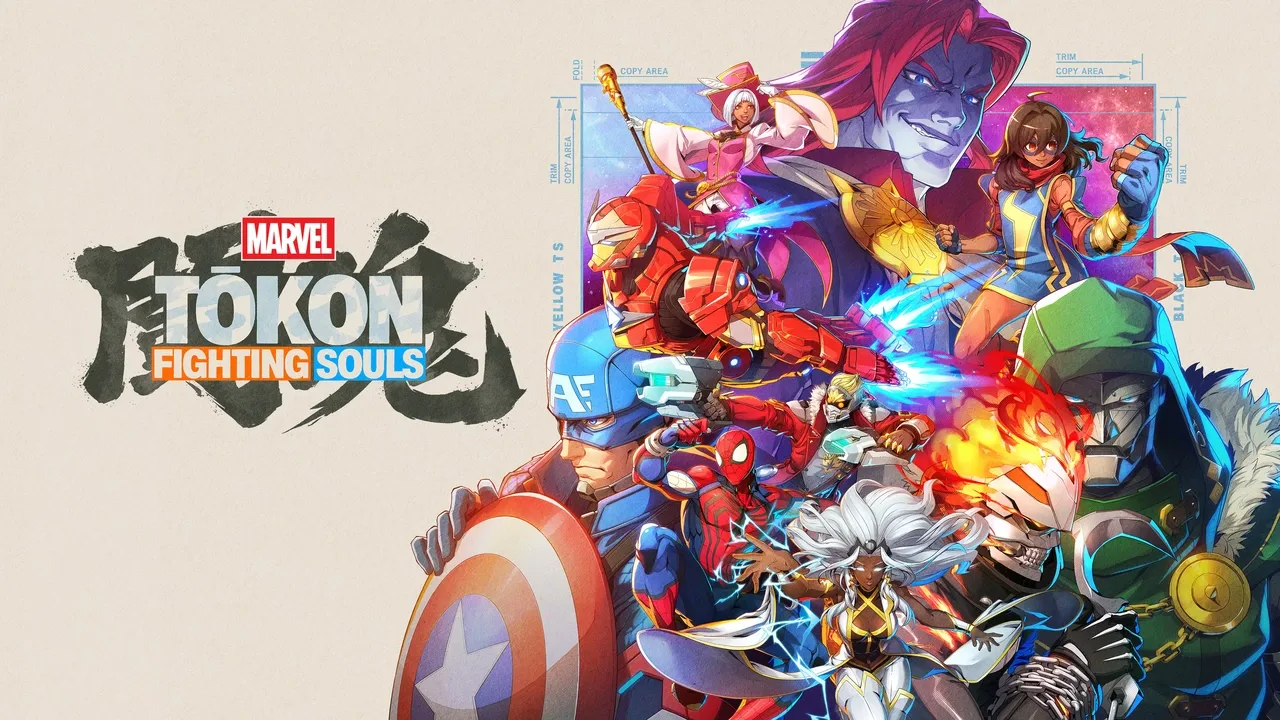
It’s been a while since I last picked up a brand new fighting game, and it’s been even longer since I reviewed one. What’s the occasion for such a comeback? Why it’s Arc System Works reviving the Marvel Comics tag team fighting tradition of course! It’s been nearly a decade since Marvel had a proper fighting game, but does Marvel Tokon: Fighting Souls live up to the legacy it inherits from Marvel Vs. Capcom? Put on a colorful costume and grab your tag partners because we’re about to find out.
The story of Marvel Tokon features The Champion as its antagonist, an Elder of the Universe obsessed with fighting who travels the cosmos hosting tournaments to find decent sparring partners. The catch is any planet that fails to provide The Champion a worthy challenger is destroyed, and he’s set his sights on Earth for his next tourney. The story is divided into 5 episodes, each one following one of the default character teams as they battle one another for the privilege of taking on The Champion and saving Earth, but they function largely as alternate timelines of the same basic story as opposed to chapters of a larger saga. I’ll give my thoughts on all 5 versions of the story, but generally speaking I think the game’s strong premise is undermined by poor writing.
While the player can play the story in any order, I played them in the order presented in the menu starting with The Fighting Avengers. This story definitely feels like it was meant to be played first as figuring out the bigger picture behind the tournament is the central focus of the story and in that regard it works pretty well. That being said, the fatal flaw that holds back The Fighting Avengers from being a good story in my eyes comes down to the characterization of the team’s leader, Captain America. In a bid by the writer to create some internal conflict among the Avengers, Cap exiles Hulk to the Savage Lands because he was afraid the team would be rejected by the public for employing a monster like Hulk. This is very out of character for Cap, who should have taken Hulk’s side regardless of public opinion, because that’s just the kind of hero he is.
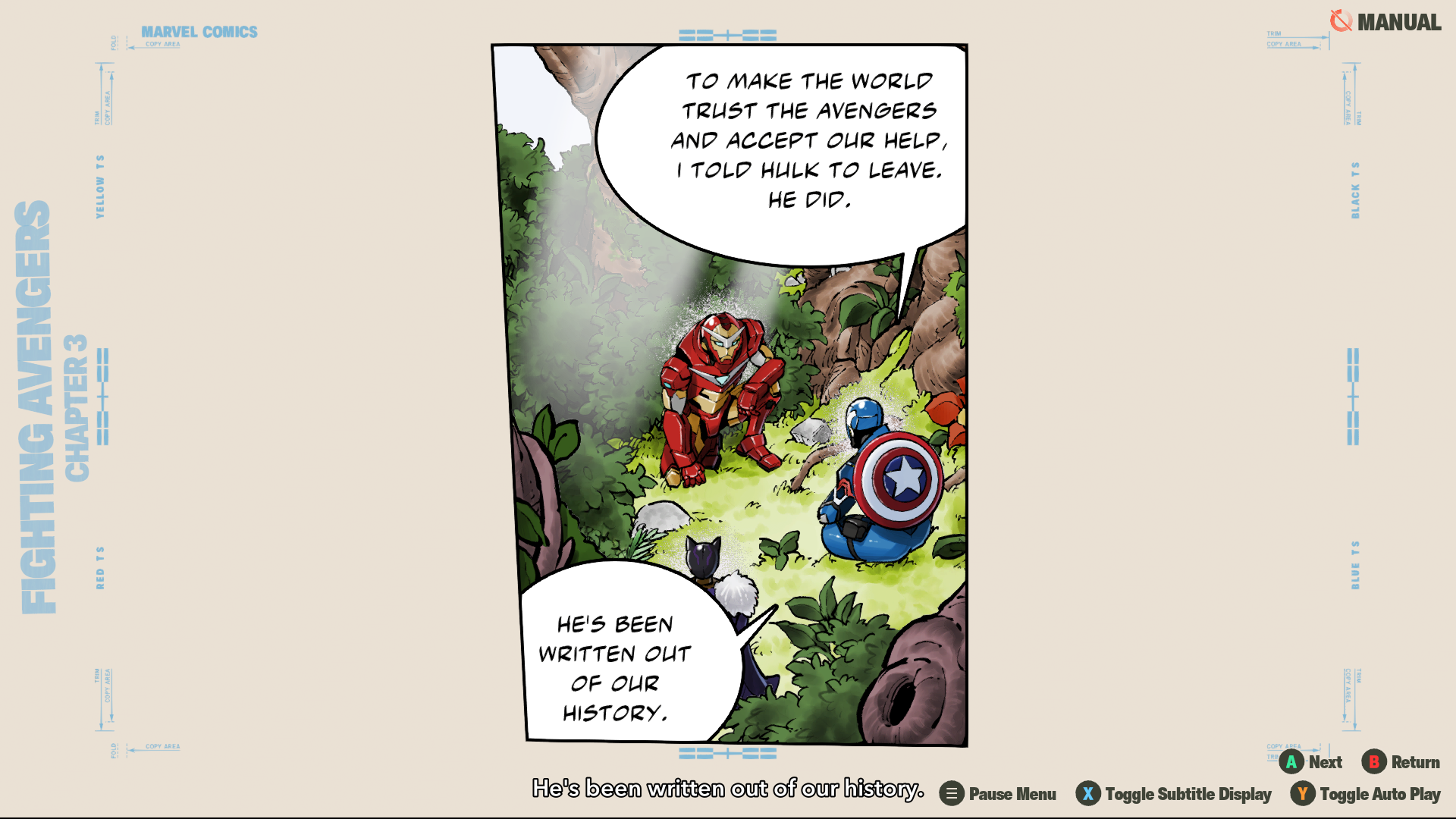
You have no idea how much this panel drives me crazy as a fan of the funny books.
The next stop on our story mode odyssey is The Unbreakable X-Men. Most of my issues with this story are similar to problems I perceive in modern X-Men stories as a whole, namely the misuse of anti-mutant prejudice and being overly apologetic towards the team’s arch-nemesis Magneto. One of the defining features of the X-Men as heroes is that they fight for a world that fears and hates them for being Mutants, but in the classic comics they’ve had just as many adventures fighting aliens and monsters without any mention of bigotry. Marvel Tokon on the other hand has several scenes of the X-Men grappling with anti-mutant sentiments, which feels incredibly forced considering the story is otherwise centered on a cosmic affair. Furthermore, The X-Men attempt to convince Magneto to abandon his dark path virtually every scene they encounter each other in, only for Magneto to refuse them every time. Not only is this repetitive, but it speaks to the worrying trend of Marvel creators and fans assuming Magneto, the infamous mutant ethno-terrorist, might have a point simply because he has a sympathetic backstory. No matter how tragic his backstory is it does not change the fact that Magneto’s actions are fundamentally evil and the only way for his redemption to make sense is through repentance.
Next on the chopping block is The Amazing Guardians, a rag tag band of underdogs led by Spider-Man. The Amazing Guardians’ leading man is unsurprisingly the highlight of this episode, emphasizing his never-give-up attitude in the face of impossible odds. That being said, the tenuous connections between Spider-Man and his teammates are what really drags this one down, with most of the dynamics being very one note. Ms. Marvel is the inexperienced kid struggling to prove herself, Star-Lord is the smooth talking rogue who embraces heroism when the chips are down, and Peni is the tech nerd there to explain the comic book pseudo-science. None of these elements are fundamentally flawed, but the writing simply failed to use them in interesting ways.
Moving on to our penultimate story we have Ghost Rider and The Midnight S… I mean The Samurai Outriders. Similar to The Amazing Guardians, The Samurai Outriders are a deck of wild cards, but most of them have at least a little history with each other to make their dynamic slightly more interesting. Unfortunately, this story is plagued by pacing issues punctuated by repetitive scenes of characters being suspicious of Loki, Ghost Rider wanting to forfeit the tournament against teams he sees as more capable than himself, and a Deadpool gag where he literally wastes your time doing nothing to make sure the cutscene doesn’t end too quickly. If they just trimmed the fat a little they could have had something here, but alas it appears my expectations were too high.
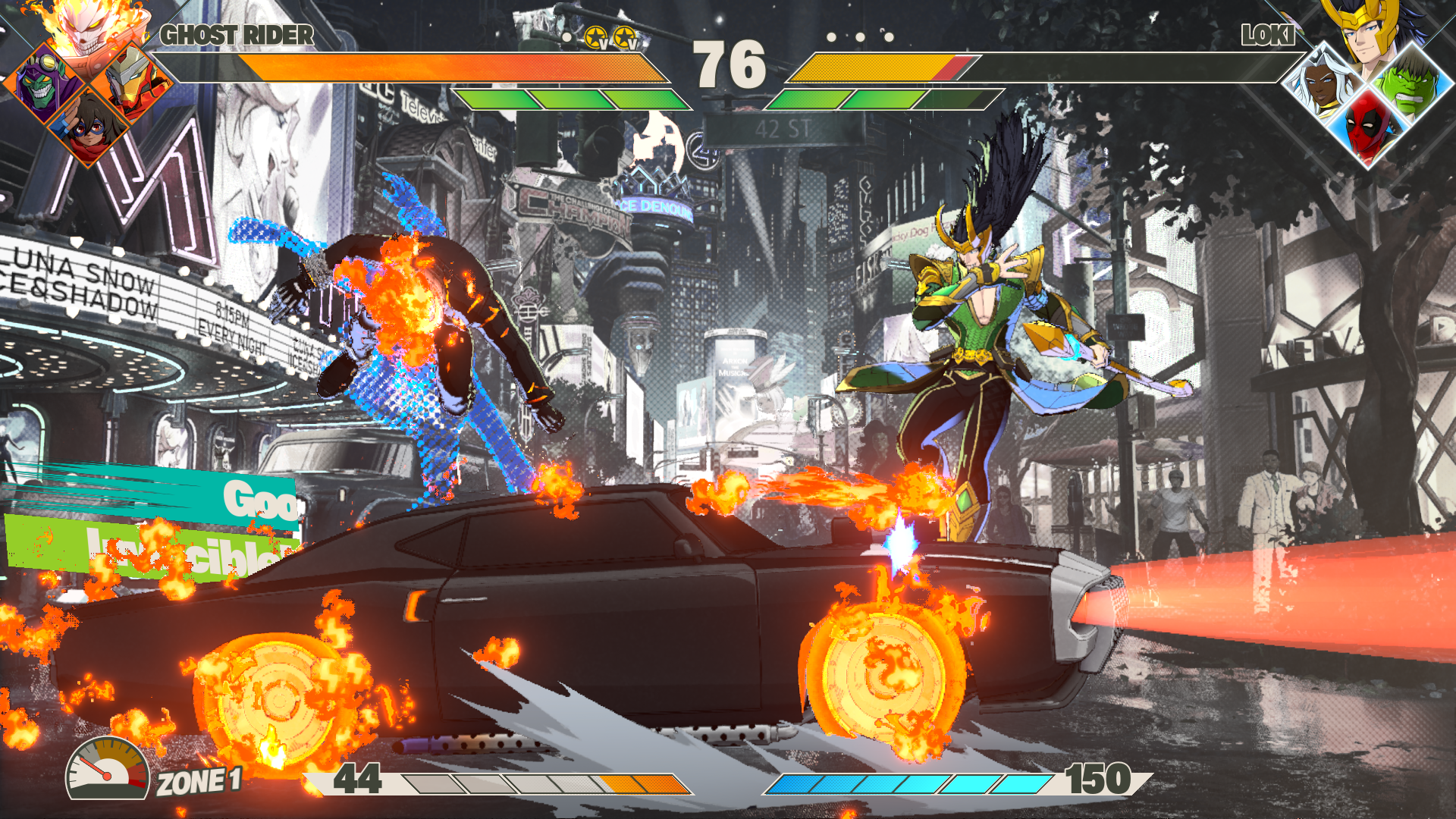
EVIL CAR
The 5th and final story Marvel Tokon has to tell belongs to The Knights of Doom, a group of supervillains fighting to save Earth… so they can conquer it later of course. It’s fun when games include a “bad guys win” scenario, but at this point it shouldn’t surprise you that even this “what if” storyline has some problems. My main issue is the overabundance of Spider-Man villains and their tenuous motivations to follow Dr. Doom. I get it, Spider-Man is Marvel’s most popular hero and his rogue’s gallery is arguably the best in comic book history, but in a game where teams are limited to 4 members having half the villain team consist of the web-head’s rivals feels like overkill. Furthermore, at the beginning of the story Doom blackmails Green Goblin into cooperation by threatening to reveal Goblin’s secret identity as Norman Osborn in the middle of his campaign to become the president of the United States, but later on this is contradicted during an encounter with the Avengers when Goblin takes off his mask to taunt Captain America. So does Goblin take the consequences of his secret identity leaking seriously or not? It’s little inconsistencies and mischaracterizations like this that add up to make this game’s story such a frustrating mess no matter which team you choose to play as.
Setting the story aside, Marvel Tokon’s presentation is everything we expect from an Arc System Works title, which is to say it’s one of the best in the business. The animation is smooth, the special effects are flashy, and the characters are expressive. That being said, there is a huge “what could have been” hanging over the art style from the game’s development. In interviews it has been revealed that Arc System Works originally wanted to make the game’s visuals a love letter to the silver age with all the characters using their classic designs and shading techniques. This approach was discouraged by Sony, who wanted Arc System Works to make something more in-line with their other games like Guilty Gear. I enjoy the way Guilty Gear looks as much as the next guy, but the fact that they were discouraged from making a silver age homage really hurts as someone who loves reading old comics.
Marvel Tokon’s music is another highlight for the presentation, featuring a variety of composers tailoring each theme song to suit its related character. From epic orchestrals to heavy metal to electronic beats there’s no shortage of variety on offer and the “best” songs in the game are probably going to come down to your personal tastes. I would recommend checking out “Man in the Metal”(Iron Man), “Thunder and Fury”(Storm), “Zettai Muteki Spider Girl”(Peni Parker), and “All for My Brethren”(Magneto) as examples of my favorite music in the game. The game’s voice acting is… unfortunately less favorable from both returning and new voice actors. Brian Bloom has previously done some good work as Captain America, but the direction here is pitched up to a jarring degree and ultimately falls flat. SungWon Cho also sticks out as an absolutely atrocious Doctor Doom, making absolutely no attempt to capture the character’s eastern European heritage or grandiloquent disposition. That being said, there’s still quite a few good performances on offer as well like Mara Junot’s Storm, James Arnold Taylor’s Magneto, and Josh Keaton’s Spider-Man. Among the newcomers I have to applaud the casting of Kellen Goff as Carnage as a stroke of genius.
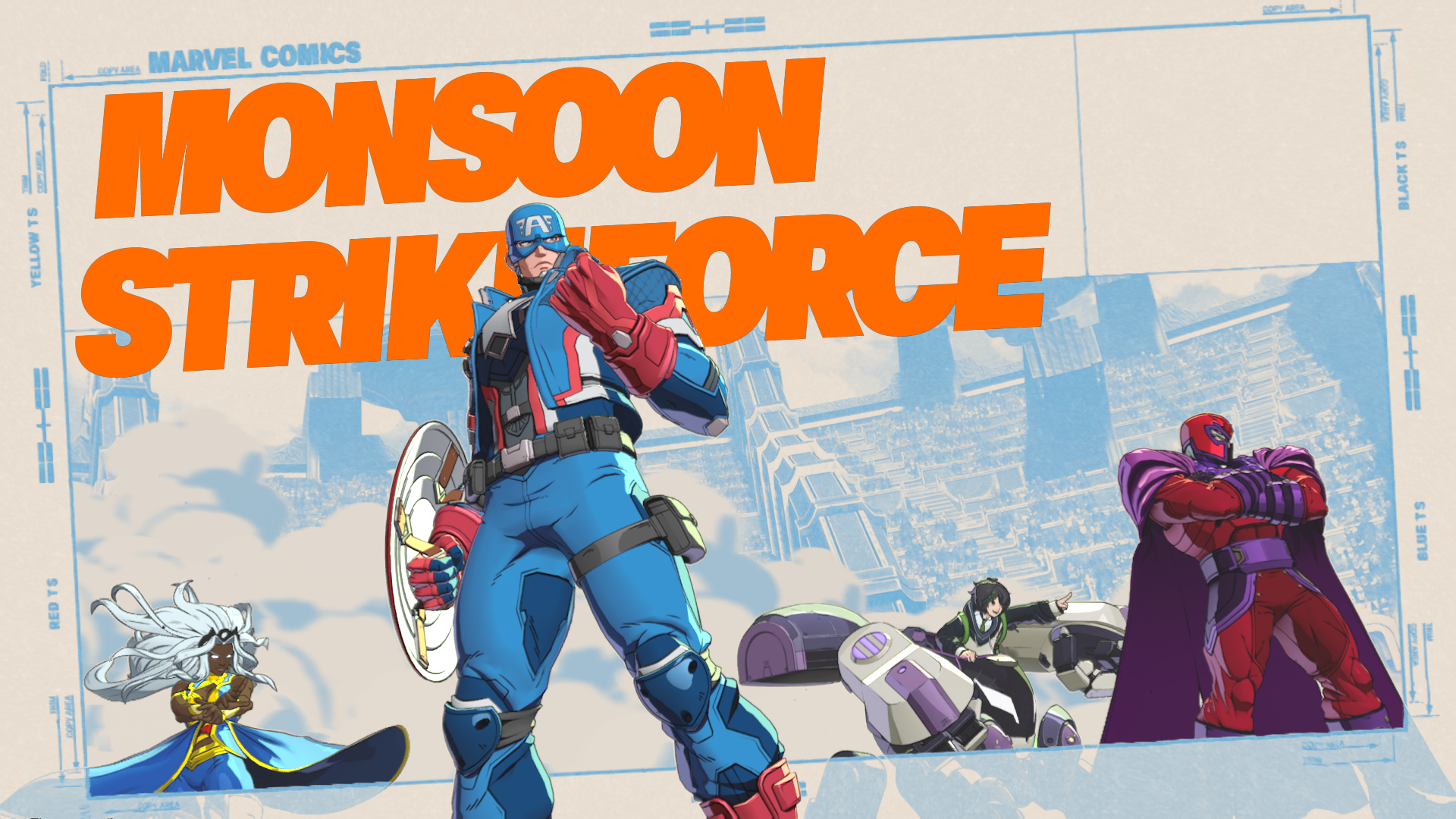
I tend to switch up my team a lot, but this is my current squad.
Marvel Tokon’s gameplay hook revolves around being the first 4 versus 4 tag team fighting game, but as ambitious as that sounds it’s actually not as intimidating in practice if you know your way around a fighting game. The player’s team shares a single health bar, meaning they are not required to swap characters mid fight nor will they lose access to characters when they are knocked out. At the start of a match the player will only have access to the first 2 characters on their team, unlocking more as they pull off certain techniques such a stage transition or as compensation for losing a round.
Characters on standby can be called in to perform assist attacks with the nature of said assist being determined by their position in the line up. The 2nd character throws out a projectile, or a similarly long ranged attack, to control space and whittle down opponents from afar. The 3rd character performs a rising, or upward angled, attack great for catching airborne opponents. The 4th character’s action is specific to every member of the roster, utilizing their most unique tools to support the active character.
Beyond assist attacks there are several other mechanics which will involve multiple members of the players team. Assemble Smash is an armored overhead attack with follow up strikes performed by characters on standby, which is a very strong tool against an opponent’s pressure in neutral, but it does have its weaknesses which a prepared player can exploit. Assemble Counter is a parrying technique which can negate most offensive moves, but leaves the user vulnerable if mistimed. Crossover is a team up attack performed while guarding against an attack, but if the attacker predicts a defender’s Crossover they can perform a counter-Crossover and stay on the offensive. Truthfully these systems aren’t anything fighting game players haven’t seen in other titles, but the addition of multiple characters flying across the screen to assist their teammates makes it a bit flashier than usual.
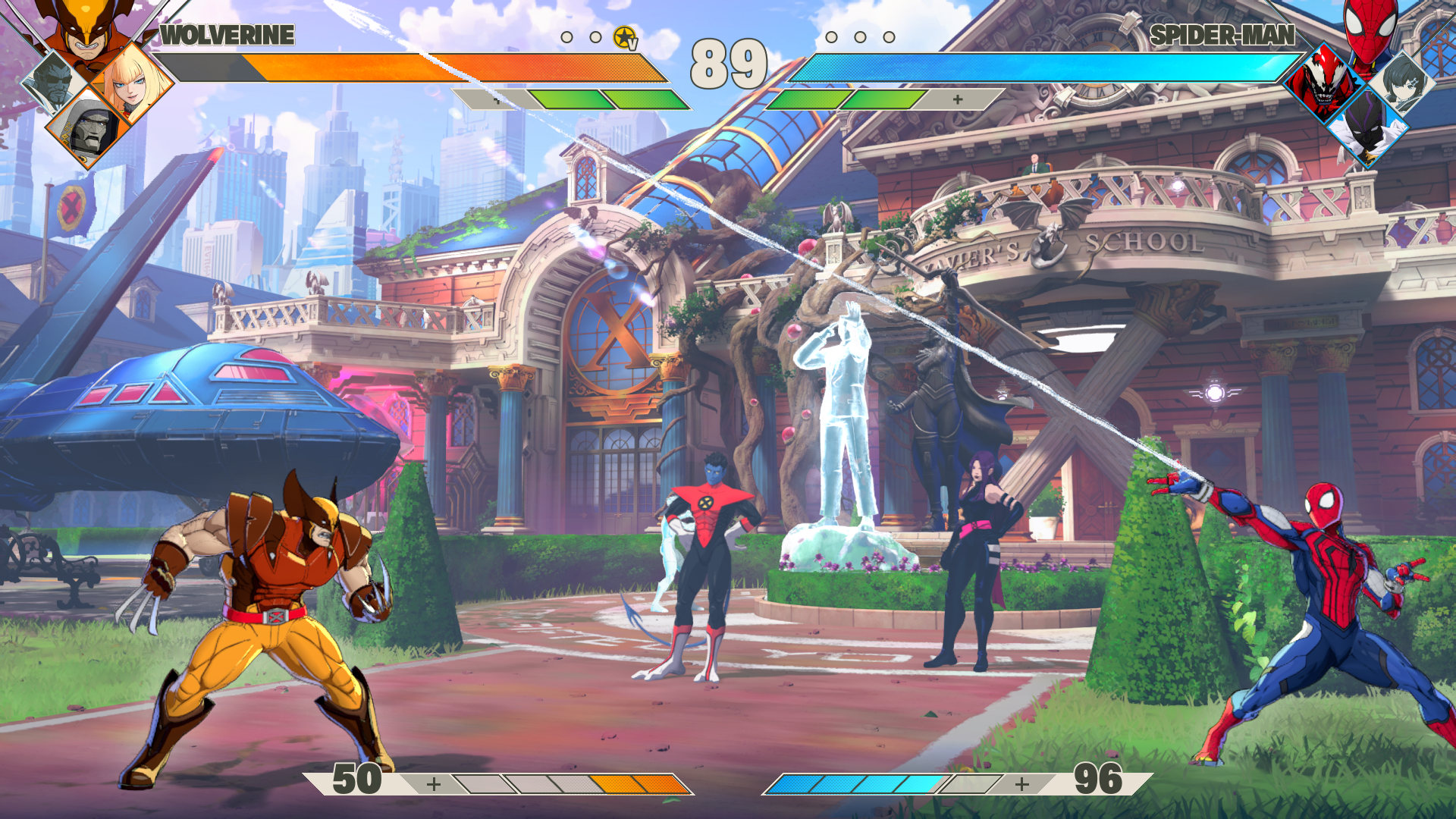
With such a robust set of tag team fighting mechanics Marvel Tokon seems to have everything it needs to become an instant classic, but there’s a huge caveat. The game’s performance is prone to framerate issues during intense situations, especially in online modes where such problems can cause players to desync and disconnect. In a fast paced genre like competitive fighting games, framerate can make or break the experience and as it stands Marvel Tokon is leaning towards break. This is definitely an issue I would advise prospective players to wait until the developers patch in a fix for because this is unacceptable for a full priced game in the year of Our Lord 2026.
Furthermore, the more I played Marvel Tokon the less fond I became of the tag mechanics. In isolation the tag mechanics are fine since they aren’t too dissimilar from other games, but layering on a 4th character is where the problems start to arise. Assist attacks are generally best used to extend an ongoing combo or to make an otherwise unsafe maneuver safer, but in a 4 versus 4 environment this just means an aggressive player who gains the upper hand gets to maintain their position for that much longer. If you’re on the receiving end of a long combo you might as well put down the controller and make a sandwich because the active player gets to extend that combo at least 3 times before your characters can act again. Even if you manage to block an incoming attack you’re probably going to end up holding that block for a long time while the opponent calls in assists to pile on the pressure and delay the opportunity for a counterattack as long as possible. No matter how you slice it the aggressor gets way too much time as the active player and the defender is forced to watch helplessly while they wait for their turn to push buttons.
An objection I can anticipate to my observations surrounding the tag mechanics is that other tag fighters with smaller teams have similarly long combos, some even capable of emptying the opponent’s health bar in one go. The problem however is that games like Marvel Vs. Capcom 3’s long combo extensions require precision timing that only the very best players can hope to achieve. Marvel Tokon on the other hand has much more generous hit stun and block stun which makes it much easier for casual and mediocre players to pull off these overwhelming attack chains. Rather than broadening the game’s appeal, I believe this will only serve to frustrate newer players more quickly and discourage them from playing again.
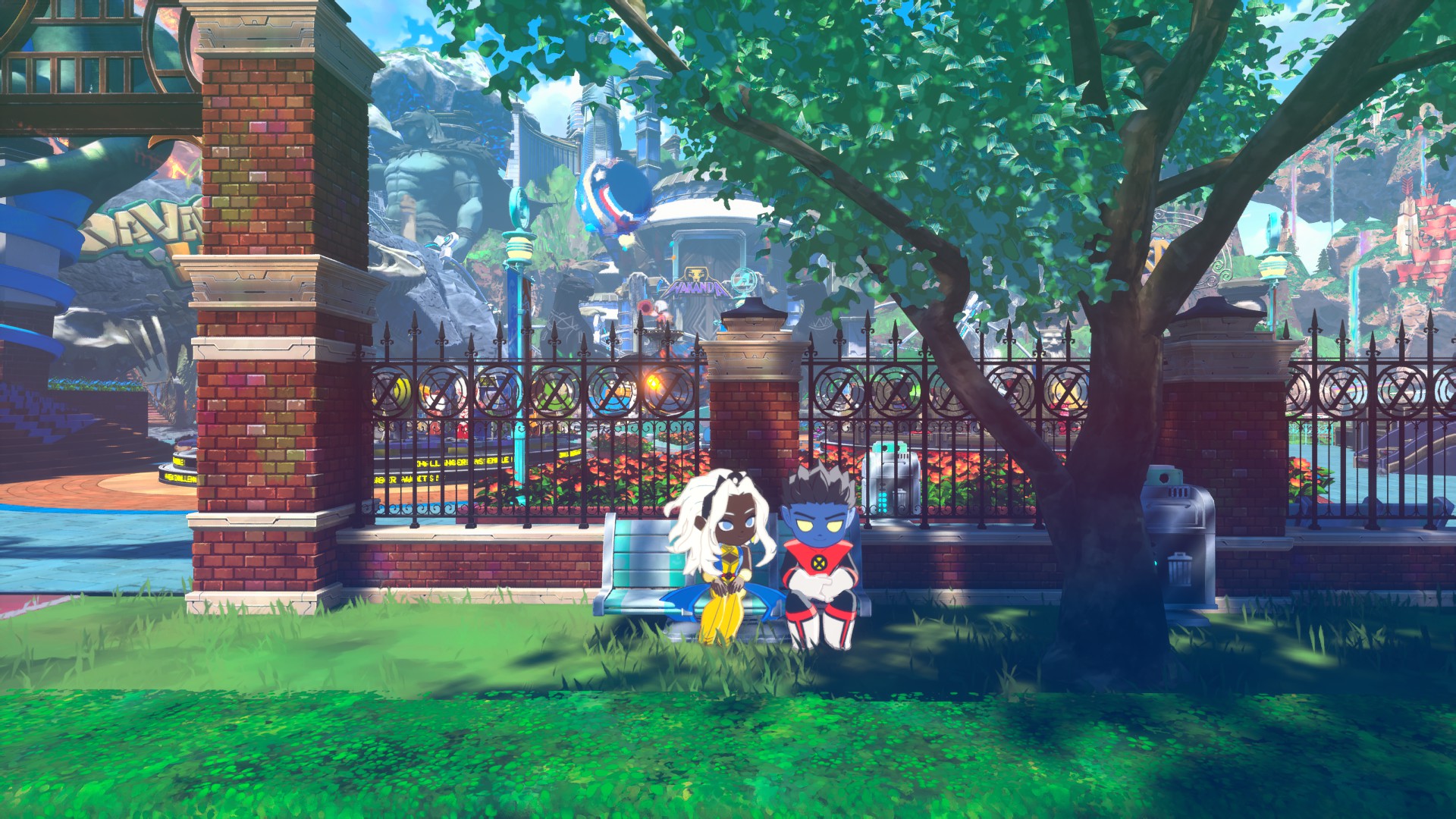
Characters cameo in the online lobby as well! I just had to get a picture with Nightcrawler.
Beyond the fighting mechanics themselves, Marvel Tokon’s selection of game modes is on the smaller side. Story mode’s replay value depends entirely on the player’s personal enjoyment of the story on offer. All-star arena is functionally an arcade mode with a branching path system that changes which character will be the final encounter. Survival mode tasks the player with surviving a gauntlet of 100 fighters, which can be rather intensive despite how quickly individual matches can be finished. Arcadia Rumble is a party mode using the online lobby avatars, but the simplicity of its mechanics are not terribly engaging compared to the rest of the game. Training mode and combo trials make for decent practice tools, though they don’t do anything particularly innovative. There’s certainly fun to be had in these modes, but ultimately the player has to be invested in the core fighting mechanics to get the most out of them.
So what might a Catholic take interest in from Marvel Tokon? Well two of Marvel’s most prominent Catholic heroes, Nightcrawler and Daredevil, make cameo appearances on certain stages, but since they’re not major characters as far as the story is concerned I’ll leave them alone for now. What I will focus on is the motivation of The Champion and by extension the other Elders of the Universe: obsession. Before any comic readers bust out their long boxes, yes I am aware that the Elders of the Universe have a cosmological/existential reason for their obsessions, but since that is beyond the scope of Marvel Tokon I will omit that from the discussion for the sake of clarity. The Elders’ obsessions aren’t inherently acts of villainy when done in moderation. The Collector’s collection wouldn’t be an issue if he didn’t include people and weapons of mass destruction, if The Grandmaster stuck to normal games like chess and stopped inventing insane death games he’d be fine, and of course The Champion really doesn’t need to coerce or threaten innocent people to find a decent sparring partner.
For normal people in the real world, moderation is essential to the things we do as well. Our hobbies aren’t any better than the Elders’ obsessions if they take greater priority over maintaining our health and security. Likewise it’s also bad for us to spend all our time working while neglecting our need for rest. Temperance is also one of the 4 Cardinal Virtues in Christianity, meaning the reward for moderation is just as spiritual as it is practical.
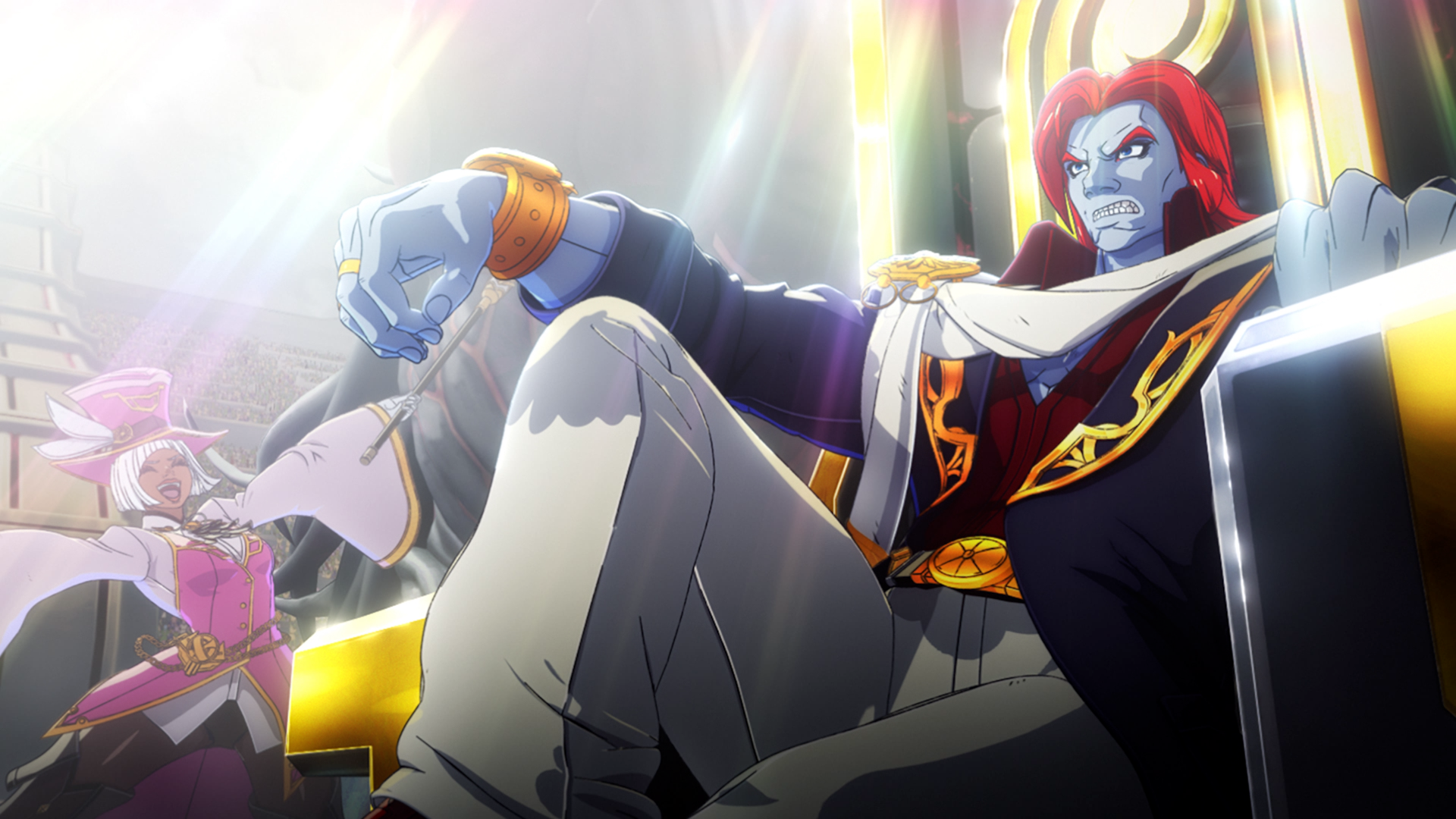
Marvel Tokon: Fighting Souls is by all counts a well made fighting game and a love letter to many of Marvel’s most iconic characters. That being said, the overwhelming offensive advantage given to aggressive players by the tag mechanics gets old really fast so I doubt casual fighting game players will enjoy this game in the long run. Furthermore PC players like myself are going to struggle with a poorly optimized port of the game until Sony finally admits defeat and patches out all that useless anti-cheat hampering the performance. If you’re a die hard fighting gamer with a PS5 it’s worth giving a shot, but for everyone else wait for a few performance patches and a sale.
Scoring: 72%
Gameplay: 3/5
Visuals: 5/5
Sound: 4/5
Story: 2/5
Replayability: 4/5
Morality/Parental Warnings
Violence: Marvel Tokon: Fighting Souls is centered around superheroes and supervillains fighting in head-to-head combat with martial arts, blades, firearms, and supernatural powers. Attacks generally do not result in blood or gore, but some characters have specific attacks that feature a flash of blood. Notably Deadpool has attacks where he stabs the opponent by stabbing through himself with his swords.
Sex: There are several male and female characters in the game who wear form-fitting or skin-revealing costumes.
Occult: Several characters have superpowers drawn from magical, mythological, or demonic origins. Magik is connected to a hell-like dimension called Limbo and even has a demonic transformation for her most powerful attacks. Similarly, Ghost Rider is possessed by a Spirit of Vengeance which gives him the ability to control hellfire. Blade is half-vampire. Loki is the god of trickery in Norse mythology and other Norse gods can be seen in the background of the Asgard stage. Dr. Doom is a master of science and sorcery so it can be hard to tell which is which in the middle of combat, but most of it is probably magic.
Ideology: In the story mode, Ghost Rider calls The Champion a fascist at one point, but the term is applied poorly as The Champion’s goals do not reflect any historical fascist political movement in any meaningful sense.