When I posted my reviews of Marvel Tokon Fighting Souls and Marvel Cosmic Invasion I thought I would be taking an extended break from reviewing anything related to Marvel superheroes, but with the release of Marvel Rivals’ 11th Season bringing Marvel’s most Catholic character into the spotlight there was no way I was going to stay quiet about it for long. I originally reviewed Marvel Rivals back in Season 1, about two years ago, and here at CGR we don’t typically cover seasonal updates unless the game has changed dramatically. Fortunately for today’s review, I’d say there’s been enough changes made to the game that we can justify a quick check up alongside an analysis of my favorite mutant.
The most significant change made to Marvel Rivals’ core gameplay since launch has been the reworked team-up system. Team-ups used to allow specific combinations of characters on the same team to gain buffs or even new brand abilities from each other, which is thematically great for a superhero game, but after a few seasons it became clear that some characters more or less required certain team-ups to be competitively viable against inherently stronger ones. Furthermore, some characters were stuck in “anchor jail” where they were only usable if they provided a good buff to a stronger character, even if they didn’t receive any equivalent perks in return. Needless to say this old team-up system was difficult to balance and often left somebody’s favorite character out in the cold while everyone else got to have fun.
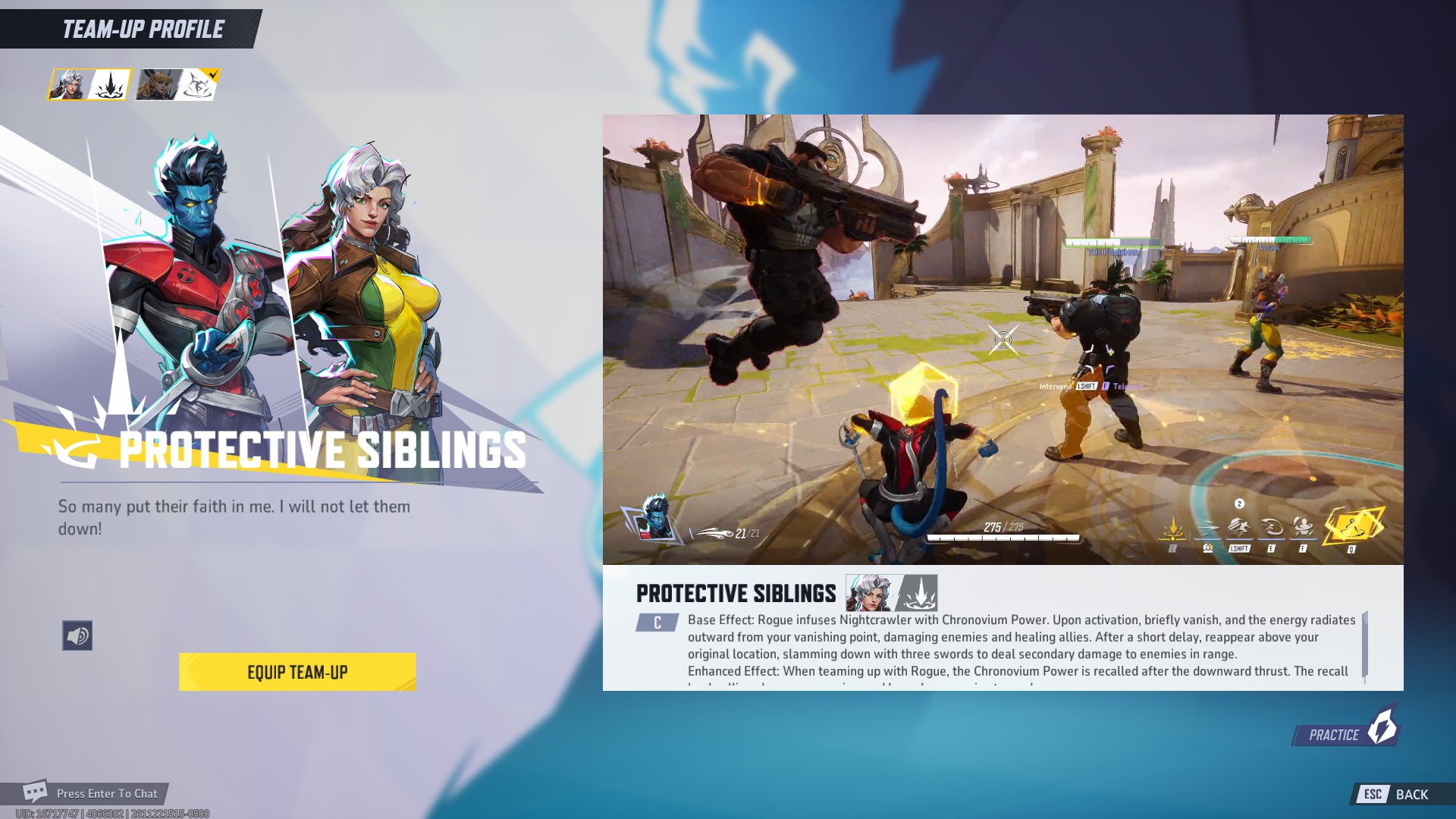
The new team-up system gives every character 2 team-up options, the primary benefit of which they will have access to regardless if the other character is present on the team. If the team-up partner is on the team, the character will receive additional enhancements. Nightcrawler, for example, has team-ups with fellow mutants Rogue and Magik. The Rogue team-up provides Nightcrawler with an extra ability that allows him to teleport up for a downward slam which heals allies, deals damage, and slows the movement of enemies caught in the impact. When Rogue is on the same team as Nightcrawler, the slam will also pull enemies towards the center of the impact zone and provide bonus healing to nearby allies. The Magik team-up on the other hand does not provide Nightcrawler with a new ability, but it does buff his regular teleport to heal his targeted ally and damage nearby enemies and when Magik is on his side he also gets a little bonus armor for himself. Either way Nightcrawler gets a useful tool regardless of Rogue’s or Magik’s presence while still giving extra boosts to teammates who intentionally synergize. We’ll probably need another season or two to truly gauge if this change was ultimately for the better, but in theory I think there’s a lot of positive potential on offer.
Outside of the team-up system overhaul, most of the game’s development comes down to the additions of new maps and playable characters. New maps will occasional introduce new gimmicks not found in older maps, such as Lower Manhattan’s periodic scan which reveals the locations and ultimate ability charges of characters caught in the path of a surveillance drone, but none of these gimmicks have ever drastically changed the outcome of my matches so I don’t actually have that much to say about them. The new playable characters on the other hand are the engine that keeps Marvel Rivals as a live service running, but in order to keep each character feeling distinct they often fall into one of 2 traps. The first trap is being so gimmick focused that the character’s utility becomes very situational and therefore less desirable than one of the more generalist characters. The second trap is when a new character is so functionally similar to an old character that the old guard is rendered irrelevant in the face of new bloods that simply do their jobs better. The latter problem in particular has gotten so bad that the game has actually started rolling out reworked versions of characters like Black Widow and Squirrel Girl to help them keep up with the fresh faces, which comes with the risk of alienating players who preferred how these characters were pre-rework.
Black Widow for example was originally Marvel Rivals’ dedicated sniper character with a powerful scoped rifle, but lacking mobility to compensate for her exceptional range. That being said, the developers clearly didn’t want to make their sniper characters powerful enough dictate the pace at which the game was played, so Black Widow’s sniper rifle was never so powerful that it could kill enemies in a single headshot, which is typically the reward of playing as a sniper in a competitive shooter. With no way to escape approaching enemies and not enough damage to effectively pick them off, Black Widow was a lame duck in the hands of most players. Eventually, she was reworked to be more effective in close range combat and her sniping was relegated to her ultimate ability, which has increased her viability against other characters. Overall most players would call Back Widow’s rework a success, but for that small niche of players who found ways to make her old toolkit work, many hours of practice and refinement went down the drain.
Now that I’ve covered how the game itself has changed, let’s finally address the conversation I’ve been teasing in almost every article I’ve written about Marvel superheroes on this site. First let me start off by saying I’ve become more of a fan of Marvel superheroes in the past year than I ever was growing up. As a teenager I read a few comics here and there, but my knowledge and relation to these characters was largely dictated by movie franchises like Sony’s Spider-Man, 20th Century Fox’s X-Men, and of course Disney’s Marvel Cinematic Universe. This year however, I decided to really dig into these characters’ history by actually going back and reading the source material using the Marvel Unlimited digital archive… at least before it went defunct in November. Needless to say I have a lot more to say than I ever did back when I first played Marvel Rivals 2 years ago.
With this newfound knowledge the 1st thing I’d like to do is acknowledge that Marvel Rivals has technically had Catholic characters from the very beginning, though the faith is not nearly as central to them as it is for later additions. For example Frank Castle, The Punisher, is an Italian-American who in his early life was a seminarian studying to become a priest before he got married and joined the Marines. Ironically, the reason Frank left seminary was because he had trouble with the idea of giving absolution to violent criminals in the sacrament of confession, which I think is an amusing way to foreshadow the merciless vigilante he would later become. Another example is Tandy Bowen, Dagger, who comes from a Catholic family and even has an uncle who is a priest, Father Michael Bowen. This relationship also gives Tandy a connection to Xuan Cao Manh, Karma, a devout French-Vietnamese mutant who Fr. Bowen took care of before she joined the New Mutants, Marvel’s 1st X-Men spin-off series. Obviously I’m getting a little bit into the weeds here, but I hope my readers have a better idea of just how deep the comic book rabbit hole goes and I highly recommend giving them a shot if these characters interest you.
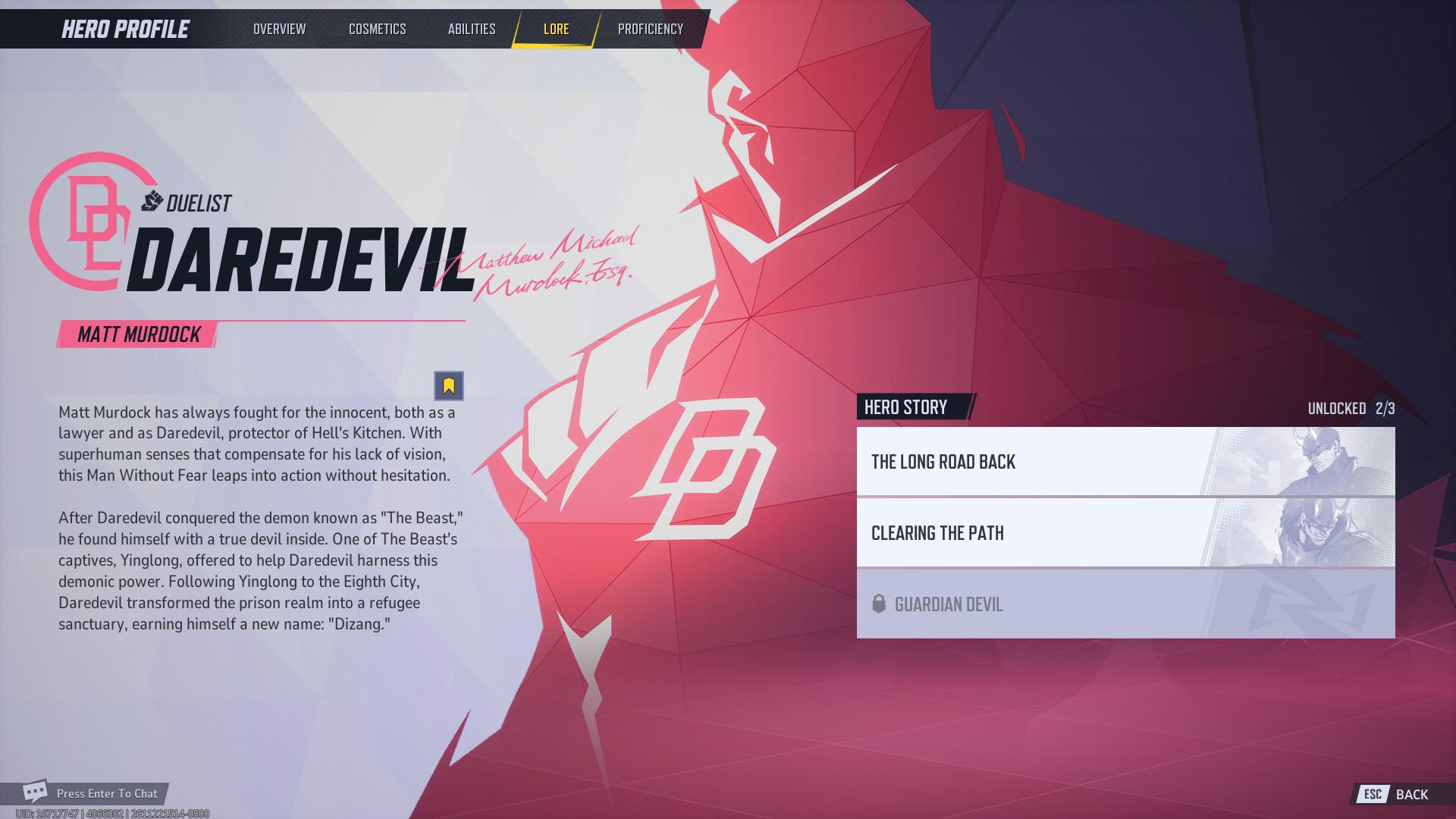
As for characters whose Catholic faith actually has historically been important to their characterization in Marvel Rivals, Season 4 introduced Matt Murdock, Daredevil. An Irish-American blinded by radioactive chemicals who pursues justice by day as a lawyer and by night as a vigilante, but rooted in the Catholic faith, which compels him not to kill his enemies so they might have the chance to redeem themselves one day. Pretty compelling stuff right? Well unfortunately, Marvel Rivals’ version of Matt is too busy being a Chinese demi-god to acknowledge any of this history. Sure the game occasionally implies he used to be the classic version Matt Murdock, but after his timeline was destroyed by a demonic invasion he wound up in the service of the dragon Yinglong. Matt’s Catholic faith was easily the biggest victim in this status quo shake up, because his commitments to justice and redemption are never put in context of his religion and replaced by his duty as “Dizang”. Needless to say I was very upset by this version of Matt Murdock and even took an extended hiatus from Marvel Rivals in my disappointment.
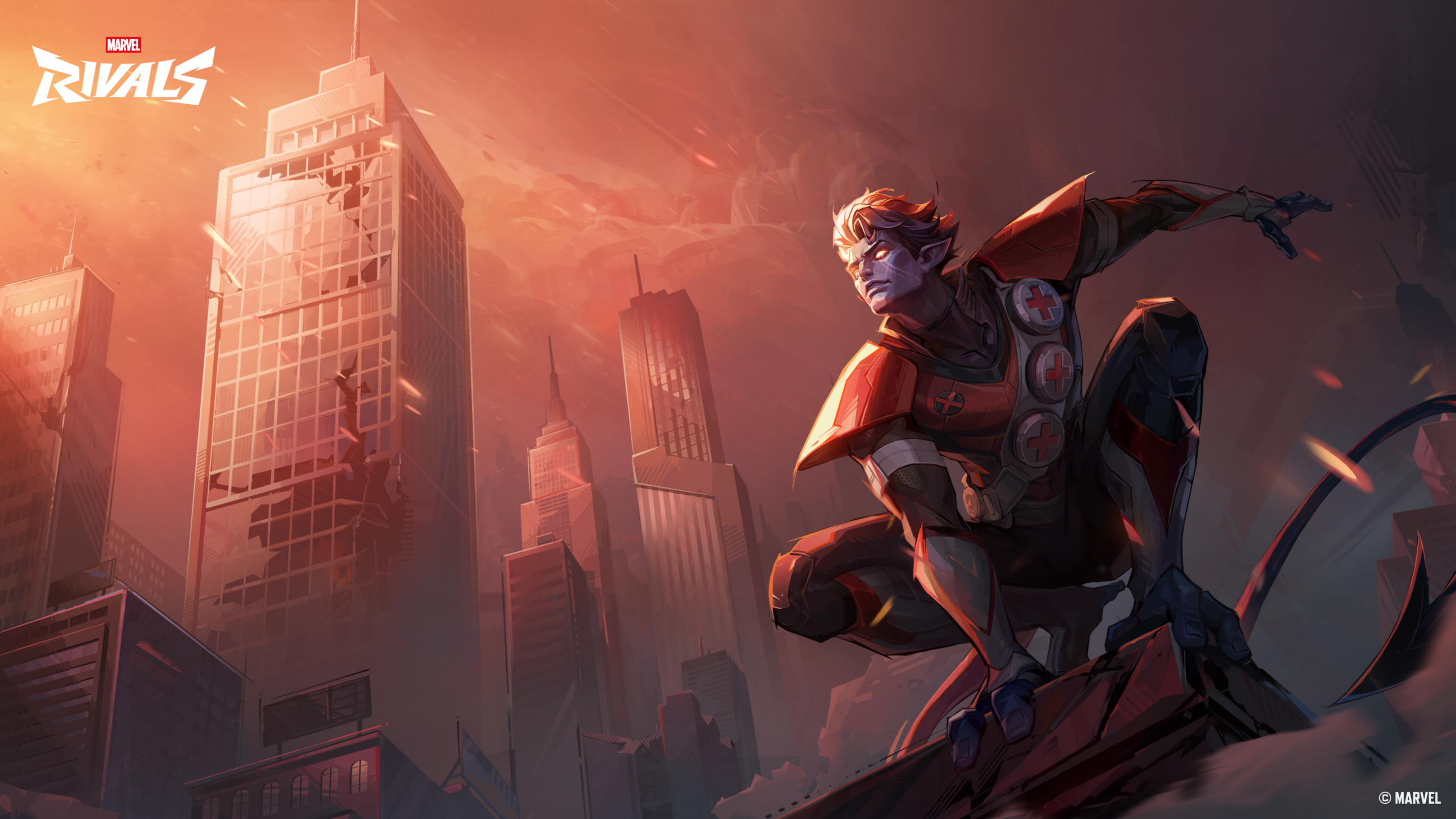
Jumping to the present day, Marvel Rivals is finally getting another shot at adapting a Catholic superhero with Kurt Wagner, Nightcrawler. Kurt is a Bavarian mutant born with fuzzy blue skin, pointed ears, prehensile tail, and the ability to teleport in a puff of smoke and brimstone, all of which has led others to brand him as a demon for most of his life. In spite of all of this, Kurt has always been a devout Catholic with a jovial spirit who brings hope and levity to others as an acrobat, X-Men, and priest. In spite of my reservations about how Kurt would be portrayed after they fumbled Matt, I’m happy to report that not only is Marvel Rivals’ Kurt faithful to his history, but in some ways it’s actually improved his characterization in comparison to many contemporary comics he’s featured in. To speak bluntly, most modern Marvel comics are not very good because the creatives working at the company are more interested in reshaping the characters to fit their own agendas rather than respecting their established history and Kurt has not been immune to this trend. Not only did they retcon his parentage from Raven Darkholme, Mystique, and Azazel to Raven and Irene Adler, Destiny, which was a thinly veiled attempt to use superpowers to justify a lesbian relationship with the capacity to bear children, but they even had Kurt give up Catholicism in order to become the founder of a mutant-centric ethno-religion.
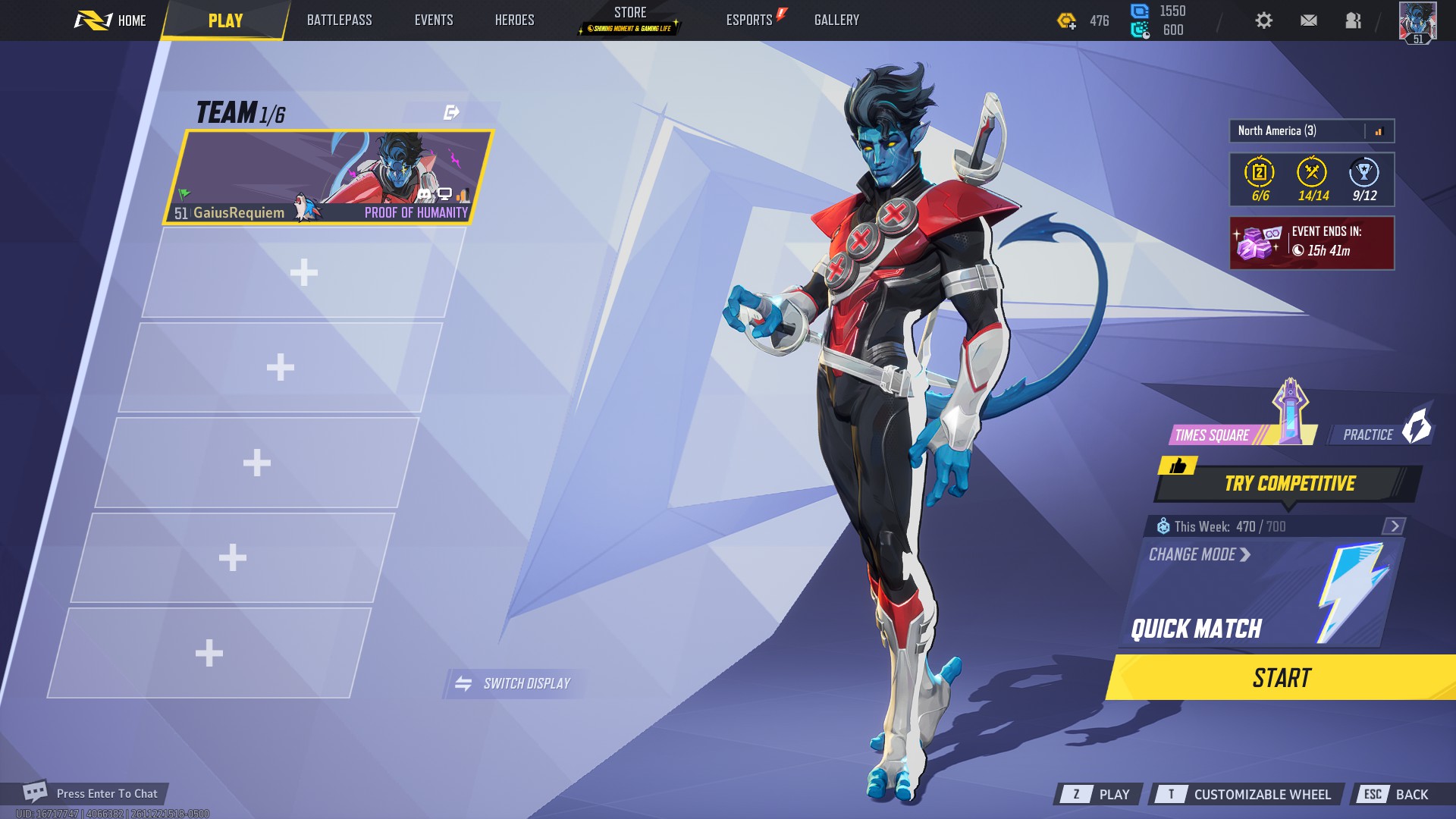
Needless to say, Marvel comics has not been in a good spot for some time, but before I discuss how Marvel Rivals changes Kurt for the better, a little context for the X-Men’s status in the game is needed as well. Around the time Marvel Rivals was in development and first released, the X-Men were going through a status quo known as the “Krakoa Era”, where all the mutants came together and built an ethno-state on the living island of Krakoa and even found the right combination superpowers to “resurrect” dead mutants back to life by artificially growing new bodies with psychically backed up consciousnesses. Consequently, Krakoa is also the status quo for the X-Men in Marvel Rivals, but a notable deviation from the comics is that Kurt chose to stay behind at the X-Mansion in New York, because Krakoa’s resurrection protocols were not compatible with Catholic theology regarding the nature of bodies and souls. So while all the other superheroes have spent the last 10 seasons traveling across the multiverse fighting supervillains, Kurt has been rescuing civilians from accidents and disasters, organizing a relief shelter within an old church, and searching for clues to the whereabouts of the missing Charles Xavier, Professor X. The only real downside to Marvel Rivals’ Kurt is that they do acknowledge the absurd changes made to his lineage, but it’s ultimately a relatively minor detail for an otherwise faithful adaptation.
So against all odds Kurt Wagner has received a satisfactory characterization in Marvel Rivals, but as happy as I am for Kurt it also begs the question as to why Matt Murdock wasn’t given the same treatment? Back in Season 4, I would have assumed it was due to censorship by the Chinese Communist Party, because the game’s developers, NetEase, are a Chinese studio, but Kurt’s portrayal arguably debunks that theory. From the perspective of Marvel Rivals’ broader storyline, one could argue that Matt isn’t supposed to be the protagonist of his own story, but rather a twist antagonist in the story of Lin Lie, formerly Sword Master and currently substituting for Danny Rand as Iron Fist. I can see reason in this argument, but if “side-character” is the best we can do then why not let a less popular or more obscure character take the role of Dizang and save a well established character Matt for his own storyline?
I admit I’ve been dancing around the most obvious steelman explanation for all of this, so let’s ask the question. What is “Dizang” and does Matt fit the role? In Buddhism, Dizang is a monk who vowed to empty hell by bringing enlightenment to those trapped there so they might escape. On paper, Dizang admittedly sounds almost Christ-like in his role, because when Jesus died on the cross for humanity’s sins he descended into hell to retrieve the souls of the righteous who died before the crucifixion and therefore unable to enter heaven right away. So Matt taking on the role of Dizang could in that sense be an emulation of Christ, but I’d also argue that Dizang’s goal of “emptying” hell runs counter to what we know hell’s post-crucifixion prisoners are like. According to Catholic theology, fallen angels and wicked souls in hell all know the choices they made that put them there were wrong, but they are also too prideful to admit they were wrong and seek reconciliation with God. So while Dizang’s goal might sound righteous, it is ultimately a foolish impossibility which a Catholic like Matt probably shouldn’t be aspiring to accomplish. No matter how you slice it, Matt Murdock just wasn’t the right character to be Dizang and probably should have been held back from Marvel Rivals until the opportunity for a proper Daredevil story presented itself.
Is Marvel Rivals Season 11 worth playing? Well if you’re looking for the chance to play as an unapologetically Catholic superhero in a video game, Nightcrawler will absolutely satisfy that very specific urge. If you previously disliked Marvel Rivals and are waiting for the core mechanics to be updated into a better game, I do think the changes to team-ups are a positive direction for the future, though I can’t say with confidence it will change the game so drastically that it will draw in a brand new audience. No matter what reason you came to this review however, I hope your main takeaway is that sometimes being a superhero isn’t about wearing a costume or fighting supervillains. You’re a superhero no matter what you look like if you’re willing to help your neighbor.
Scoring: 80%
Gameplay: 4/5
Visuals: 5/5
Sound: 4/5
Story: 3/5
Replayability: 4/5
Morality/Parental Warnings
Violence: Marvel Rivals features a large variety of superheroes and supervillains battling one another with a variety of weapons and supernatural abilities. Blood is depicted in certain story artworks, but in-game violence lacks gore.
Occult: Some characters have magic powers with some being described as demonic or mythological in origin, though no actual rituals or incantations are present in the game. Some characters like Thor, Loki, and Hela are direct adaptations of Norse mythology, though they deviate quite a bit from their source material. Angela calls herself an “angel of heven”, but she is not an angel in the Biblical/Christian sense, nor is “heven” an adaptation of the Biblical/Christian heaven.
Sex: The game offers a variety of outfits for each character to wear, which can range anywhere from fairly modest to sexually titillating. Users do not have control of which costumes other players wear, so encountering the sexualized options is pretty much inevitable.
Microtransactions: Many of the game’s cosmetics can be purchased with real money by purchasing in-game currencies.