
Twisted spectres and vicious vampires dominate a decadent land in Legacy of Kain: Soul Reaver. Its protagonist, Raziel, is a macabre figure in his own right, having been disfigured by torment and now bent on revenge. However, what really haunts Soul Reaver, particularly in its remastered form in 2026, is a line delivered by Raziel’s inscrutable patron:
“Do you suppose that time stood still for you, Raziel? Much has changed since you passed from the world of men.”
Like the crumbling world of Nosgoth, Soul Reaver possesses some beauty but mostly shows its age, and it struggles to bear the burden of its outdated design.
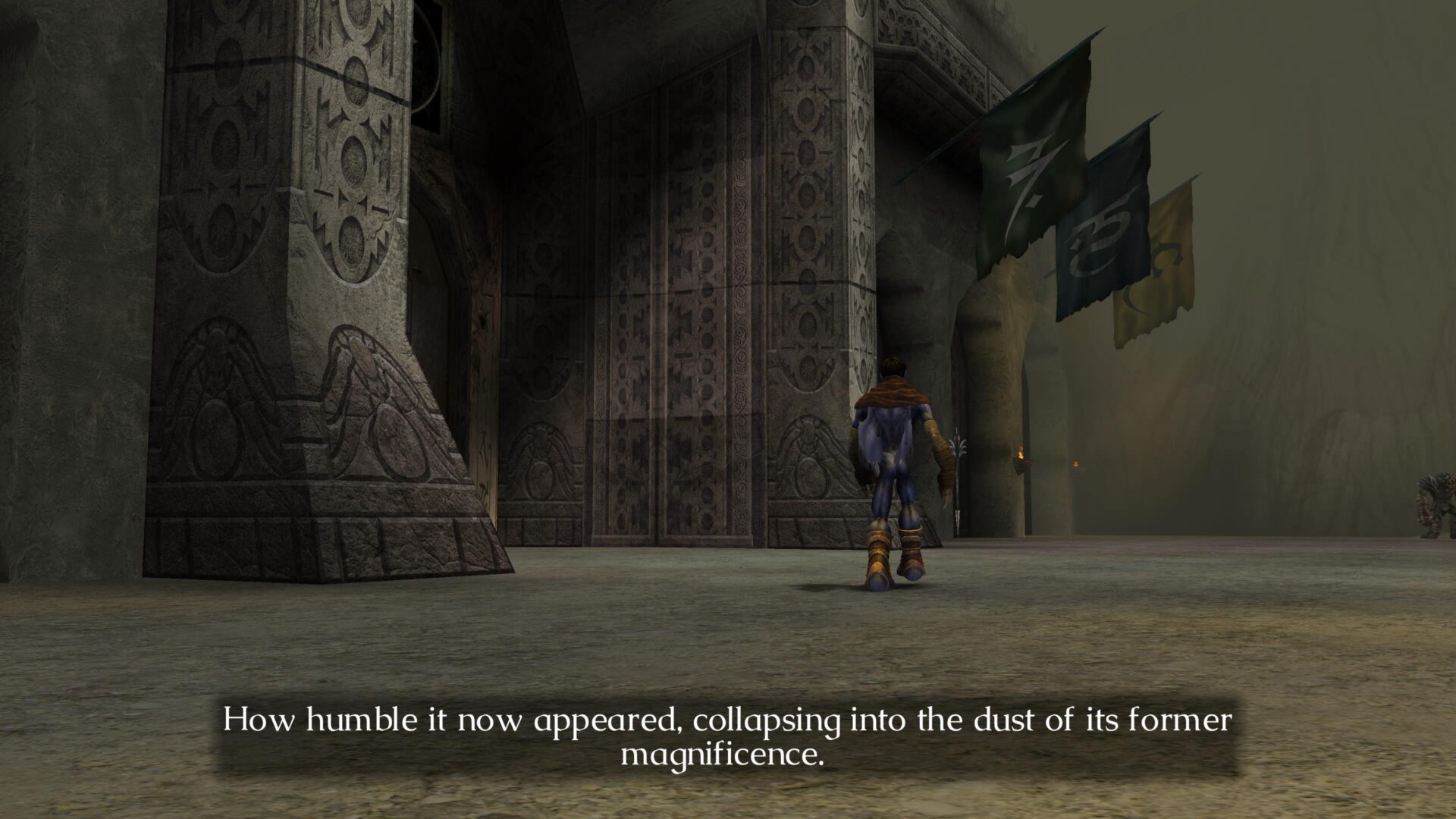
What beauty is there is owed to Nosgoth itself, especially as a narrative setting. Raziel turns out to be a good surrogate for the player, in that his torment has left him clueless with respect to the reasons for the world’s decrepitude. Slowly learning along with Raziel why the world is dying and the source of the conflict between Kain and your Lovecraftian liege is Soul Reaver’s strongest suit. The visual realization of the world, if considered in the context of what could be achieved in a 1999 PlayStation game, also seems laudable. There’s an interesting mix of ecclesiastic and middle-eastern architecture set inside a ghastly and barren world, with an attention to detail in environmental storytelling. Kain’s vampire lieutenants each have a distinct effect on or relationship with the realms they inhabit, so you’re not just visiting arbitrary video game biomes, you’re traversing lands that have been altered by the whims of specific characters.
Soul Reaver’s script and voice acting also help lend a timeless quality to the game. Unnatural, saccharine quippiness is not to be found, although I must admit there were times where I felt the writing skirted awfully close to pretension. (And I would never do that!…) Still, the dialogue always feels like it fits the world, and it’s certainly well-delivered, with Tony Jay’s voice being a standout treat as the elder god. The story is short but compelling enough, which turns out to be a curse and a blessing. On the one hand, Soul Reaver ends very abruptly on a cliffhanger that introduces entirely new plot threads. On the other, even with my patience for older games, I’d already been tired of the gameplay itself for quite some time and was happy to be finished.
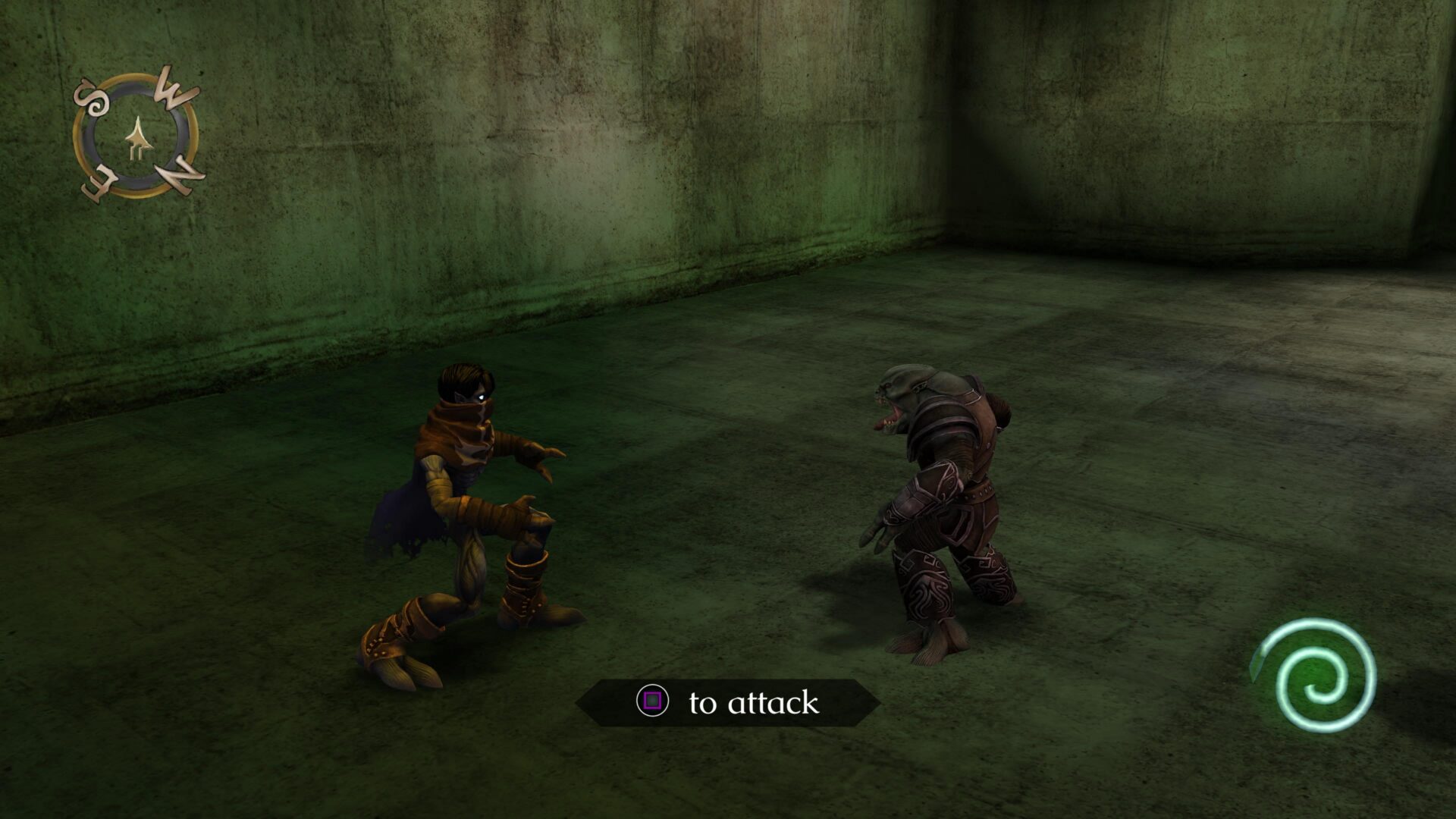
Soul Reaver is, unfortunately, plagued with some frustrating, outdated designs and is a bit of a slog. Combat is a particular pain point, in part because its rules follow vampire logic more than they follow video game logic. Enemies can only be fully defeated by exposure to sunlight, water, or a stake through the chest. Such constraints may make for compelling tension in one-on-one conflicts, but quickly become frustrating when it’s you against a group. (Even against just a single enemy, it can get tedious when, for example, you miss when tossing your foe towards a spike or shaft of sunlight, and you have to repeat the process.)
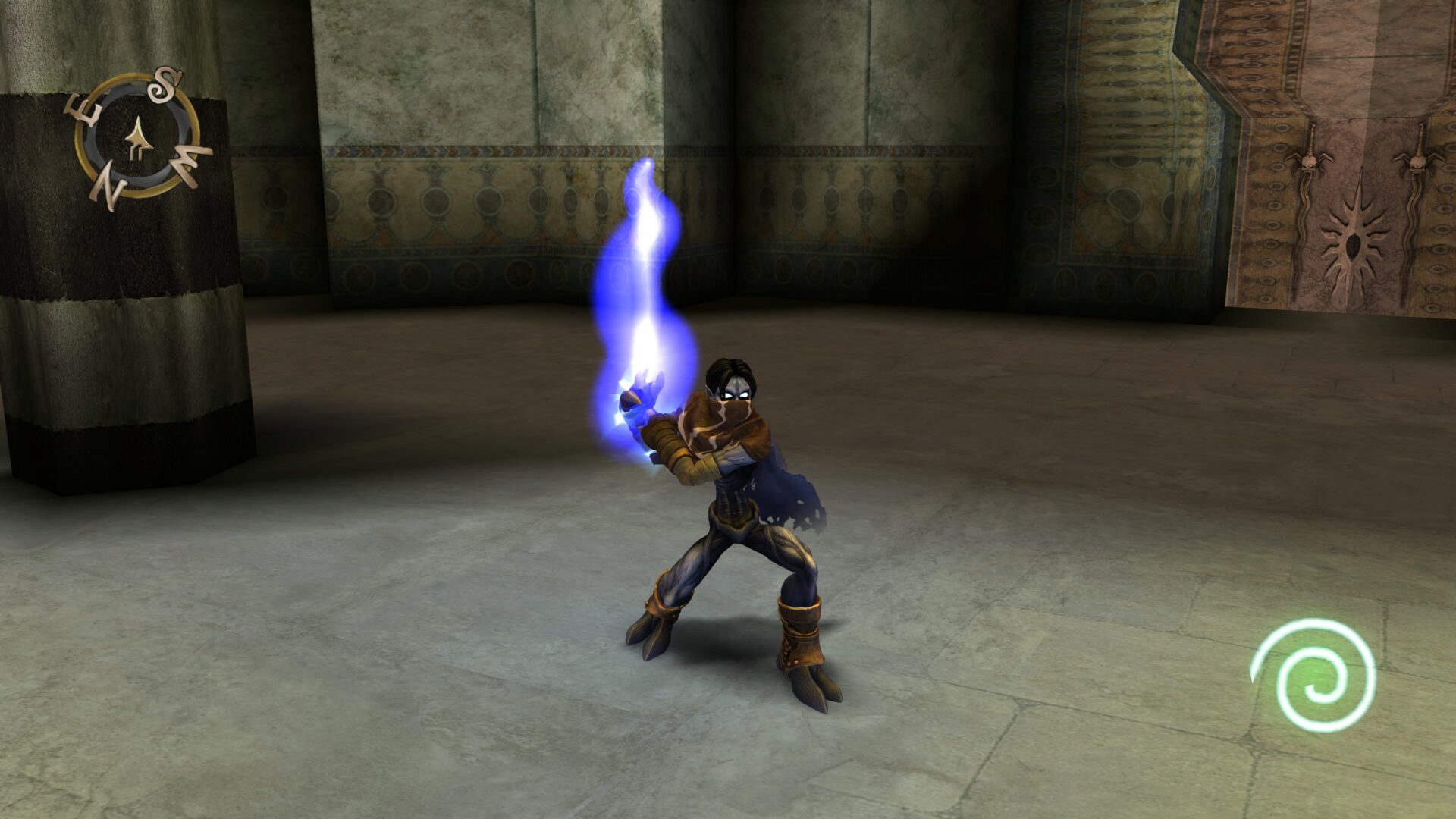
This system’s frustrations are compounded by what should be a selling point – the titular Soul Reaver, a glowing magical blade whose spectral tendrils spiral around your arm. The excitement of receiving such a weapon is quickly lost upon learning that it’s only available (in the physical realm, at least) while at full health. Once again, vampiric logic slows you down, as recovering health to recover your sword isn’t as simple as popping a potion. Instead, you must absorb life from your enemies: in this case, souls emanating from your fallen foes. You’ll have plenty of time to ponder the theological implications of that act, too, as it requires Raziel to stand still while waiting impotently for one of the souls to find its way to your gaping maw. (Imagine Kirby trying to inhale a rogue tennis ball while cast as Jacob Marley in a production of A Christmas Carol, and you’re pretty much there.) Maybe I am misremembering or just inept, but I don’t recall my foes waiting for me while so engaged. Instead, I’d try to wait for an opportunity, but by then the soul had wandered off-screen and it was too late.
Now, combat’s not necessarily the focus of Soul Reaver, there’s puzzles as well, which often involve navigating the superimposed landscapes of the physical and spectral realms. Many times this devolves into excessive block-pushing, but there are bright spots in terms of the boss encounters. In those cases, Soul Reaver often mercifully leans away from direct combat and requires you to observe your surroundings and find a clever means of defeating your opponent.
To avoid beating an [un]dead horse, I have a hard time recommending this one. Its striking visual design and concepts help explain why it became a PS1-era icon, but at this point you’re going to need to muster supernatural nostalgia to enjoy it.
Spiritual Value
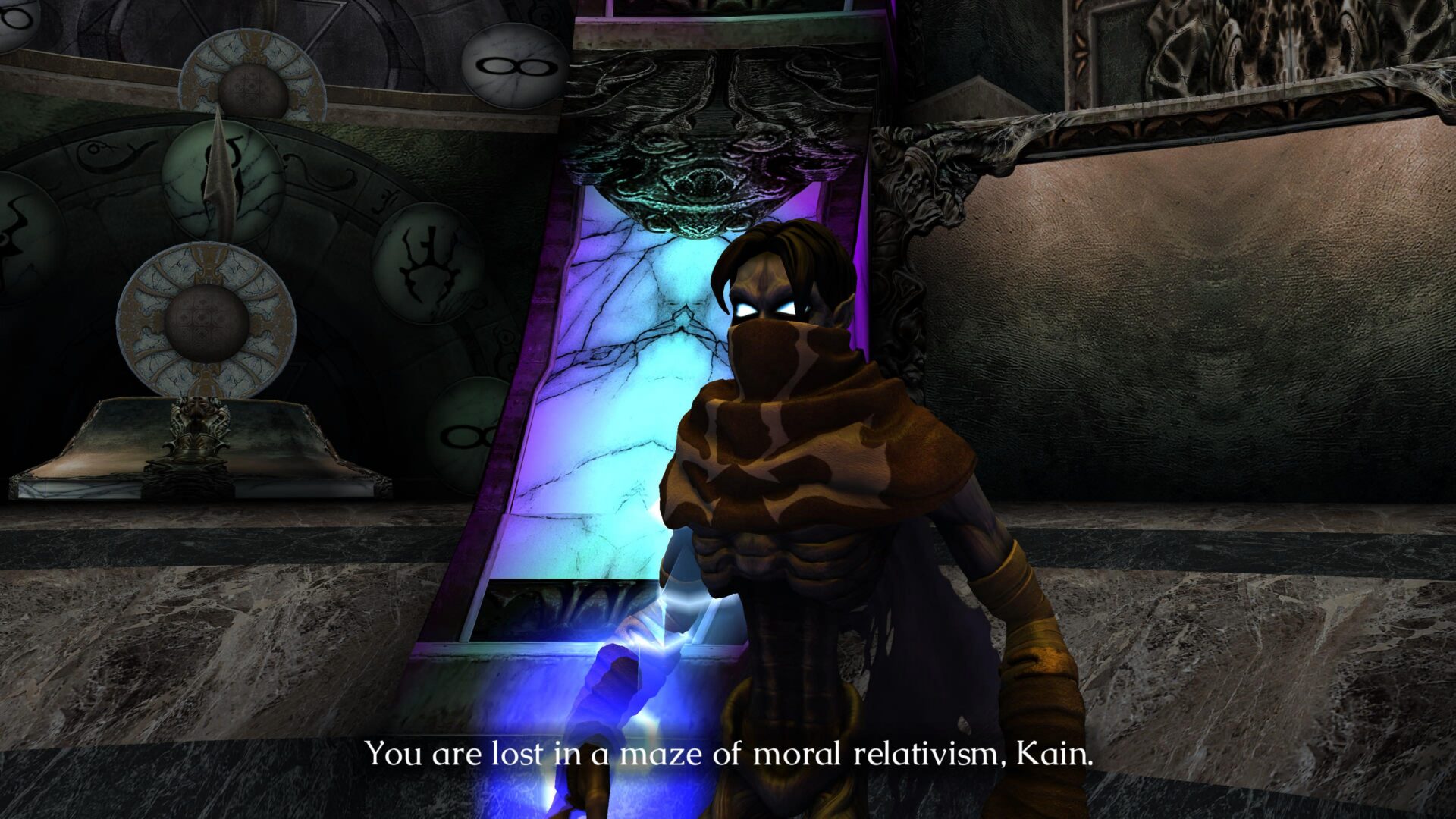
Soul Reaver’s unresolved story makes it difficult to be confident about a discussion of the value in its deeper themes. However, there’s at least something that rings true about the decrepit state of Nosgoth and Kain’s role in it. According to the elder god and Kain’s own admission, it’s not an exogenous force but rather Kain’s pride and selfishness that have slowly drained the life from the world. His consumption and abuse of the souls of both friend and foe alike have upset the natural order, leading to its slow descent into oblivion.
In this, we might see a macabre portrayal of the damage we can cause in our own lives if we turn inward, neglecting the responsibilities we have towards others and seek our own comfort, pleasure, or advancement above all else. A life so-lived is necessarily a rejection of the love we are called to have for others, and is also a rejection of the love God has for us. It is bereft of gratitude for His gifts and inexhaustibility, and consigns us to a life of perpetual diminishment as we focus on securing perishable penultimate goods. It’s an upsetting of our own natural order.
Nosgoth then might be a unique visual warning, and Kain’s rationalizations are rightly criticized. Indeed, I cheered when Raziel took Kain to task for his moral relativism. However, I couldn’t shake the feeling that Soul Reaver 2 was going to reveal how Kain actually had a point and/or how the vampire hunter priests were just as bad as the vampires, etc. etc. I hope I’m wrong, but unfortunately I’m not invested enough to continue.
Scoring: 70%
Gameplay: 3/5. Combat is simplistic and frustratingly burdensome, and non-boss-related puzzles are often tedious. Boss encounters are creative and memorable.
Visuals: 4/5. Soul Reaver excels in establishing a visually interesting world and a unique setting, particularly given the hardware limitations of its era.
Audio/Music: 3.5/5. While the score is serviceable, the voice acting is a highlight.
Morality/Parental Warnings
Violent Imagery: It’s PS1-era polygonal violence, but there’s fly-ridden corpses, gruesome vampires, and creatures in various states of undeath.
Odd conceptions of souls: It’s hard to tell what’s really going on with the souls in this game. I think there’s a sense in which you’re liberating souls trapped by the vampires, even though it looks like you’re eating them (and the fact that it replenishes your health lends credence to this notion), but I don’t really know what the elder god does with ‘em after that. Obviously, you wouldn’t want to treat this as any sort of authoritative theological source, but rather just take the worldbuilding on its own merits.