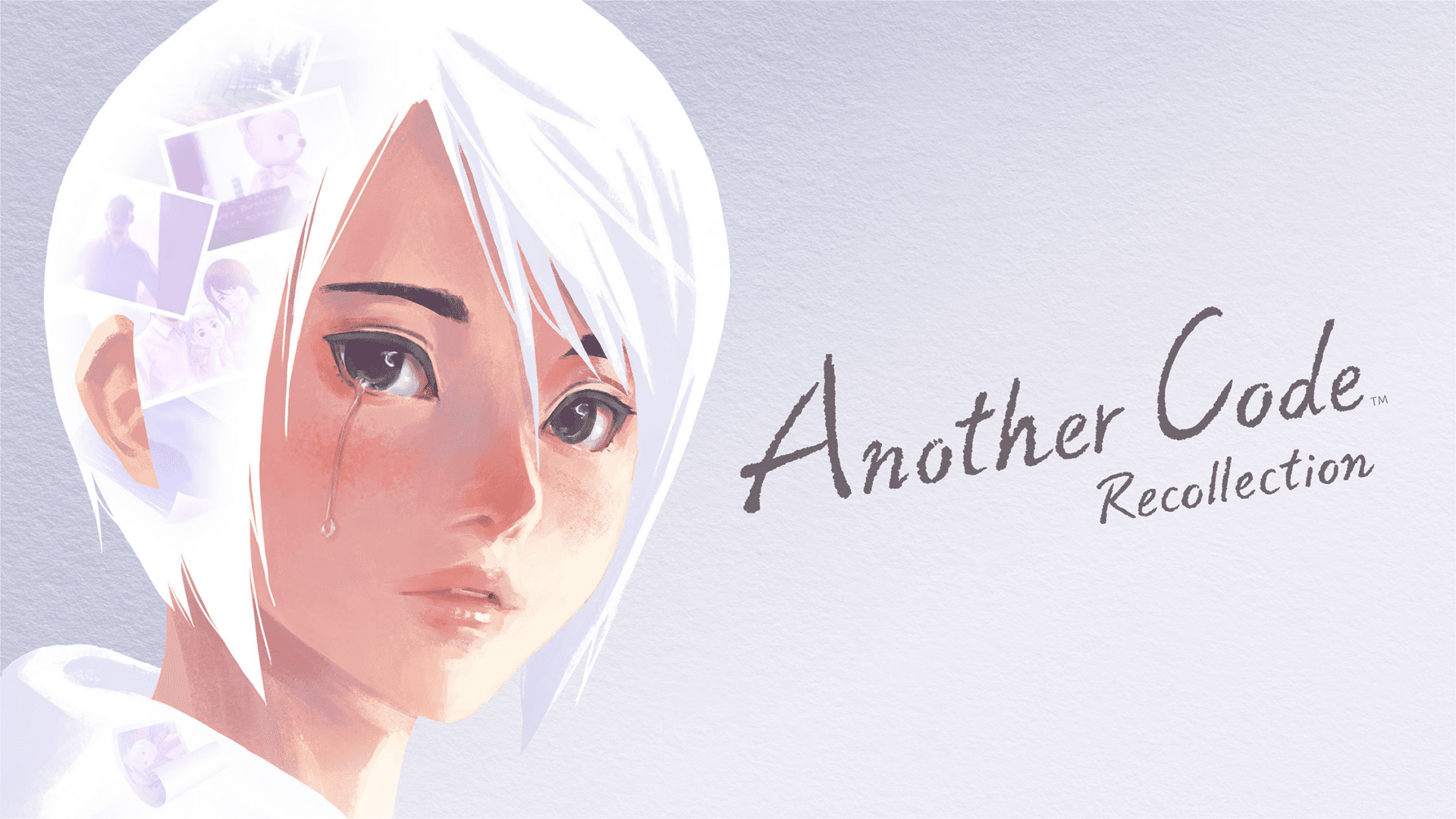
As one of the longest running publishers in the realm of video games, Nintendo has quite the backlog of dormant titles underneath their usual heavy hitters like Super Mario and Legend of Zelda just waiting to be revived. One such b-lister was brought back in the twilight years of the Switch 1’s tenure, a duology of puzzle adventure games known as Another Code. Another Code: Two Memories, which was rebranded Trace Memories in North America, was originally developed by the now defunct Cing Inc for the DS and its sequel Another Code: R – A Journey Into Lost Memories was developed by the same for the Wii, though the sequel was not released in North America under any name. These games were originally created to showcase the potential of the DS’s touch screen, and later the Wii’s motion controls, wrapped up in Nintendo’s most groundbreaking innovation of all: an actual story. I never played the original Another Code games so I can’t speak on their quality or how popular they were, but clearly someone at Nintendo liked them enough to green light a revival for the Switch so take that as you will.
Another Code: Recollection is a full blown remake of the Another Code duology developed by Arc System Works of all studios, though the original director and character designer Taisuke Kanasaki would return to spearhead the project. The core gameplay has been completely reworked from the ground up and the events of both games are combined into one long story. When discussing the gameplay I will more or less treat both games as one package, but for the story I will split my analysis into 2 parts for each of the original games. Finally, for any long time Another Code fans out there reading this, please note that I will be judging Recollection on its own terms so don’t go into this article expecting points of comparison with the prior iterations. Enough with the preamble and disclaimers, let’s set sail and begin our adventure into Another Code: Recollection.
Another Code: Two Memories follows the story of Ashley Mizuki Robins, a teenage girl raised by her aunt Jessica after her neuroscientist parents died when she was young. Everything changes however, when Ashley receives a package from her father, who is still alive, containing a special device he created known as the DAS and a letter inviting Ashley to meet him on Blood Edward Island. Upon arriving on the island however, Ashley’s indecisiveness gets her separated from Jessica so she must brave the derelict Edward family mansion in order to find her aunt and uncover the mystery of her father’s disappearance. Early on in her adventure Ashley also befriends the ghost of a young boy called “D” who struggles to remember his past life and seeks to learn how he died. The girl and the ghost work together to explore the mansion and uncover their mysterious pasts in character arcs that parallel one another, hence the game’s subtitle: “Two Memories”.
I have mixed feelings about the story of Two Memories. On the positive side I enjoyed Ashley and “D” as the main characters quite a bit and uncovering the fate of the Edward family through D’s memories was a compelling tragedy in spite of its simplicity. Unfortunately the mystery surrounding Ashley’s parents is pretty predictable, which ruins half the fun of being a mystery in the first place. I also took issue with aunt Jessica, whose willingness to lie to Ashley about her father’s death for over a decade without questioning why he wanted such an extreme degree of secrecy seems incredibly contrived and fundamentally weakens the story’s foundation. I still enjoyed my time playing through Two Memories, but objectively speaking there’s definitely some issues with the plot that can’t be handwaved so easily.
Another Code: R – A Journey Into Lost Memories takes place 2 years after the events of the first game and once again follows Ashley as she begrudgingly goes on a camping trip to the scenic Lake Juliet. Upon reaching the gates of the campsite however, Ashley is hit with a major case of déjà vu as memories of visiting Lake Juliet as a little girl with her deceased mother begin coming back to her. That’s all I can say about the plot of Another Code: R before I start spoiling major events from Two Memories, but I won’t shy away from critiquing the story because hoo boy do I have some opinions on this one.
The most fundamental issue with Another Code: R as a story is that it’s a story that didn’t need to be told. Two Memories was a self-contained story with a satisfying ending and while it’s not impossible to make a follow up to that kind of story it needs to build on or improve what came before, but Another Code: R is inferior to Two Memories by every metric I could think of. Two Memories wastes no time making the player invested in Ashley’s journey by presenting an intriguing setting, personal stakes, and a sense of urgency. Another Code: R by comparison has a much more mundane setting and slow burn narrative that takes a few hours to start getting interesting.
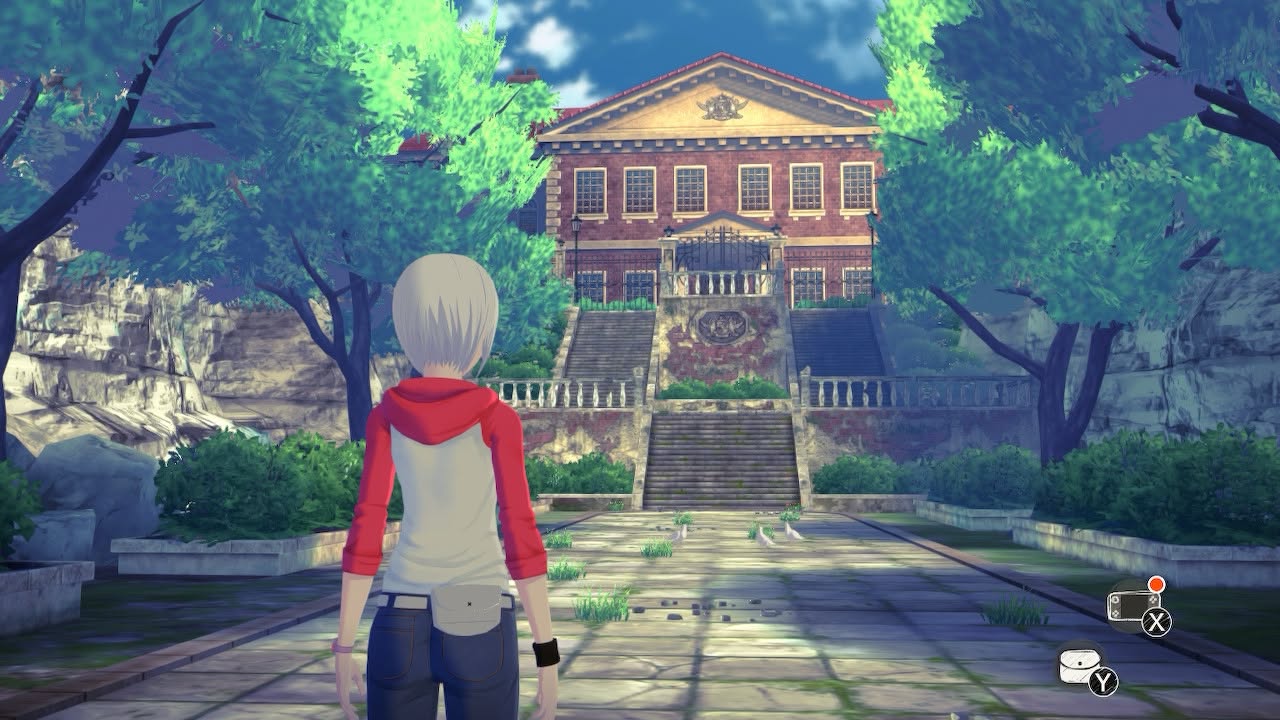
You can’t fool me game! There’s DEFINITELY an undead abomination inside there.
Two Memories has a small cast of characters and only one major subplot, but each character has an important part to play and the subplot enhances the main story even though they don’t fully merge until the very end. On the other hand Another Code: R has a huge cast of characters who are struggling for room to breathe in the narrative, which isn’t helped by the three to four subplots that occasionally overlap, but never truly come together. Frankly the best thing I have to say about Another Code: R’s story is that it improved my opinion of Two Memories with the benefit of hindsight. Another Code: R isn’t an awful narrative experience by any means, but Two Memories accomplishes a lot more with a lot less so it’s hard not to feel disappointed.
Another Code: Recollection’s presentation fares a bit better than the story in terms of consistency. The artstyle is very reminiscent of a Japanese comic book with a heavy emphasis on the use of color to set the tone for any given scene. Dark, muted tones for dusty storage rooms hiding secret treasures and hushed conversations, brightly colored living spaces that invite the player to relax for a bit, and sterile science labs marking the advent of some serious revelations. That being said, Another Code: Recollection is still a modestly budgeted project under a workhorse studio so the graphics aren’t exactly stellar. Muddy environmental textures and stiff character animations are present throughout so don’t go into this one expecting a feast for the eyes.
In the sound department, the music was absolutely the highlight of the game. The game is dominated by piano melodies that create a calming yet mysterious atmosphere which is very fun to listen to as you explore. I often joked with my brother about little similarities between the premises of Another Code and most survival-horror games, but in truth the music was a constant reminder that this is a relaxing game that won’t end with Ashely fighting a big monster. The voice acting on the other hand was nothing to write home about. To be fair the voice direction clearly wants to take the story seriously so thankfully none of the voices are obnoxiously over the top, but some characters come off as emotionally flat so as much as I would like to give high praise I can’t really justify it.
The gameplay in Recollection is all about exploring your environment to find keys and solve puzzles to access new locations and advance the story. Exploration takes place from a 3rd person perspective, one of the biggest departures from the previous titles which had fixed perspectives. At first the controls felt a little awkward as walking around and panning the camera are both very slow by default, but considering a big part of the game is observing Ashley’s surroundings for clues I grew to appreciate them over time. Unfortunately the game’s puzzles were very simple and obviously telegraphed as if the developers were afraid of road blocking players with an actual brain teaser, which probably isn’t helped by the fact that without the hardware gimmicks of the DS and Wii their options are naturally more limited by the constraints of a standard controller. This is also an area in which Two Memories once again proves its superiority over Another Code: R as the eccentric mansion puzzles are way more interesting than the sequel’s generic hacking mini game that constitutes most of its puzzles.
From the Catholic perspective, Another Code: Recollection presents an admirable core message that makes spiritual analysis very straight forward. The moral of the story is best summarized by a line from “D” in which he says: “Even though facing the truth can be hard, in the end, it’s always for the best.” Contrary to what obnoxious internet trolls will tell you, God is not a magic genie who can wish away all your problems, Jesus teaches us that the only way to truly follow him is to carry your cross and suffer its burden gladly. Recognition of difficult truths isn’t exclusive to “D” either as many of the major characters have to grapple with this reality at some point or another, but as much as I would like to dig into specific examples I probably shouldn’t for the sake of not spoiling the story.
What I will not shy away from however, is another chance to riff on Another Code: R’s story one last time. The major thematic contribution of the sequel is the idea that memory is the foundation of a person’s identity, which is a very popular sentiment from materialistic perspectives. This is obviously not compatible with Catholic theology, which reveals the human person is fundamentally the hylomorphic union of the physical body and the rational soul. But we don’t even need to have a philosophical discussion to debunk Another Code: R because the sheer fact that Ashley spent the entirety of Two Memories accompanied by a ghost is pretty definitive evidence that the world the story takes place in has a supernatural layer that is incompatible with a purely materialistic view of reality.
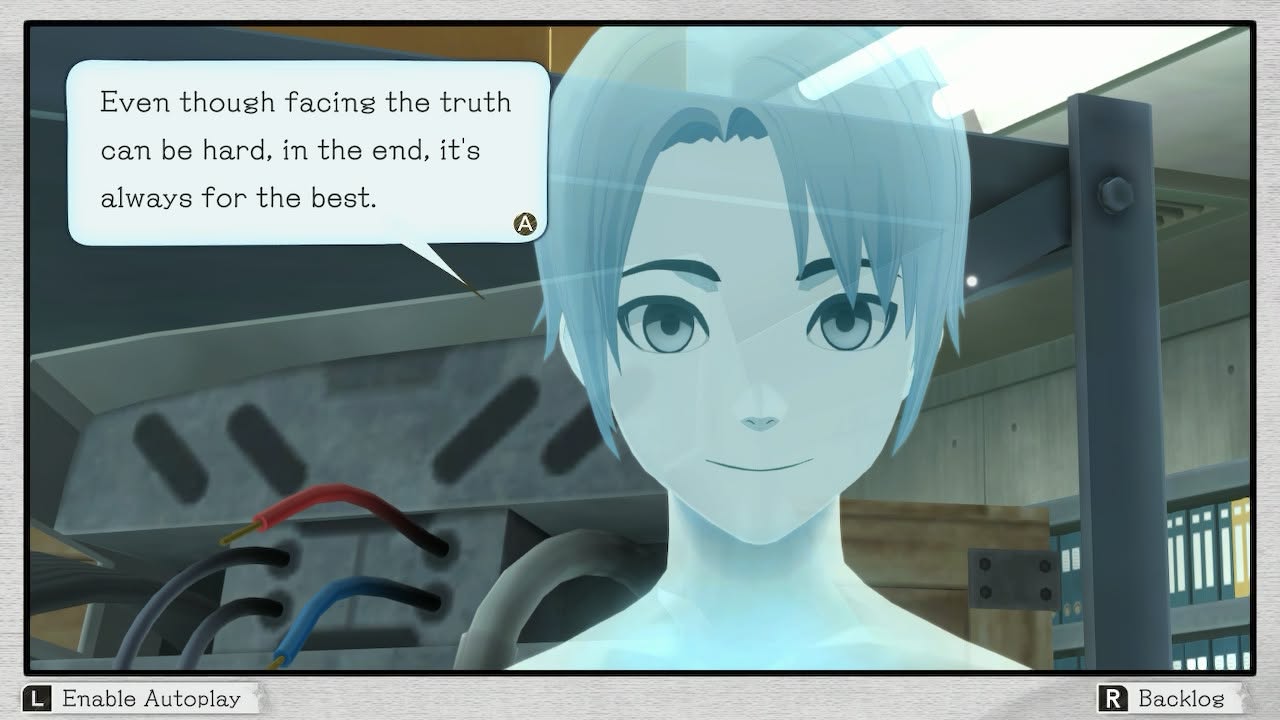
He’s oddly friendly for an undead abomination.
Taking everything into consideration, trying to recommend Another Code: Recollection is a near impossible task. The game’s primary interest is telling an interesting story, but the story on offer is wildly inconsistent in its quality. The gameplay is painfully easy and the only people who could possibly be challenged by it are probably too young to be engaging with a story featuring murder, depression, and PTSD. Honestly I think people like me, who have exhausting day jobs, are the people best suited to enjoy Another Code: Recollection, because for all its faults it’s a very relaxing game to play if nothing else. That being said, the game is certainly not worth the full $60 price tag so prospective players should probably wait for the admittedly rare occasion when Nintendo puts their games on sale or find a secondhand copy if necessary. I certainly made some memories playing Another Code: Recollection, even if they weren’t always good ones.
Scoring: 70%
Gameplay: 3/5
Visuals: 4/5
Sound: 4/5
Replayability: 3/5
Another Code: Two Memories: 4/5
Another Code: R – A Journey Into Lost Memories: 3/5
Morality/Parental Warnings
Violence: Many plotlines in Another Code: Recollection involve some kind of murder mystery, but the killings are never shown directly. Traces of blood can be found at a few of the murder locations, but otherwise gore is largely absent. Some characters die after falling from high places, but the moment of death is never shown. Some scenes involve the antagonists threatening the other characters with weapons.
Substances: Bottles of alcohol can be found throughout the game, but no drinking is depicted. Used cigarettes can be found in certain locations, implying frequent use by a particular character, but smoking is not explicitly depicted.
Mental Health: Many characters described in the game’s backstory go through traumatic events and as a result some suffer from depression or PTSD.
Occult: One of the game’s main characters is the ghost of a young boy, but the nature of the supernatural or the afterlife in this story is never explained.
Philosophy: Later portions of the game present a very materialist argument for memory as the primary basis of human identity.