When I was five, I flipped off my mom. You see, I had seen my neighbors and my brothers give the one-fingered salute, but every time I asked them what it meant, they said ‘it’s something only grown-ups can say.’ Well to my mind, only grown-ups said “I love you”, so I cheerfully went up to my mom the next day and gave her the bird. The reaction was…about what you’d expect. (“MATTHEW KEVIN, YOU GET OVER HERE!”) But when I explained myself, my mom burst out laughing.
I’ve told that story (and heard that story) a thousand times. So why do I tell it so much? Why do we tell the same stories over and over again? What’s to be gained in retelling a tale? Let’s go ask Star Fox.
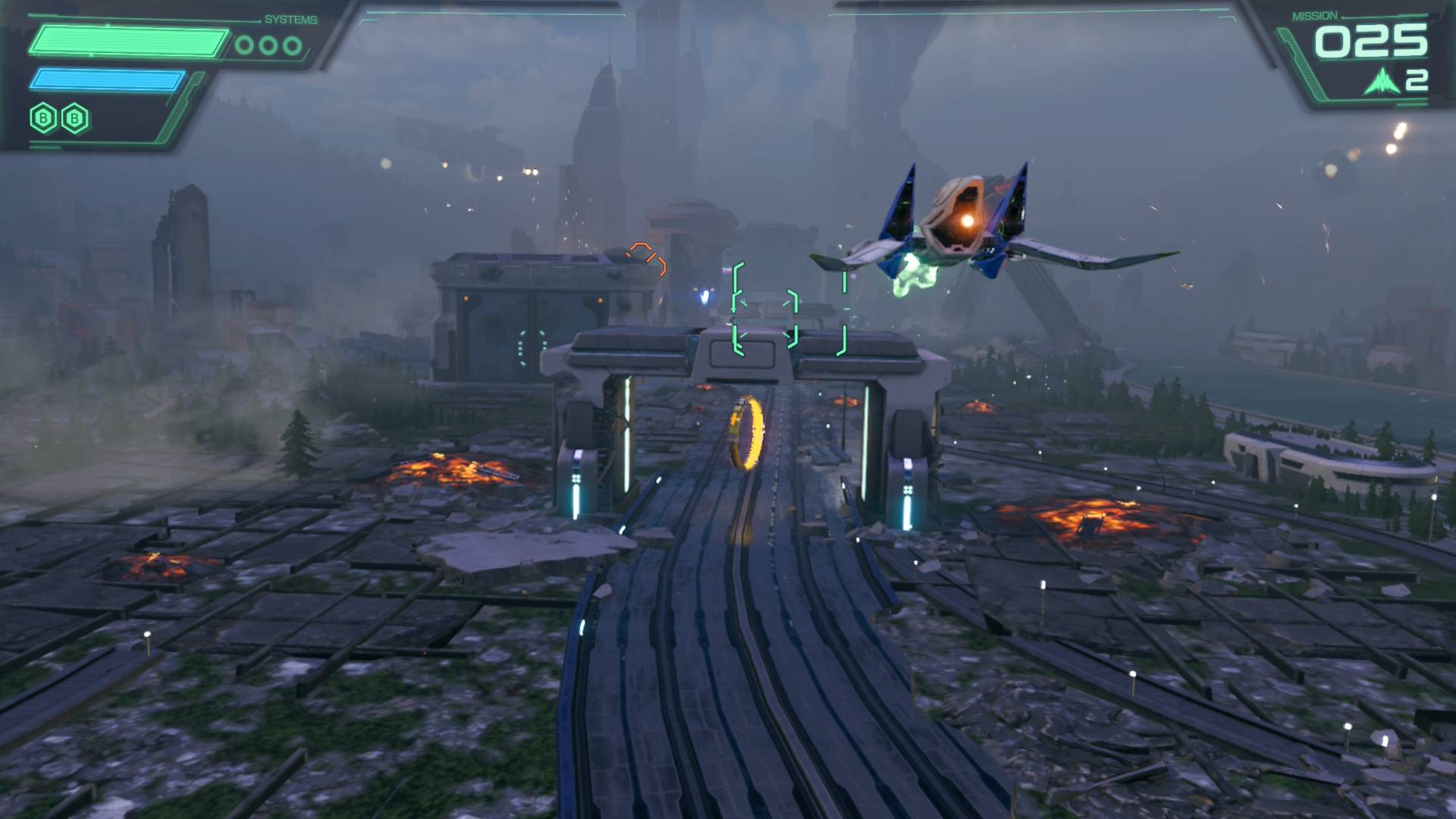
The latest game in the series, Star Fox is a remake of Star Fox 64, which itself is a retelling of Star Fox for SNES. Counting the 3DS remake, and Star Fox Zero, this story has been told quite a few times for a video game. But with each iteration there have been technological advancements which have improved the gameplay in different ways. This iteration of Star Fox smooths out the game feel of 64, while also being a feast for the eyes. It all controls very smoothly, including the mouse mode which you can switch to on the fly. The character design takes a bit to adjust to, but it does work well enough. They fit in their environments better than if they were to have a cartoony style like many would have expected.
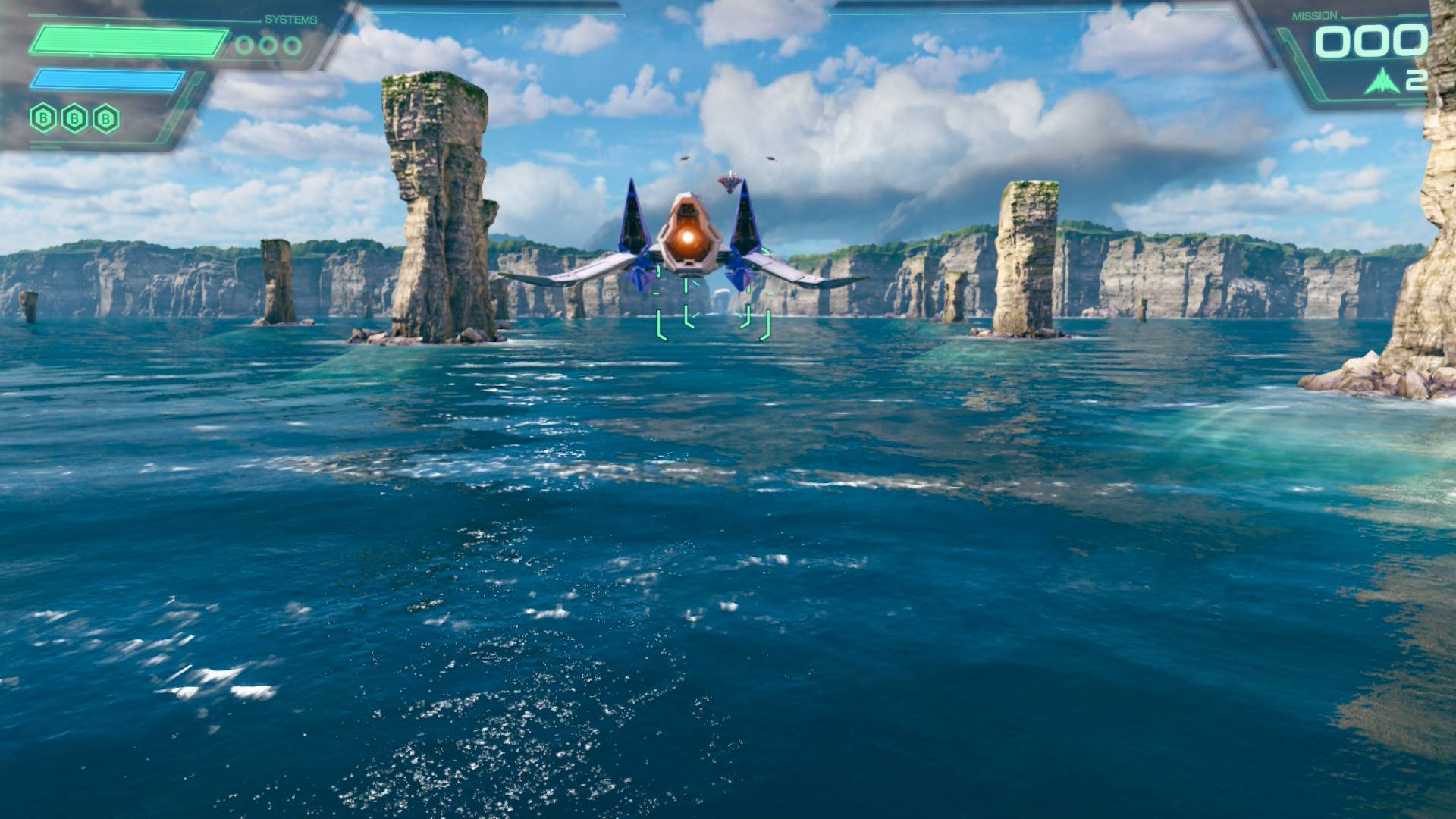
Graphically this is the best Star Fox has ever looked. Design will always beat computer power for me, but it’s nice that with the Switch 2, Nintendo is on par enough with the other systems that we can enjoy some more polygons and better lighting. Each level is awash with color. It really is a treat just watching each level unfold. However, one big issue with the graphical update is readability. During boss fights there is no visual feedback for when your hits are doing damage (unless Slippy gets a scan in, but that’s not every boss fight.) So if you never played the original or just forget how this boss worked, you’ll struggle more than before to know where to target. Peppy will sometimes offer a tip, but he can only verbally describe it, so if you don’t know what this boss’ exhaust port looks like you’re out of luck. This is a problem with a lot of modern games – designers don’t want games to feel gamey, so they offload visual feedback and change it into advice given from non-player assistants. Or in the worst case, the player character talking to themselves. (Focus, M.) Still, while it’s a shame to see here, for others this will be a pro, as they already know each boss and just want a pretty Star Fox.
The music is fantastic. It’s one of the best scores of the N64 era, and it gets a near-perfect update to orchestral instruments. It is somewhat lacking in electronic voices though. The midis of the N64 era were meant to equate to some orchestral instruments for sure, but it feels like any electronic sounding ones just got lumped in with the orchestral, which loses out on some of the sci-fi sound. It still is an epic score for a space-faring adventure, but a digital touch would have helped establish a sense of place better.
The audio and HD rumble offer incredibly satisfying feedback. When you get hyper lasers, you feel how powerful you are. The sound design is strong overall, however I do have one nitpick – the short range comms, where much of the game’s dialogue takes place. In the N64 version, everyone’s audio is compressed due to technological limitations, but it works well for the game. It makes it sound like the Arwings communicate to each other through AM Radio. We get a little bit of this in the remake when General Pepper contacts Star Fox, but nowhere else. While crisp audio is usually nice, it does remove me from the sci-fi setting a bit. I prefer a dirty, lived-in sci-fi like Star Wars to a pristine science fiction world. That ruggedness lends the world more credibility, and would have been nice to see retained.
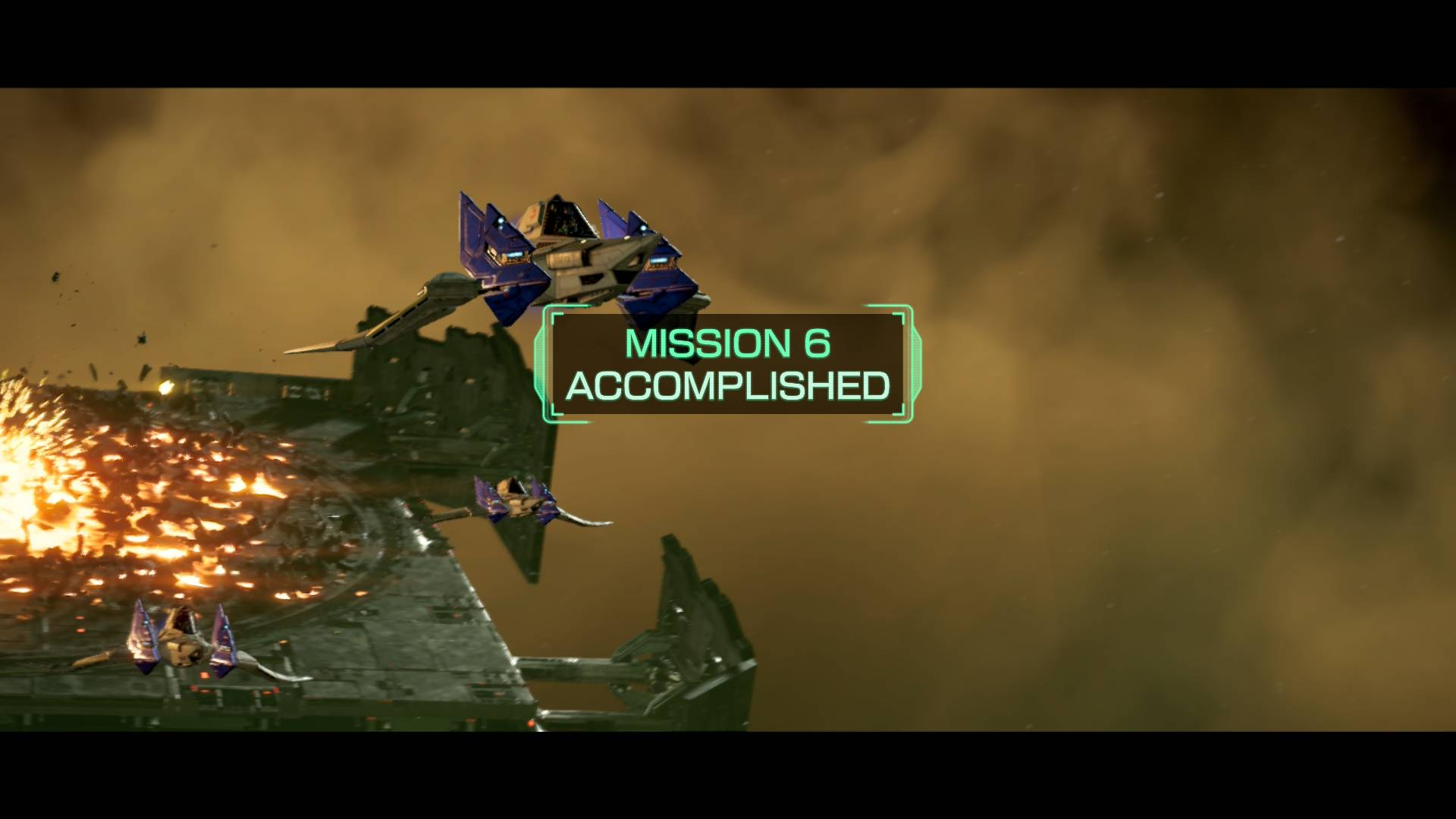
It’s not all retreads of old material here though. Some new modes were introduced in this Star Fox. There is a holoviewer where you can unlock holograms and learn about the lore of the universe, which is surprisingly fleshed out. (In fact they do an incredible job building out the universe here.) Challenge mode is where you replay unlocked maps with specific goals in mind. It works well as a training mode for specific maps, as you don’t have to do all the planets leading up to it, and the goals dovetail neatly with teaching you how best to do the level.
Finally, there’s the multiplayer. While there are only 3 maps and modes, that doesn’t matter: it is multiplayer distilled to its strongest potency. It is tense, well-balanced fun that brings back the best of older multiplayer games: multiple power-ups, post-game nickname accolades, and simple but extremely replayable match types. It’s best enjoyed in Game Chat, which, while simple, might be my favorite feature of a Nintendo console in a long time. There when you’re hanging out, you can try on different AR filters for your switch camera, and forget that there’s technically no local multiplayer. [You can gameshare with anyone who has a Switch 2 if you want to play in person, but it’s a shame so few games have multiplayer that all works on the same system nowadays.] It still packs a punch when you lobby up with randoms, but just like the original, it’s best with friends.
Though each Star Fox has brought something new to the table, some have done more for the story than others. Lambasted as it was, Star Fox Zero actually attempted to iterate on the story and flesh out what was lacking. Star Fox for Switch 2 plays to the same exact beats as 64, but now between each level there is a cutscene depicting the aftermath of the current level and setting up the next levels in your path. Generally, It’s a laborious way to add more screentime. Some scenes flesh out characters better – in particular, the scene before you go rescue Slippy on Titania is very compelling. But for the most part there isn’t any development. Almost every character is rather static – Peppy says to trust your instincts, Slippy is a nerd, Falco is a jerk. Falco might advance the most, from blatant disrespect to begrudging acceptance. But that’s a sorry example if it’s the best we got.
The voice acting ranges from serviceable to more than competent, but it feels like Nintendo has had a voice direction problem for a while now. I understand its supposed to be more schlocky and like a B-movie; in fact that’s what I love about Star Fox 64. It’s incredibly quotable, and the voice lines are still stuck in my head. But even trying to put nostalgia aside to hear these voice lines fresh, some of them still come out lacking, as if they don’t want to do anything memeable. Villains cry out their dying screams as if they bumped their knee. Sell me on it! This is the time to ham it up! I know this version of Star Fox walks a tricky tightrope trying to elevate the seriousness of the tone, and I respect wanting us to take the narrative seriously. But the cheesiness is part of this genre, and for the voice directors to emphasize sobriety and restraint over silliness does it a disservice.
Fox himself is a different character than the one we might know. More than confident, Fox is cocksure and mercenary. His entire motivation seems to be bilking the military for all its worth. In most conversations with General Pepper, Fox mentions how much he expects to be compensated. This is a fine starting point for our hero, but it never advances. I’m fine with a flawed hero or emphasizing the mercenary aspects of Star Fox’s career, but it’s rather one-note.
If there’s one thematic throughline in the game, it’s Peppy echoing James McCloud, saying to trust your instincts. It happens in pivotal moments in the plot and at certain key junctures. But it is advice Fox never seems to need. As a player though, it does have one intriguing moment. At the end, the final gauntlet has you following an ally’s Arwing while escaping an exploding lair. They say to trust your instincts, and fly on ahead. For quite a while, they stay within sight and its easy to pick the right forks in the road. But slowly this ally begins to outpace you, causing moments of self-doubt. Did he go left, or did he go right? If I pick this wrong, will I die? All you can do is quiet yourself, trust your instincts, and choose. It’s a moment of great ludonarrative harmony at a point in the story where it hits hardest.
The issue is, the credit for many of the pros of Star Fox is really due to Star Fox 64. Let me be clear: Star Fox 64 is on my Mount Rushmore of games. It is a tight experience, easily replayable, with near perfect design and gameplay that holds up to this day. It’s one of the earlier games we got for the N64, so it holds a lot of nostalgia for me, but even outside of nostalgia the game holds up. There’s a reason why Nintendo keeps remaking it. With such a solid base, it just needs a fresh coat of paint.
There was a lot of discussion leading up to release about Star Fox being yet another remake. I can understand there being fatigue somewhat, even if it’s been 10 years since Star Fox Zero. But as I asked earlier, why do we retell stories at all? One of the first benefits is obviously that those who have never heard it before now get to for the first time. When it comes to mass published stories like we have here, there’s also the benefit of bringing the story back into relevance. Most people won’t dig up old movies or games just because they’re among the classics. It’s easier to grab what’s within reach. So instead of bringing the horse to water, we just bring water to the horse by retelling it. So the exposure to a new audience is welcome. But for those of us who know the stories and have heard them a million times, what’s the benefit?
If you’ve read me before, you know that whenever I talk narrative, there is a 60% chance I’ll bring up Tolkien’s lecture On Fairy Stories. At this point its my goal to quote all of it over the course of 50 articles. But would it surprise you to know he once again has something to say?
[Some people] are inclined to say that any two stories that are built round the same folk-lore motive, or are made up of a generally similar combination of such motives, are “the same stories.” We read that Beowulf “is only a version of Dat Erdmänneken”; that “The Black Bull of Norroway is Beauty and the Beast,” or “is the same story as Eros and Psyche”…Statements of that kind may express (in undue abbreviation) some element of truth; but they are not true in a fairy-story sense, they are not true in art or literature. It is precisely the colouring, the atmosphere, the unclassifiable individual details of a story, and above all the general purport that informs with life the undissected bones of the plot, that really count. Shakespeare’s King Lear is not the same as Layamon’s story in his Brut. Or to take the extreme case of Red Riding Hood: it is of merely secondary interest that the retold versions of this story, in which the little girl is saved by wood-cutters, is directly derived from Perrault’s story in which she was eaten by the wolf. The really important thing is that the later version has a happy ending (more or less, and if we do not mourn the grandmother overmuch), and that Perrault’s version had not.
-On Fairy Stories
Tolkien’s statements are ostensibly about different tales that resemble each other; however, it can still be applicable to the ‘same’ stories’ told by different people or at different times. The way a story is told can vary wildly between the tellers, and even with each retelling. The timbre, the tools used, the art and atmosphere, these things all influence the story. All this to say, Star Fox shouldn’t be discounted simply because it is the “same story”. It can give us something new entirely, if we let it. And I hope that if you play it, you’re open to what this old story can reveal to you.
Star Fox still suffers from lack of punchy dialogue and mostly static characters, and can certainly be criticized for it in spite of my defense. I never said execution couldn’t be critiqued. But it’s been long enough that I want to hear this story again. It’s close to my ideal version of Star Fox – it might just need another telling or two.
Scoring: 90%
Art: 8/10
Music: 10/10
Story & Writing: 7/10
Gameplay: 10/10
Design: 10/10
Morality/Parental Warnings
Cartoon Violence: Overall, Star Fox is an incredibly tame game. I was watching an older version of this game when I was 5, so I wouldn’t be too concerned. You do shoot planes and other spacecraft out of the sky, but there’s nothing more graphic than an explosion. There is a semi-realistic depiction of a brain at one point, which might be freakier to kids now than when I saw it on N64, but otherwise the game is pretty clean.