Xenoblade Chronicles 3. Where do I begin? I had this review almost completely written before figuring out how to open the review with this very paragraph. And I think that speaks to how indigestible this game is. But the fact is, despite how dense Xenoblade Chronicles 3 is, it is absolutely a game worth playing if you have the time, particularly from a faith-oriented approach. While it’s definitely not perfect, it is without question an excellent representation of the way in which we need to have a respect for all life, and a strong warning against falling into complacency.
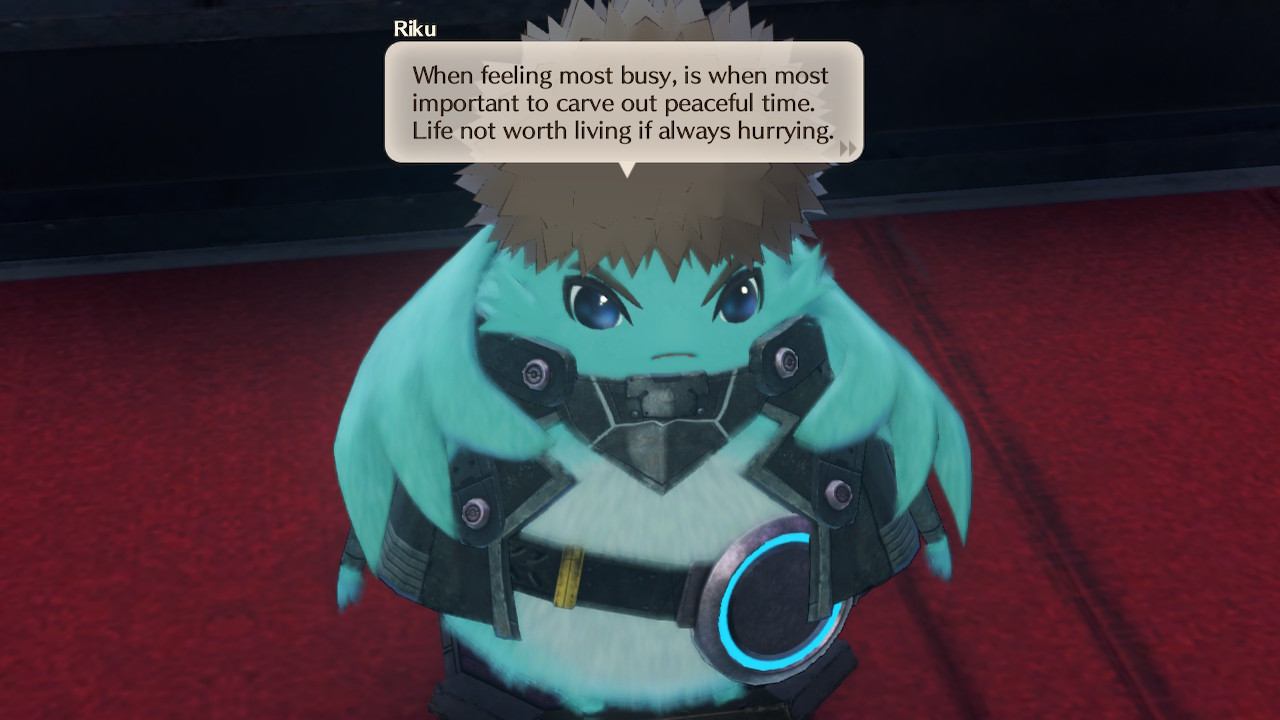
Photo Credit: Screenshot
Another thing to mention here, is that this review does not contain any details regarding the Switch 2 edition of the game. That said, I don’t believe any changes brought about by the update will not have a major impact on the items I’ve focused on in this review, other than improved graphics/performance and the additional gameplay content.
With all that out of the way, Xenoblade Chronicles 3 has a setting that drew me in immediately, and the first few (or maybe more than a few) hours of the game spends a lot of time getting you brought up to speed. The game introduces two warring nations on the continent of Aionios, Keves and Agnus, who are locked in a perpetual state of war and conflict. The citizens of each of the nations are essentially raised to do nothing but fight, and are taught that the opposing nation represents all that is evil. The citizens of each nation gain power, energy, and leadership approval by working to fuel large mech-like devices called flame clocks. The catch, of course, is that these flame clocks are fueled with the stolen life force of the opposing nation, further incentivizing the conflict between the two nations.
Furthermore, the people of both Keves and Agnus have a maximum lifespan of 10 years, assuming they don’t die in battle before then. And that’s a hard cut-off. Everyone is born out of mechanical birthing pods, and begins their life as an adolescent or teenager. Which I guess makes the first impression of the game a little more palatable than it would be if it was about 8-10 year-olds going to actual war with each other. But if you’re like me, this setting immediately gets me thinking about my own life. How much time do we have on this earth, and what should I be doing with said time? I’ll talk about it later, but as it turns out, I was pleased to discover the game has some good ideas in regards to the answer to this question.
With the world established, the scope of the story narrows to focus on the 6 main characters of the overarching story; 3 members of Keves, and 3 members of Agnus. They meet each other on the battlefield, investigating a mysterious vehicle that has crash landed in a secluded area. Upon reaching the crash site, they are of course hostile with each other. But after learning more about the nature of the crash, a brief conversation with the dying pilot of the vehicle, and a surprise encounter with one of the game’s many villains, the 6 protagonists come to learn that there is far more at play between the two warring nations than they had initially realized. With this revelation, the 6 begin their journey to both become friends and to find a resolution to the perpetual conflict between Keves and Agnus.
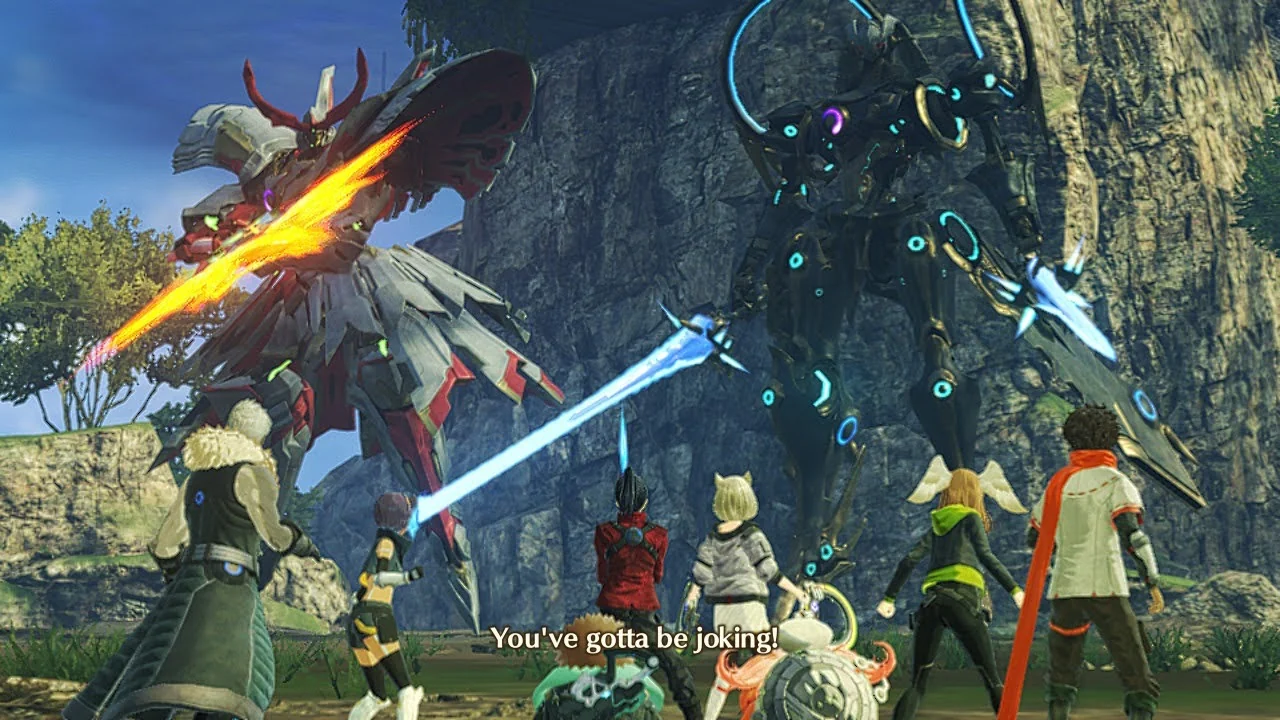
Photo Credit: PC Mag
All while the setting is established, the game simultaneously tutorializes you in all the many intricacies of the systems at play in the game. By the time the stage is set, you will have been made fairly familiar with the basics of the combat system, which is characterized by using auto-attacks or elapsed time to fill cooldown meters on special abilities called arts. Arts are categorized in a number of different ways. Some are straightforward attacks with bonuses associated with positioning or enemy types, some give enemies debuffs, some give allies buffs, and others create buff/debuff zones on the battlefield. Furthermore, they are divided by Keves arts, the cooldowns of which are restored with elapsed time, and Agnus arts, the cooldowns of which are restored by landing auto attacks.
You can also swap between controlling any of the 6 playable characters mid battle. At the tail end of the story set-up outlined above, you’ll also be introduced to Ouroboros transformations, the main hook of the combat, in which two of your 6 characters are fused together to create a sort of ultimate oversized warrior, with arts that are unique from the two characters’ arts that were available before. There are also chain attacks, a staple of the series, which brings with it enough variation to make it stand out as unique compared to the previous Xenoblade Chronicles games. Beyond all of this, the game continues to tutorialize the player deep into the game. You’ll receive tutorials even 30 to 40, or even 50 hours into the game, as you’ll be given access to a group of special characters that you can swap in and out as a 7th non-controllable member of your party, the ability for your main party of 6 to learn the abilities of said heroes (effectively, a job/class system), and arts that open up a branching path for your driver combos to take, among many other details that I might have already forgotten about.
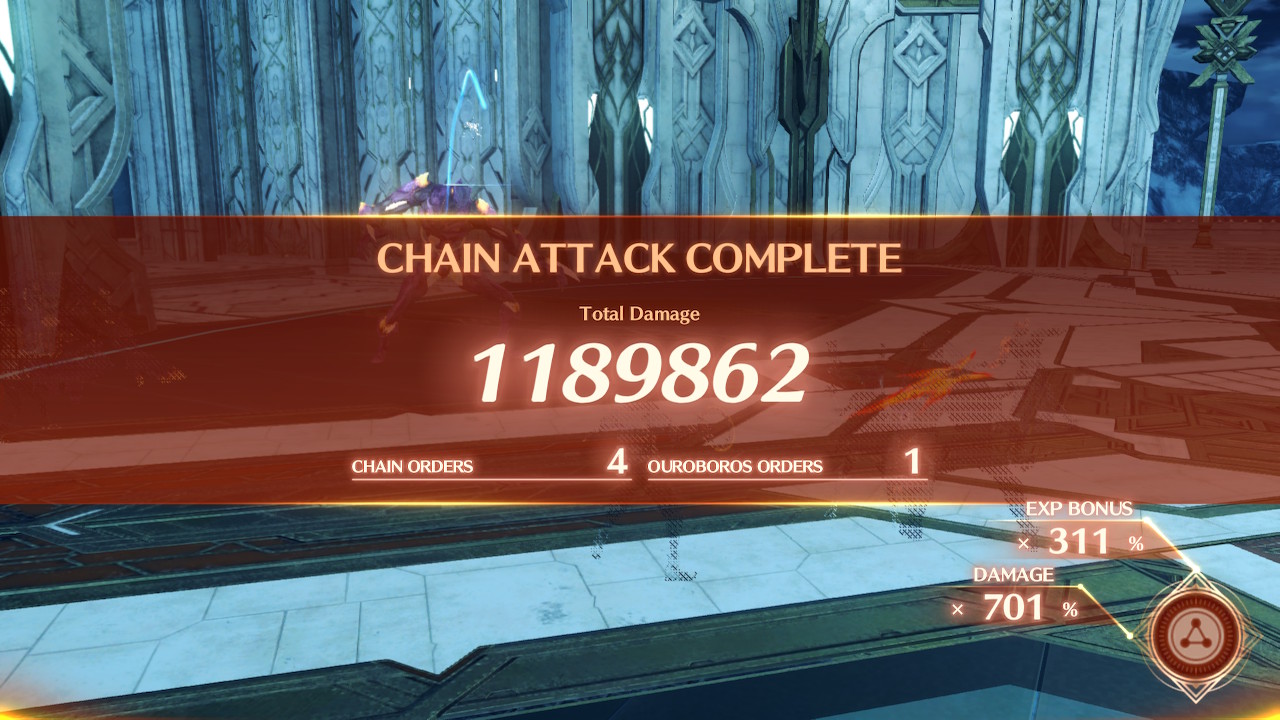
Photo Credit: Screenshot
The previous two paragraphs really only scratch the surface of the complexity of the battle system here. But if you find that intimidating, you might find this next detail to be a bit of good news. The fact that you are only ever in control of 1 of 7 battling characters makes it so that if you don’t completely grasp everything there is to the mechanics, your computer-controlled team mates are usually able to carry a lot of their own weight. If you enter battle and contribute nothing to the fight, your party is still at 6/7 of its strength, assuming you can build your team appropriately. So on normal and easy difficulties, your combat ability doesn’t usually serve as a hard roadblock to story progression. There are maybe 3 major story battles that require you to utilize unique strategies to defeat them, but otherwise the game isn’t really too difficult. On the flip side, if you are looking to get into the combat though, playing on the hard difficulty setting presents enough of an incentive to learn all the nitty gritty details of the combat.
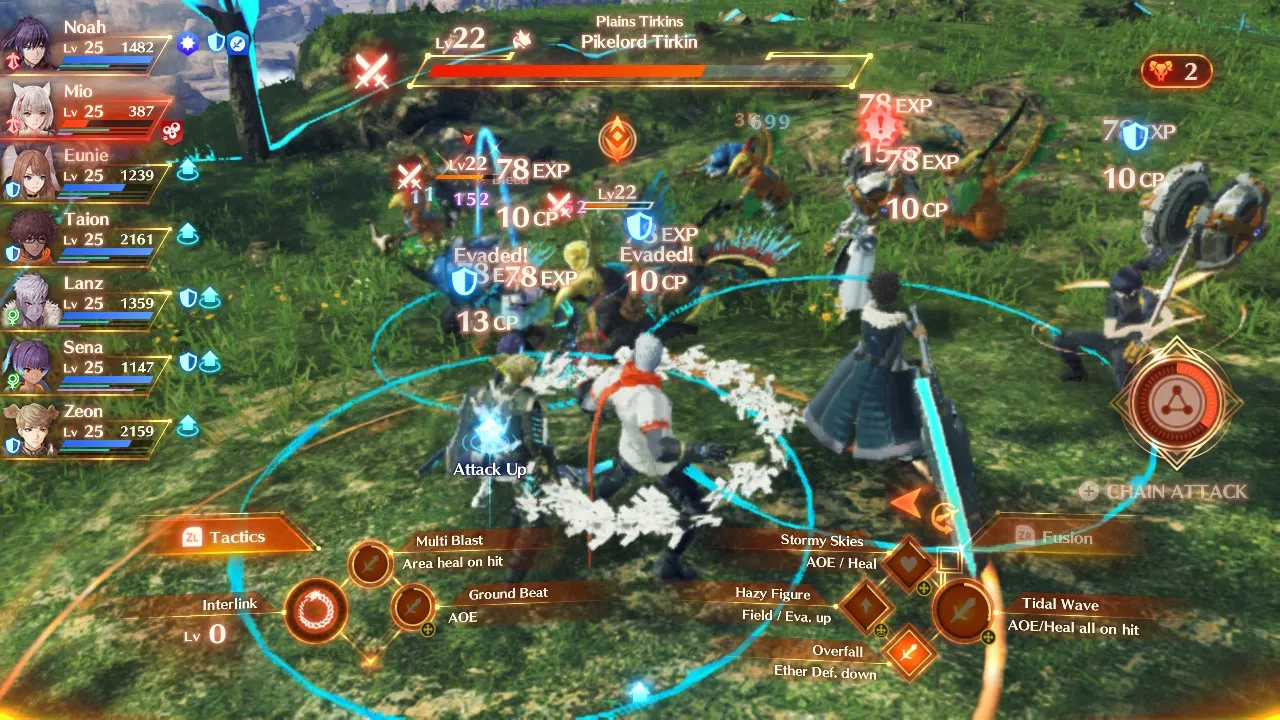
Photo Credit: The Verge
If you’re still not sold on being able to wrap your head around the game’s combat, you might be able to take a little comfort in knowing you’ll have a very long time to learn it all. In an effort to see most of the major content in the game before writing this review, I spent over 190 hours in the world of Aionios. An average player who’s not interested in chasing down the optional story quests for the 20+ hero companions in the game likely will finish the game quite a bit sooner. I would argue that a lot of the optional content is worth pursuing, but the critical path of the game is packed to the gills with rich character development. There is an appropriate level of romance between the 3 pairs of protagonists that grows in interesting and different ways as the game progresses. There’s a character who wrestles with whether or not the sacrifices he makes for his friends – significant sacrifices – are truly worth the effort. There is a substory told about a family spanning 3 generations, and what it is like to inherit not just the gifts left behind by our parents, but their responsibilities as well. There is also an air of mystery surrounding the identities of the true villains that is maintained for a very long time throughout the game, feeding the player just enough nuggets of information to stay intrigued throughout the whole game, without fully revealing the true nature of the evil the player is up against.
No matter how you slice it, Xenoblade Chronicles 3 presents a massive feast of gameplay for the player. And while there’s certainly plenty of monsters to battle – most notable being the challenging Unique Monsters with special names, that can be battled again after defeating them for the first time – the most memorable moments of my time with the game came from exploring the beautiful, massive world that opened up through the duration of the overarching story, slowing down to appreciate the incredible soundtrack (a hallmark of the Xenoblade Chronicles franchise), and getting to know the personable heroes and main characters through each of their individual story vignettes through the critical story path, and their respective Hero and Ascension Quests, which open up later in the game.
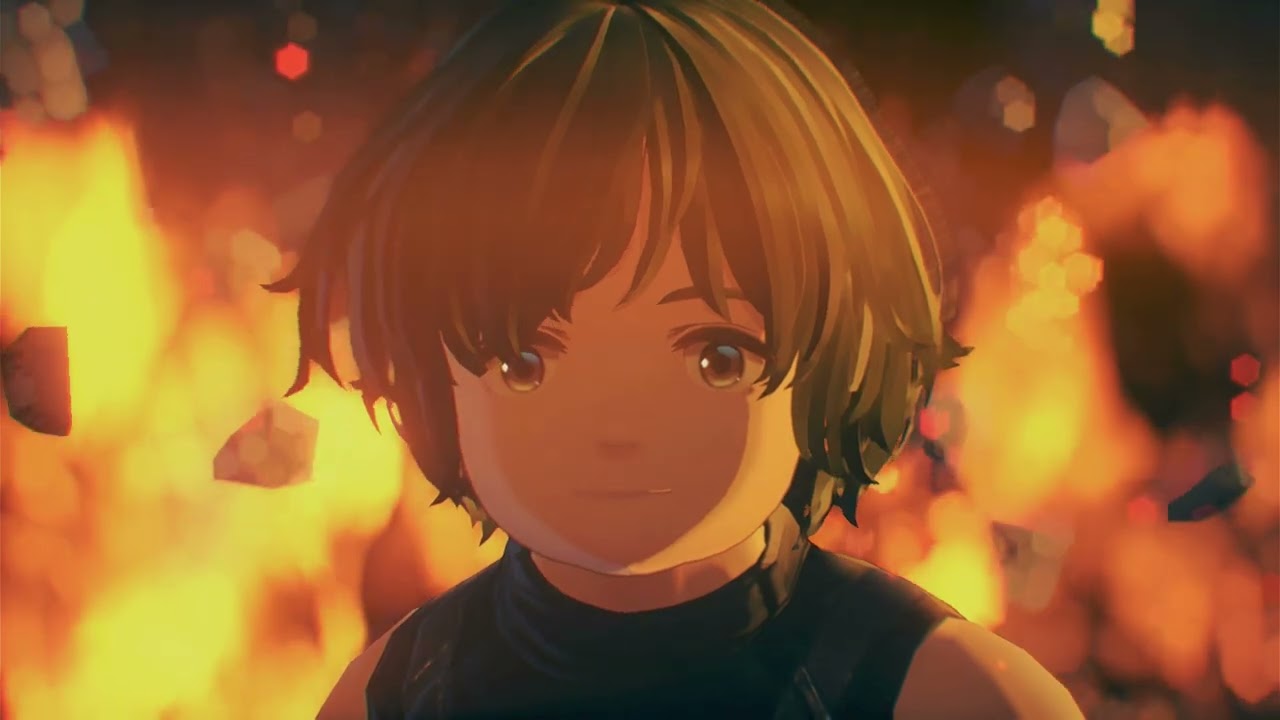
Photo Credit: reddit post from user RagnarSan22
While the game isn’t what many would traditionally consider an open world, there is a lot of freedom given to the player to explore, and there’s a lot of it to do. Whereas a traditional open world might resemble flowing down through a funnel (any number of possibilities at the beginning of the game that all eventually gradually lead the player to one fixed climax), Xenoblade Chronicles 3 gave me the opposite sensation through most of its playtime. Each area that was unlocked was substantially bigger than the last. In addition, there are 2 moments in the game that will give you a reason to revisit everything you’ve seen up to that point – 1 optional, and 1 forced. There were several points in this game where I thought I understood the scope of the journey, only to be humbled when I watched the scope double before my eyes. Most if not all quests in the game automatically place a waypoint on your map, so you’re never really wondering where it is you need to go. While this may be a detractor for a lot of folks, I think the sheer size of the explorable world in front of you softens the blow. It’s kind of nice to know exactly where you need to go after getting lost exploring the world on your own. There is one singular climax to the game, but there are plenty of things you can choose to do before engaging with the ending.
Visually, there are a few distinct biomes you’ll come across, which are nice enough to keep things fresh through your playtime. There are wide grassy fields, desert dunes, caves, a vast ocean, among a few others. And up close, there really isn’t anything too special about the scenery as you venture through it. But the visuals really shine when you’re able to reach a high vantage point and either look out on the path you took to get there, or look ahead to the path you’re about to take. This is a “if you can see it you can go there” type of game. And all throughout the game, you’ll encounter the soldiers of Agnes and Keves along with the large distinctive mechs that belong to each nation. There is a surprising amount of detail put into each character, and even some of the NPCs. It’s very impressive what the development team was able to do using somewhat restrictive design constraints on the original Switch hardware.
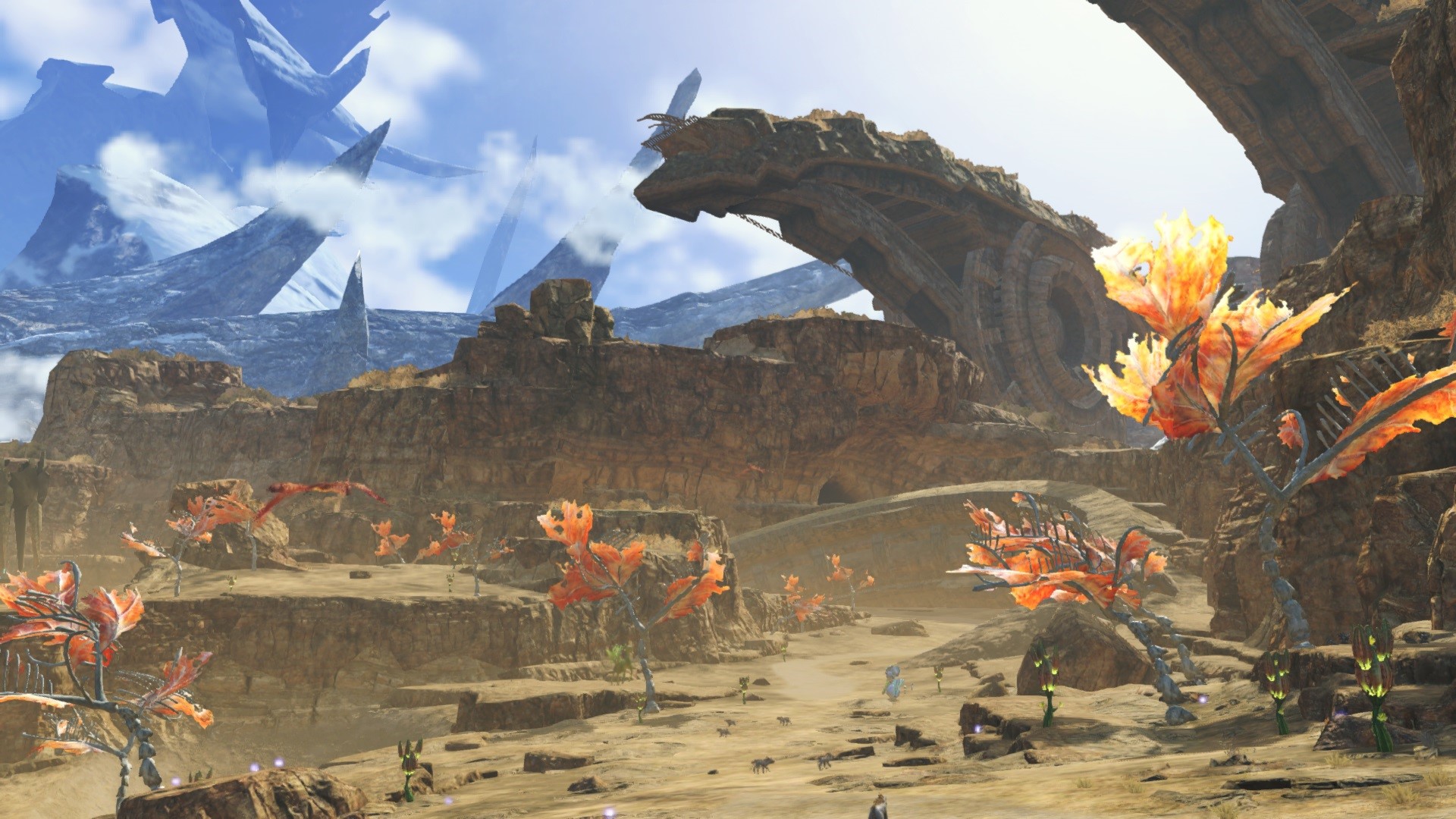
Photo Credit: Nintendo Everything
It should be no surprise to any fan of the Xenoblade Chronicles series that the soundtrack is top notch. High energy orchestrated tracks overlayed with metal guitar riffs and solos are incredible, and the slow emotional ballads are here to make their mark on key story moments as well. Flutes actually play a key role in the story, so the composers have very intentionally made the flute a key part of the soundtrack as well. It’s generally a welcome tweak to the music, as it certainly makes all of the tracks more interesting. But if you have a predetermined opinion of the flute in general, its presence here may not change your mind like Pedro “Flute Guy” Eustache will. And like the rest of the game, there’s just a lot of it. A quick search on YouTube will tell you there are over 11 hours worth of music found here, and you’ll likely experience all of it by the time you’re done with the game. So there’s bound to be something in here for everybody.
Finally, if you’ve played previous entries in the trilogy, there is some connective tissue here that does tie back to the first two games. The major references to prior games are not revealed until some of the final story beats of the game, and if this is your first foray into Xenoblade Chronicles, you don’t need to have played the other games to enjoy this one. But considering that I have played the previous entries, it was nice to get a little nod from Monolith after having spent 400+ hours with the rest of the Xenoblade Chronicles series. Longtime fans should appreciate the callbacks present in the final hours of the game, but I won’t spoil the details here.
Perhaps the most noteworthy aspect of Xenoblade Chronicles 3, and the reason I felt the desire to write this review, is how much spiritual truth there is to the major themes found in this game.
As a Xenoblade Chronicles fan, I entered into this game with zero expectations to find high level moral takeaways. Previous entries in the series have suggested that our personhood can be separated from our biological bodies, and have also featured a level of human objectification that many players found “distracting,” to say the least. So I was quite surprised to find out that Xenoblade Chronicles 3 has an appreciation for life that I don’t think I’ve ever seen matched by any other game I’ve personally played. While I won’t spoil the major crux of the story here, I think it’d be hard to discuss what makes this game so special without exposing some mid-game story beats in this review. So consider yourself warned, if you’d prefer to go in blind.
Firstly, right at the start, you are introduced to Noah, the primary Kevesi protagonist of the game. He is unique in the sense that he is an “off-seer,” a person whose job it is to “send off” warriors who have fallen on the battlefield. His counterpart from Agnus, Mio, also happens to be an off-seer. This send-off is done by performing a song on the flute as a sort of impromptu funeral. When this happens, the red life force floating up from the deceased’s body is replaced with a bright white life force, before slowly dissipating altogether. While not immediately noteworthy, this makes it clear the developers wanted to make a point to respect the lives of all these warriors, whether they are nameless NPC’s, or anyone more distinguishable. There are fallen warriors scattered all the way throughout the game, which means you are constantly reminded of all of the people who have fallen before you. This level of respect isn’t necessarily unique in the world of games, but it’s certainly a step towards expressing a Christlike appreciation for all human life.
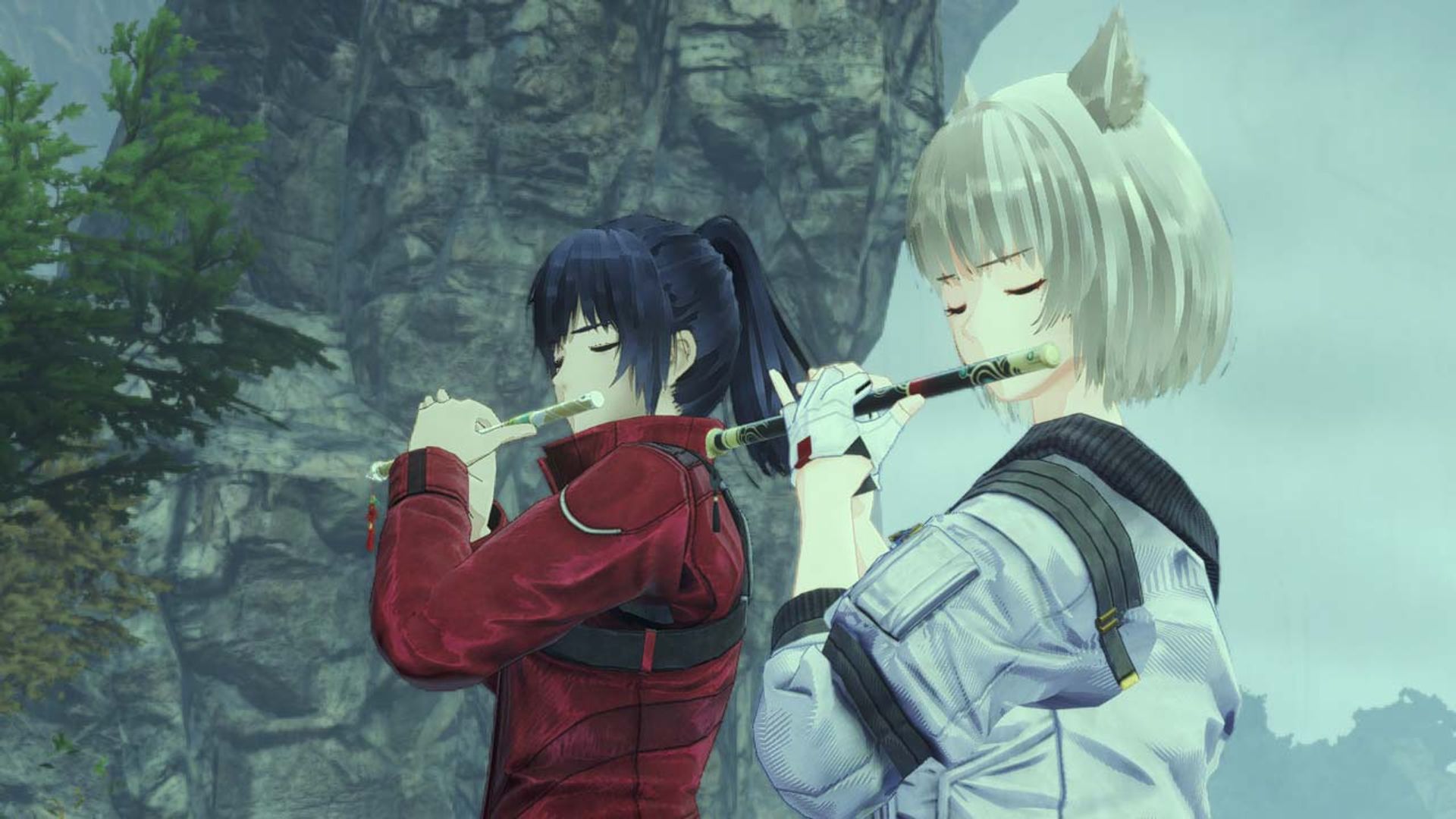
Photo Credit: IGN
Respect for the fallen is admirable, but it was this next moment that solidified my decision to write this review at all. I realized what this game was about when the party encountered a newborn baby with its mother in the hospital bed. As people who had never seen a baby before – you know, being born as tweens out of birthing pods and all – they were completely astounded by the existence of this tiny human, and immediately and unanimously agreed that it should be celebrated. And of course, the game did not miss the opportunity to let the party ask “Where do babies come from?” Which cleverly presented the subject matter in a lighthearted way. But there’s no question that the storytellers here are making a point to explain that both fathers and mothers are important pieces to how the whole thing operates – not just before and at the moment of birth, but throughout the life of the child.
After this point in the story, the party begins being introduced to words like “family,” “brother,” and “grandmother,” and from this point forward, you are reminded that this group of heroes – trained to do nothing but kill people who ultimately just look and dress differently than they do – have lived life up to this point having no idea what a family is or why it’s important. And in this somewhat subtle way that is pervasive throughout a large portion of stories told in the rest of the game, Xenoblade Chronicles 3 is able to stress the importance of family by showing us what happens when “family” doesn’t exist, and how even the imperfect families on display are still better than the alternative.
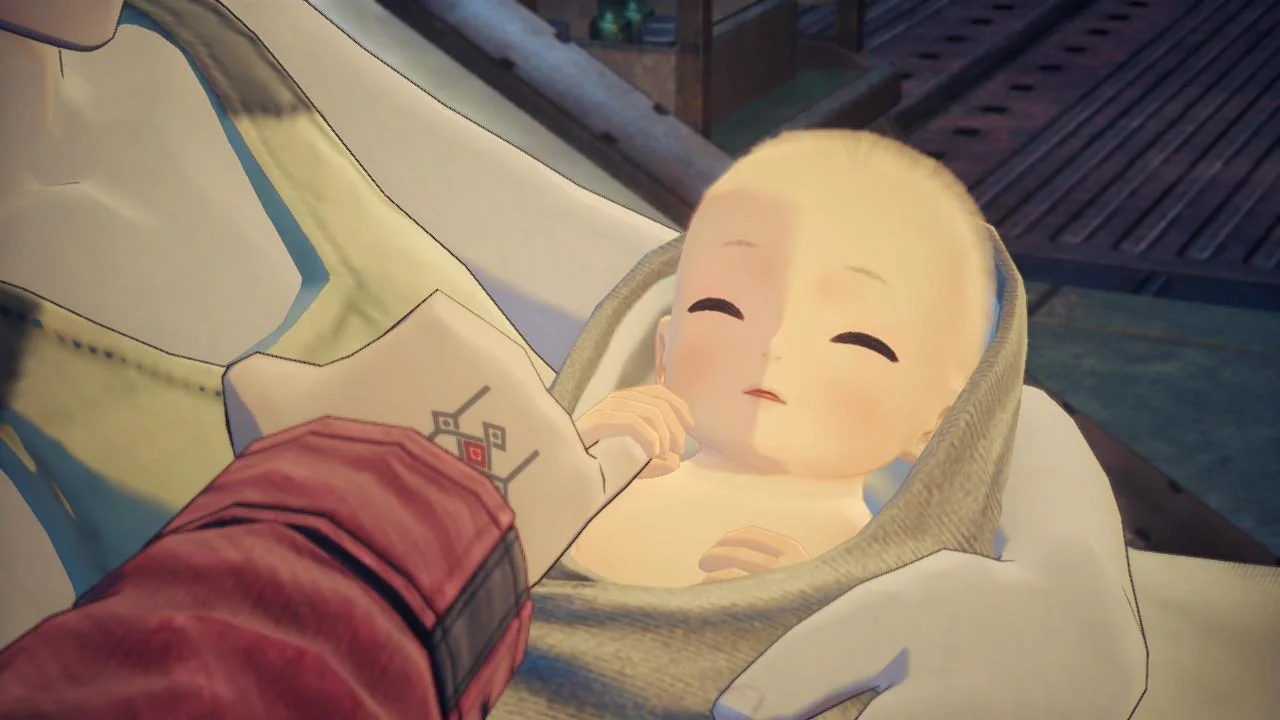
Photo Credit: reddit post from user ReverendRoo
Speaking of family, one of the things families are responsible for is bringing new life into the world. Xenoblade Chronicles 3’s outlook on life is refreshingly nuanced. As Catholics, we come to understand that this life – our time in this world as physical and spiritual beings – has value. A lot of value actually. But we also know that our final destination does not exist in this life. As such, our lives are enriched when we learn how to “die to oneself” for the sake of another, or for some greater goal that exists outside of service to ourselves. In a way, this creates a sort of paradox. Even when we’ve come to appreciate God’s gift of life or recognize the good things He’s provided for us, we know that in order to grow, or just due to the natural passage of time, we must be able to move on to the next chapter of life to reach our final destination, even if it means leaving these gifts behind to our memories.
Xenoblade Chronicles 3 echoes this sentiment. Throughout the game, each main character and hero has a level capacity that is unlocked by completing what the game calls ascension quests. These typically consist of story vignettes that focus on the growth of individual characters, and most if not all of them tell stories that exemplify the theme highlighted above. One story even uses the biblical analogy of planted seeds, having to “die” in order to transform into something greater than they were before (not mustard seeds in this case, but the message is still front and center). And I don’t think every single one of these ascension quests will tell a story that resonates with everyone. As a 30-something-year-old father with absolutely zero fashion sense, I did have trouble sympathizing with the teenage girl who tries to fit in by mimicking her friend’s food orders and clothing choices. But I still wouldn’t discount the game’s telling of that experience as being entirely removed from its overall message.
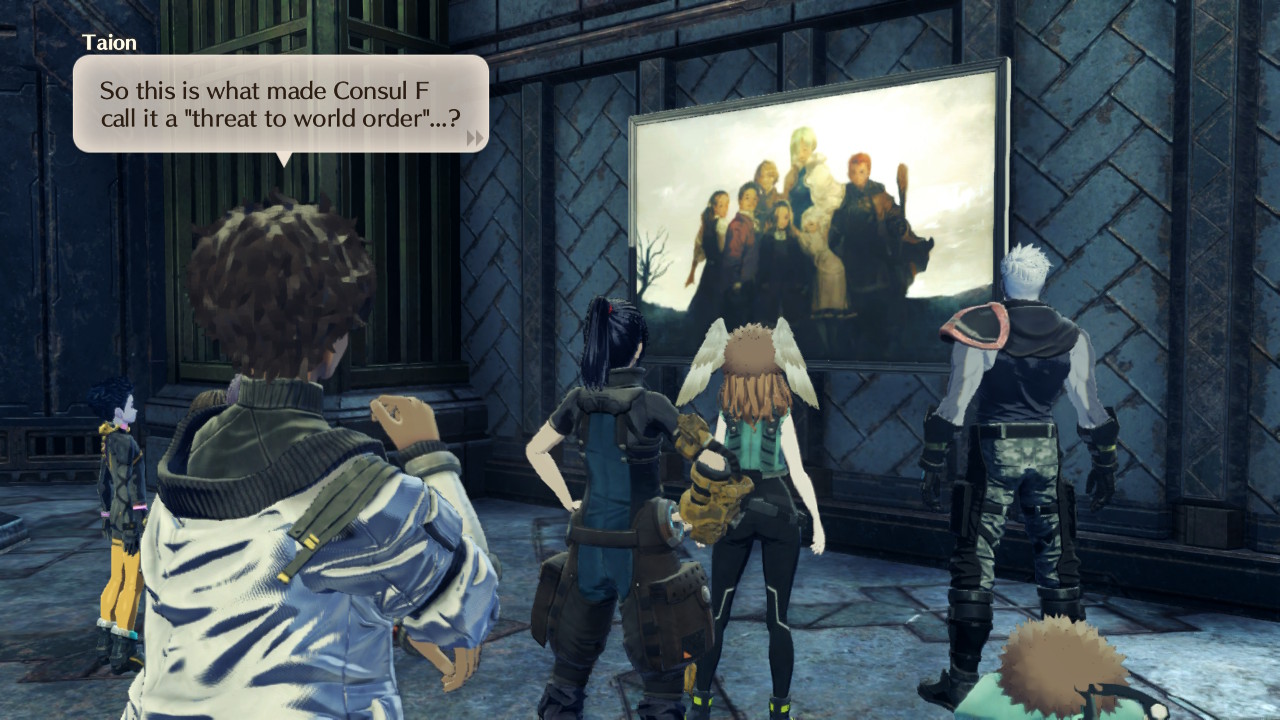
Photo Credit: Screenshot
And after completing all of these ascension quests prior to completing the game’s main story arc, I’m happy to report that the critical path truly ups the ante in terms of getting this same point across. Late in the game, the player is exposed to Noah’s (the primary protagonist) biggest character flaw in an absolutely heartbreaking way. And it is something he must reckon with in order to complete his quest. It’s also something I think many people will be able to relate to, and in turn will give them something to think about. And when the true nature of the big bad villain is revealed, it serves as the cherry on top of the massive thematic sundae that the developers have crafted for us to enjoy. It’s too good for me to spoil any more of it here.
All in all, Xenoblade Chronicles 3 delivers a very lengthy but incredible journey towards a greater appreciation of life, and the seasons you might experience within it. On top of all that, it’s a solid Xenoblade Chronicles game. One that will both please returning fans, and likely hook newcomers who are open to committing the time to immerse themselves in its beautiful world. This is an easy recommendation to anyone looking to get their money’s worth, in terms of game time per dollar spent.
Scoring: 93%
Gameplay: 4/5 – Combat is perhaps too complex to be the series’ best, but it’s certainly compelling enough to be engaging throughout the experience.
Visuals: 4.5/5 – Vistas are absolutely incredible. Up close, most objects still look great. Great use of art style and direction make up for what the Nintendo Switch is not able to handle.
Sound: 5/5 – Music is a definite highlight.
Story: 5/5 – Prepare to cry. It’s beautiful. And surprisingly spiritually gratifying as well!
Morality/Parental Warnings
The ESRB has identified “Suggestive Themes,” language, violence, and mild blood present in this title. I don’t have a lot to add, but as big as the game is, it’s probably worth going into detail as to how these things pop up in the game.
Suggestive Themes – There are a few character models that are scantily clad. And there’s also a bath scene in the game that makes use of strategically placed steam clouds to hide nudity. But frankly, the sexual objectification here is quite mild in comparison to the previous numbered entry in the series. Just beware it’s not absent in this title.
Language – In an effort to portray the militaristic environment these characters live in, the language most characters use in this game can be pretty crass. There are some silly substitutions that are made for the most severe curse words in most cases (“No snuffin’ way!” and “For spark’s sake!” are a few examples that come to mind). That said, there are a few cases – largely in cutscenes – where these substitutions are not made for the expected curses. And “minor” curses are quite frequent throughout the course of the game.
Violence and Mild Blood – With a game focused on war, it’s worth noting the nature of the violence. Characters do harm and kill each other with swords, guns, and other comparable weapons, but I don’t recall seeing any blood in the traditional sense. It’s shown as a sort of red sparkly life force that floats up into the air in a bubble-like appearance, mostly to depict the method in which the flame clocks absorb the life force of fallen soldiers on the battlefield.
Other – There is a late-game story beat that suggests that the people’s souls and bodies in this game are separable, which is counter to the Church’s teaching that our we are hylomorphic beings (meaning our bodies and souls are tied to each other, and are NOT separable – both are gifts from God). This is not something that is immediately obvious, given the metaphorical nature of a lot of the content of this game. Beyond this one example though, I can’t recall any additional instances of this.