
During the campaign and review process for the original Household, the expansion books we are talking about today had loomed large even back then. For day one fans it had been three long years between the releases, but for our group it was only a roughly four to six months gap between the end of our campaign and the release of its continuation. We certainly didn’t play the original campaign for the sake of the expansion, but I would be lying if I said the thought of eventually continuing the story after a short break didn’t give me something to look forward to. So with anticipation in my heart I bought the new books as soon as I was able, and thoroughly immersed myself into the world’s smallest regency drama once again. Let me tell you what me and my ever faithful players, Gaius Requiem, Starwarp, and Catholic Twitch streamer ZergTron, found within the pages of a new History!
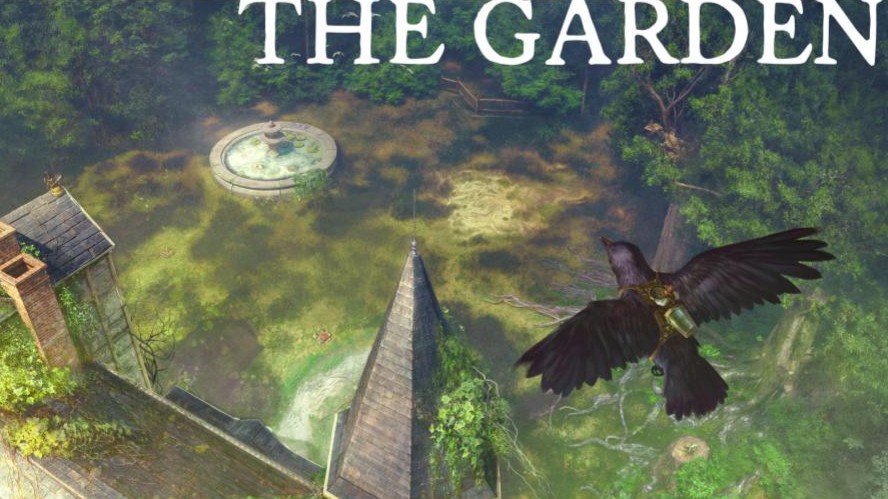
Written and developed by Riccardo Sirignano and Simone Formicola, and published by Two Little Mice, Household Vol. II is an expansion to the Household roleplaying game released in 2025. It continues the stories of its tiny folklore people as they reencounter the denizens of the outdoor territory of the abandoned house, and details how the cold war that seethed for many years finally draws to a close. Players once again interact with the game through creating characters and telling a story together, rolling dice to resolve challenges and uncertainties. Please note that the pdf versions of the volume two books were used in this review, and it will not cover the Adventures in the Household 5e conversion of the game (which is not yet available to the public as of this writing anyways). Spoilers for the original Household ahead.
The story of Household Vol. II picks up two years after the end of the Fragile Peace, which ended with the Fall of Faeriyev. The culprit behind this surprise offensive turns out to be none other than Titania Lightheart, ancient ruler of the Fae (from whom the Faeries are an offshoot of) and mother to the Ruling Empress of the Household, Tsarina Arcadia Oberonova. This elder imperial decries The Realm as a shameful betrayal and bids the Faeries to return to the Garden outside under her rule once more, but ultimately the Tsarina chooses to mobilize the Grand Imperial Army to lay siege to Faeriyev and sends her elite warriors as vanguards into the Garden. Hopes that the conflict would be over by winter’s end are dashed as the siege quickly devolves into a cold war, and thus this era became known as the Long Winter. The game follows the two years in the back-half of this era, with the protagonists now free to traverse the Garden and seek their adventures and ambitions in a whole new set of locations and nations.
As with the core game, the story of this expansion primarily serves to create a moving backdrop which you may optionally engage with directly at key points in the timeline. To that end the game once again provides very useful lore, but the quality of the lore itself has taken a downturn. Expanding the setting of Household to include four new peoples with their own nations and histories that had technically been there all along was perhaps a tall order, and it really shows in the final product. The Gnomes of The Citadel are a completely inert addition who do basically nothing throughout the timeline, essentially being the ‘enlightened centrists’ of the setting without the ego and ambition that made the Free Dominions interesting, and I only really engaged with them thanks to having a Gnome player in the party. The Shinigami of The Shogunate of the Silver Blade have probably the best worldbuilding in a vacuum, but are unfortunately so insular in their politics that I had to go out of my way to include them in my campaign. Then the Barghests of The Bramble are so, so close to being a highlight of the setting with their great rebellion premise, only for the secret identity of the Knight of Thorns to be the most purely shock-value piece of writing in the whole series, and makes the character who dons that alias into an idiot the more you think about his situation. He was done so dirty.
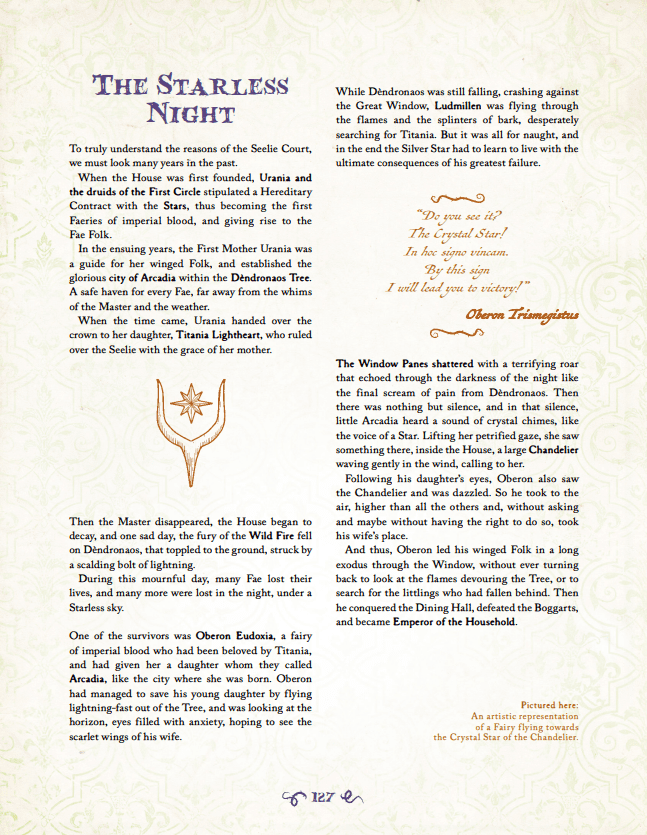
The biggest fumble of all has to be Titania and the Fae though. Considering the Seelie Court serves as the defacto protagonist faction for the Outsiders it makes sense that the book tries to endear them to the players somewhat, but this was chiefly attempted through retroactively trying to frame Oberon and the Faeries as treasonous usurpers who abandoned their Holy Empress. Titania’s retelling of The Fall of Dendronaos was apparently so shocking as to cause a long period of indecision on Arcadia’s part, but anyone who’s actually paying attention will quickly recognize that Oberon was just doing what any sane ruler-apparent in his position would have done to ensure the survival of his people. The closest the book gets to an actual form of legitimate criticism of Oberon is the fact he uprooted traditional Fae matriarchy in favor of patriarchy, but The Realm was so thoroughly characterized as patriarchal in the first book that I can’t help seeing this as lazy retcon employed to make Oberon look bad. The Realm isn’t even a century old, so how in the world did the men and women switch roles so fast?! Honestly I just have it both ways and imagine that after their initial settlement of the Dining Room, Oberon met with the other Fairy nobles and just asked “So… are we done with the whole Longhouse thing? Yeah, I think we’ve moved out of The Longhouse.” and the room erupts into cheers. In this GM’s game, Tsar Oberon Trismegistus is a dearly departed hero and Titania is slanderous and unreasonable, end of discussion.
Having said all of that you might think I hated the worldbuilding of Household Vol. II, but believe me when I say it is not that simple. I adore the setting of Household and I can appreciate some of the new ideas introduced in this expansion, and thus it’s because I care about seeing this setting continue to flourish that I’m so critical of where this new volume went wrong. Sure most of its new ideas veer closer to what a ‘typical’ imagining of a littlefolk RPG might entail compared to the genius of the House itself, but I certainly can’t fault the Garden for being an obvious next step and they do make a valiant effort to keep it engaging. If I had to pin down what’s missing in this department more than anything, it’s that it fails to reproduce the roundedness of the original’s characterizations. Household Vol. I may have had factions and characters that were portrayed in more positive or negative lights, but ultimately I never got the feeling that any one corner of the world was ever meant to be so prescriptively heroic or villainous. Not because morality is subjective or any dumb notion like that, but because the four nations and their inhabitants all felt like they had a mix of virtues and vices that made them feel less monolithic, and there was more room for the players to engage with the messy nuances of the setting’s struggles. It felt like a setting you could have genuine debates about. With Household Vol. II everyone is described with so much less subtlety, and it can sometimes feel like I’m being asked to engage with ideological talking points rather than fully realized characters. Still a good backdrop for an RPG campaign, but it could have continued to be so much more!
Moving into some new gameplay features, the first thing players will latch onto are all the exciting new character options available to them. The new folk options may not measure up to the others in worldbuilding, but they do feature great new Hereditary Contracts that offer powerful new abilities and variations on old favorites at the cost of much more demanding Counterparts. It might seem unfair to powercreep Fairy flight with Fae flight that is faster, more stable, and can be used to boost yourself in a pinch, until you realize you have to be extra protective of your true name unlike any other race in the game, and the GM might still have you inherit a troublesome oath! Character professions also now have Garden variants, which provide different skill points and starting Moves at character creation to skew familiar archetypes towards specialties suited to the new environment, as well as six new vocation options for every profession. Considering these professions and vocations can be mixed and matched with the ones from the first volume, you can bet that few players will have similar builds. There is also an entirely new profession called Wayfarer, a traveler archetype who serves as a jack-of-all-trades with their ability to temporarily adjust their Traits and Moves, as well as directly interact with certain Vol. II mechanics like Travel. It has to be said that Wayfarers do feel significantly more powerful than the other professions, mainly because Natural Knowledge allows you to produce any of the new powerful Natural Concoctions at any time. It makes them feel borderline like spellcasters in a game balanced around no spellcasting, but so long as your group’s Wayfarer isn’t a min-maxer you should be fine.
The main challenge for players in character creation is that Household Vol. II maintains a heavy continuity with its predecessor by having characters effectively start at the same power level as Chapter V, leading to lengthier character creation and a higher skill floor with lots to keep track of. It’s not too big an issue for veterans, and those who want to carry the same character over from one campaign to the next have some fairly simple conversions they can follow, but if the big number two on the cover didn’t dissuade a first-timer then the overwhelming number of options just might. The game’s leveling system has also been adjusted to fit the new chapter structure, with the end of each session offering the option of two skill points, a Trait, a Move, and two Memories (Autumn only) per chapter. While I can see the vision in making progression more incremental and player directed, we could immediately tell that it would get difficult to keep track of which upgrades you’d already done in a chapter and decided to take the same upgrade type across all party members. If future volumes wish to continue this granular leveling then that isn’t my preference, but I’d be more ok with it if the order in which you receive upgrades were fixed to avoid potential confusion.
On the Game Master side of things, there are three major gameplay additions offered to provide new experiences to direct. The first to discuss is the Travel mechanic, a dedicated system fleshing out the experience of trekking through the great outdoors over multiple days. The biggest positive this system adds to the game is the defined travel distances between The Garden’s major locations, as these help to better define the sheer scale of the world around you. I tried a similarly travel-themed adventure in the first volume to explore the scale of the interior, and it was an interesting experiment but the more defined lengths of The Garden leaves more to imagine about the space between each major city or landmark. As for the mechanic in practice, it’s fairly functional but unassuming players might find it hard to use. The camping scenes at the end of a travel day, for instance, need to be employed more sparingly to keep things moving, but less experienced players might think that logically they should be checking this every night due to how crucial food and shelter are in the wild. Careful reading of the rules can prevent pace-breakers like this, but my temporary GM thought constant checks for this was necessary and it did lead to a rather swingy battle against encroaching Severe Stress (a new kind of damage introduced in the game which has stricter recovery requirements). Other features such as Crossroad key events and random Extreme Weather ensure that every journey has something exciting and perhaps even narratively relevant happen, and are generally the highlights of the system. The weather deserves special mention as the kind of bad climate depends upon the season, and that is determined by how far you are in each Chapter. It’s a neat new way to explore the passage of time, and while I wouldn’t want this strict four season Chapter structure to return in a future installment, I do think it heightens Vol. II’s nature thematic beyond more pedestrian interpretations of such settings.
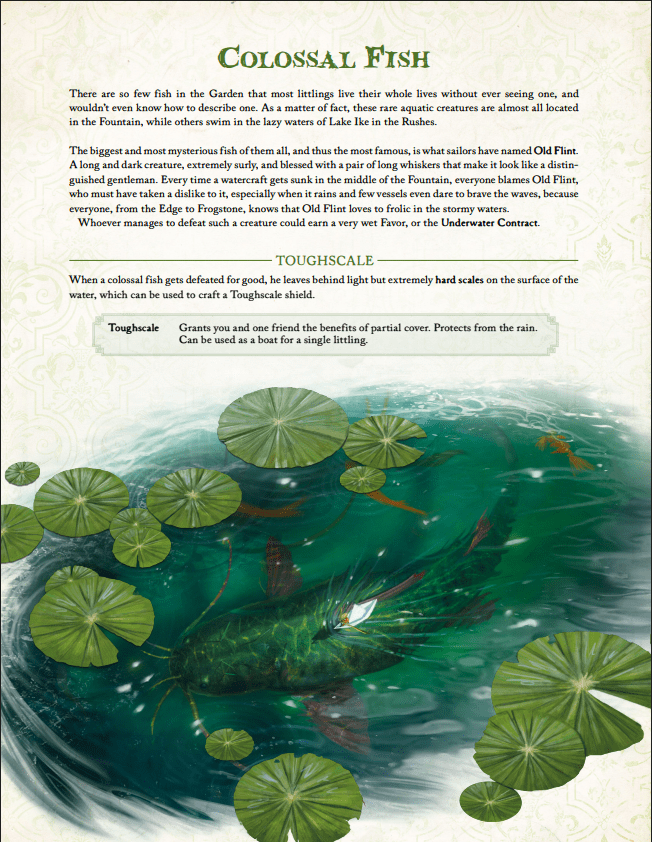
The other major addition of note to the GM is the new Colossal Opponents, rules for facing conflicts with enemies far larger than anything the littlings have contended with before. Towering owls, terrifying squirrels, and nightmarish snakes are just a few of the kinds of Colossi you can find within the book’s pages. The main thing in the players’ favor against a Colossus is that by littling standards hitting these Opponents is like hitting the broadside of a barn door, so you get to deal Stress to them even on a Basic Success and the damage scales higher with better types of Successes. This makes Colossi fun in that you always feel like you’re contributing something each round, but the better part of them is what makes them scary. The lowest total Stress limit of a Colossus in the book is the Colossal Snake at a whopping 110 Stress, and while this Stress is split between three phases which are not intended to be fought all at once (unless your GM is a sadist) you still need to land a great amount of damage to conquer even just one of those phases. These foes can also make players roll Reaction Checks against different skills in the same turn and use their Moves once per battle on their own terms, meaning the GM has significantly more control over the dramatic pacing of the fight. It’s the most fun that Household‘s combat has ever offered, and I highly recommend planning on engaging with these foes earlier in the campaign so you can weave grudge-matches and narrative tension between the party and a ferocious titan into your History.
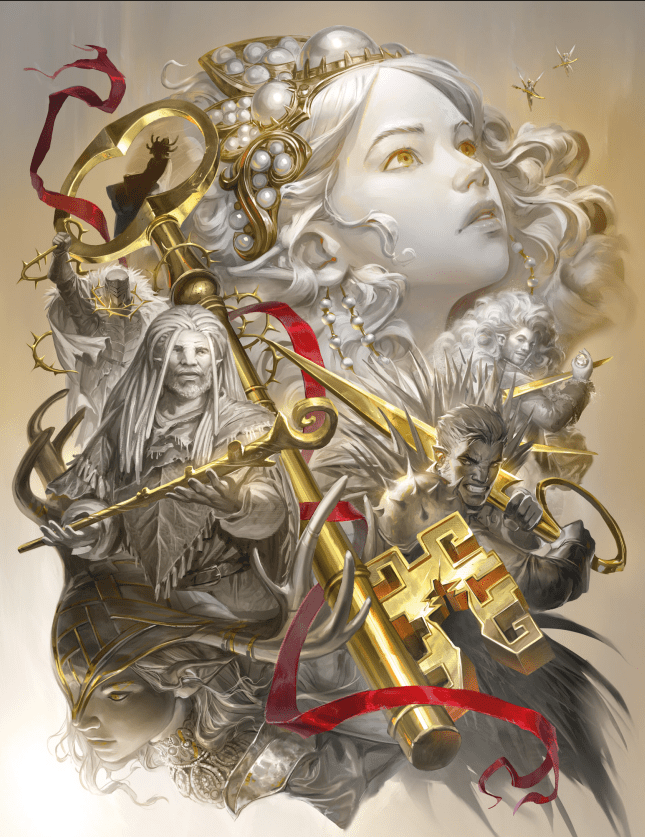
Regarding the buyers’ guide for Household II’s books, this time we’ve reduced down to just two books. The core expansion book “The Garden” is of course mandatory if you want to play any of this at all, so the real point of discussion lies in A Saga of the Long Winter. This campaign book includes 30 pre-made characters, 6 pre-made Chapter VI Paragraph I adventures, and 45 adventure prompts for the rest of the campaign. Once again this book is mostly optional as many players will prefer their own creations when running a campaign, but for fans of pre-made adventures I did want to discuss a few notable changes. The main good change within this campaign book is the addition of multiple Epilogues, as instead of just The Battle of Frostwing there are now three additional scenarios to give the characters not invited to the main dance another means of sending-off their adventures. This wasn’t a problem in A Saga of the Fragile Peace per se, but the extra parity between protagonists is nice and makes it more clear that there are other ways to cap off your journey than just the main historical event. The pre-made protagonists themselves feature a solid mix of returning faces continuing their stories from the first volume and some new characters that liven up the cast list. There are some returning exclusions from this book that confuse me, like why Dimitri Sokov and Tubo couldn’t have returned when all six(!) of the other Fall of Faeriyev characters came back, but on the whole it’s a good set of heroes on offer. The only real element I took issue with here was Jemma Reed, as the book happily retcons her as having been a Barghest the entire time without appreciating the implications of that change. The Boggarts were at civil war with the Barghests even during the Fragile Peace, and the Tsarina’s “Welcome!” Edict did not occur until the beginning of the new campaign, so it doesn’t make much sense for her to have operated so openly were she truly a Barghest. I get that all Barghests are technically Boggarts, but with a situation as delicate as the Fragile Peace you would think her relationship to the many characters in that time period would be way more complicated at minimum. At the very least they could have added some lore to explain how a littling’s Hereditary Contract can be altered and change their Folk designation beyond their founders, for that would at least flesh out the setting more.
Speaking of fleshing out the setting, it should be noted that Household II has no equivalent to A Practical Guide to Living Inside the House. In my review of the base game I made it clear that it wasn’t required to enjoy Household, and I still believe that this is technically true. With that being said, my experience with this expansion has made me realize just how much of an unsung hero that book was. Even if there was something in the Practical Guide you didn’t need in your campaign, knowing about all those little details really helped me to roleplay with confidence. Knowing about the different funerary rites of the four nations of the House certainly isn’t necessary to running the game’s high drama for example, but they taught me aspects about the different cultures that would subtly shape how I portrayed different corners of the world. Household II lacking a companion piece of this scale really exacerbates my frustrations with the way its new lore was handled, as it is rendered objectively more shallow by not having a Practical Guide to its name. Sure, the expansion can include more material in the other books that would have otherwise been in this theoretical tome since it does not have to re-explain every mechanic to its veteran audience. In fact, the new Saga book explicitly references its six “Wandering Characters” as spiritual successors to the bonus pre-made characters in A Practical Guide to Living Inside the House. Despite this, the core rules still have to introduce story timelines and novel new core mechanics which eat away at the extent it can actually replace a setting guide supplement, and in the long run I find this to be a particularly tragic misstep.
Even if there’s fewer pages to go over in total though, I’m happy to report that the writing style itself has been well maintained. Herasmo J. Hemingway once again serves as the point-of-view for the rulebooks, with all the entertaining and personable color it adds to the experience. I maintain that books like these are usually my favorites in the TTRPG space, thanks to how they allow you to read a level of unreliability into the information from which to make interpretations of the world, without leaving you high and dry either. Even beyond that though, it’s always fun to read, plain and simple. The art direction also remains quite strong with its painterly, yet oddly believable renditions of the world and characters that inhabit it. There do come moments when I see some of the new artwork and feel it’s a bit cleaner and smoother than its predecessor in a way that feels less integrated into the setting, but the more I thought about it the more those felt mostly like nitpicks.
Lastly, as for the game’s spiritual themes, it is up to any given group how applicable Catholic topics and virtues are to your campaign, but for today I’ll give a few reflections on the key supernatural element of the setting: the Contracts. These bargains vary in nature and severity, but they all demand a similar change to the way a character behaves. This feature of the setting was made particularly salient in Household II, with the scenario’s climax being based around a major character plotting to strike a Contract with The Night and devote their entire race to darkness in exchange for a boon of questionable necessity. In events such as these, we see reminders of the dangers of trying to grasp powers we mustn’t trifle with, and the importance of swearing our oaths carefully. The parallels to the First and Second Commandments are clear as day in that warning, but what I was more interested in was how the Catholic faith of my players actively guided their own roleplaying. We of course played around with the consequences of the largely more tame Hereditary Contracts, but we generally preferred to treat those with respect and delicacy, and we certainly didn’t feel overly compelled to strike any Personal Contracts due to the heavy prices they cause one to pay. It also helped that my players were largely compelled to be a bit more altruistic than the average party, always biting on most plot hooks for little other reason than to help someone in need.
I bring these up not to posture our own virtues, but to show how having an earnest desire to live the faith can change your perspective even in something as small as a shared fiction we co-created. Contracts that might seem like a no-brainer for others to take were viewed with caution, and rarely did we put ourselves into a position to even have one of them signed. The takeaway I wish to impart is that we shouldn’t fear growing in love for Christ because of how He might move us to behave differently than others, because His commands actually make us freer than if we were to act on pure instinct or self-interest. A deal with darkness is only superficially a matter of self-liberation in that you personally consent to it, but when the dust of rebellion settles you’ll invariably find yourself a slave to your passions, or deprived of those things in life that bring us any meaningful happiness. Never be ashamed of saving your devotion for God and the brothers and sisters who deserve it, for there lies strength beyond anything that you can achieve by signing up to secrete venom in exchange for letting those darn snakes have their way.
In conclusion, Household Vol. II is something of a bittersweet expansion to Household. If you found your time with the first volume enjoyable and wished for an additional campaign to continue your adventures in the world’s smallest TTRPG setting, then you will not regret picking up this new volume. Its new gameplay features can at the best of times flat-out improve ideas from the original game, having a bunch of fresh locations and character archetypes to explore is an absolute delight, but perhaps most of all it just plain extends the total playtime of an already great game by 75%. This praise must be qualified, however, by an admission that on the whole it is not up to the quality of the original book. The expansion to the world proves itself to be less interesting than the premise of visiting the exterior would suggest, and the lore which upholds the campaign backdrop is marred by a dismissive attitude towards continuity and lack of dedication to the nuances of what came before. For all that can be said of Household II, I can understand that the team at Two Little Mice wanted to push the boundaries of what Household as a setting could be, and I have to respect them for taking the risk. In the pursuit of this however, it has begun to lose sight of that carefully crafted setting and compelling saga backdrop which formed the bedrock of the game that swept me off my feet last year. The shine of what I love about Household is still here, and I’m glad I got to experience it, but I really hope the series regains a bit of its luster in the next entry (soft-confirmed in this volume). Call me a filthy Lockin all you want, but I think the stars are best viewed from the windowsill at Faeriyev. Glory to God, and glory to The Realm!
Scoring: 88%
Gameplay: 4/5
Story: 3/5*
Art: 5/5
Writing: 5/5
Replayability: 5/5
*Story in this context refers to the quality of the setting, its canon history, and the way it moves in the background of the campaign. CGR does not suggest that the stories your table tells with this game will be of this specific quality.
Morality/Parental Warnings
Household is a tabletop role-playing game starring tiny peoples from European folklore. There is no explicit magic in the setting, but a variety of metaphysical enchantments called Contracts underpin the more fantastical side of the setting. They are framed as agreements that provide certain supernatural concessions to the littling, at the price of a counterpart they must follow or suffer increasingly worse consequences if they don’t make amends. Hereditary Contracts simply exist as spiritual realities of the various folks and Welcoming Contracts are just magically enforced entry waivers, but certain Personal Contracts can feel like deal-with-the-devil type affairs (demons are not actually in the setting, but there are certain legendary enemies named after demons such as the giant mole Moloch who can offer the Pitchblack Contract). Religion is not a major element of Household II’s setting, but The Shogunate of the Silver Blade are stated to offer worship to various idols such as the great snake Eyes-of-Stone, and the various communities of The Seelie Court are largely organized around their druidic circles. One of these druids bargains with a wicked Force known as The Night, and nearly dedicates the entire Fae race to darkness by her actions. The game’s bestiary is just a collection of garden animals, made terrifying by scale. The characters wield a variety of weapons themed around household items like pins, needles, keys (including varieties that are firearms), cutlery, etc. One of the Professions is entirely dedicated to playing as a Criminal, with the new Vocations for it being Smuggler, Bad Advisor, Ninja, Fugitive, Spy, and Apothecary.
The main themes of Household II’s background story continue to focus on international and cultural tensions between the various littlefolk. The notable issue here is in how selectively the writing seems to hand out critiques of its various figures. For instance the Daimyo Oni Raidon is generally set up as a dour and overly ambitious ruler who is critiqued for his ruthlessness, while Shogun Yokai Jorogumo kills dozens of other nobles of her county to suit her own ends but is not often portrayed as especially negative. There is a fairly consistent pattern of female characters with masculine traits being admired while males with those same traits succumb to darker flaws. The praises for the Seelie Court and Jorogumo, and the condemnations of Daimyo Theodore Knox (not that he’s misunderstood or anything), suggest a degree of sympathy for Marxist ideas. There are a few spicy pieces of artwork in the game, particularly the depiction of the throne room of Frog King Jack which features a frankly uncomfortable number of fairy attendants pampering their amphibian lord in little more than loincloths, men and women alike.
Keep in mind that as a tabletop roleplaying game, Household allows you to basically alter or remove mechanics or lore elements as you see fit and nobody is able to stop you.