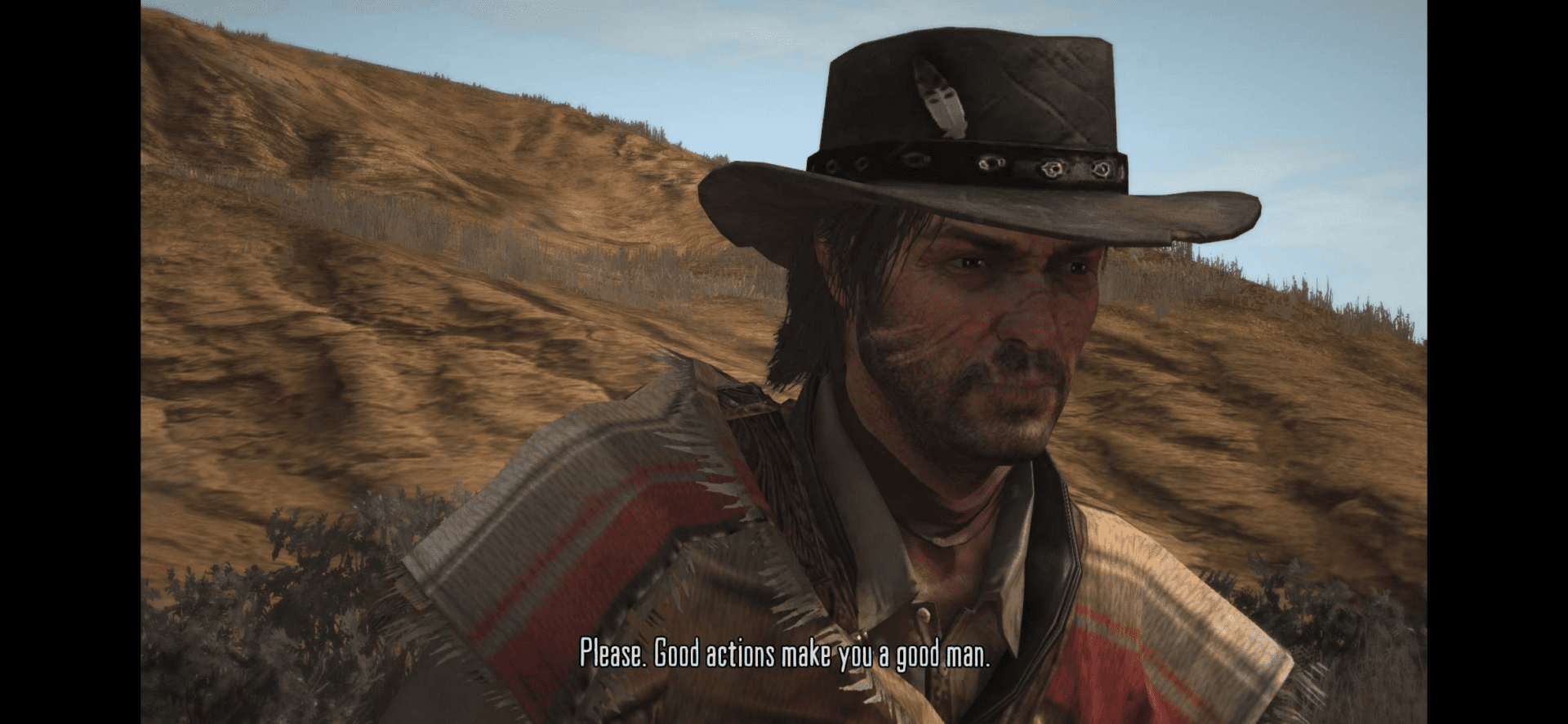
Change – change comes for us all. For a long time, in spite of my faith, I struggled with believing that change was possible. There are various personal reasons for this, but I think it’s a question all of us inevitably ask: can I leave my past behind and change for the better? Or am I stuck in the life I chose? When discouragement is high it’s tempting to believe there’s nothing we can do to change ourselves, others, or the world. But despite how difficult it is to change, it is not impossible. Red Dead Redemption wrestles with those very same questions, in particular with John Marston and the rest of the crew he used to run with.
I’ve been champing at the bit to review Red Dead for a while, and now that it’s been rereleased on Netflix Games (among many other platforms), I finally have a flimsy excuse to review it. Let’s put the heavy questions aside for a moment and talk brass tacks. For this review I played on my phone, which is a new experience for me. Most of the other versions recently released are on console, and should have no issues running a 16-year old game. They’ll play fine and feel the same as if you had just booted it up on your PS3 again. But playing this on mobile promised a new experience.
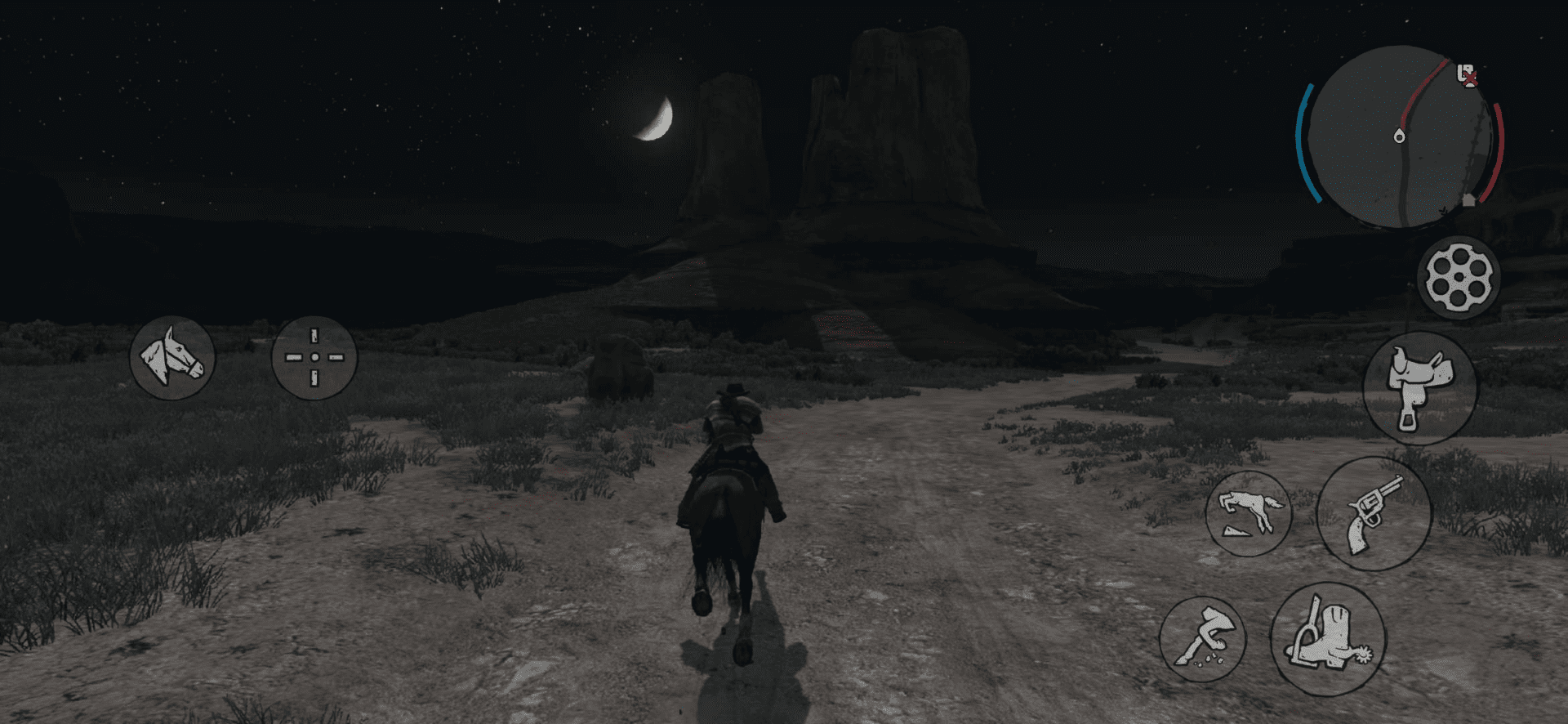
Performance wise, my phone handled Red Dead perfectly fine. There was never any slowdown, and any jank I experienced was clearly attributable to the spaghetti code that plagues this spaghetti western game. (And those experiences were minimal, to be clear. Usually an issue with hogtying someone, come to think of it.) However, controlling a game that wasn’t initially designed with a touchscreen in mind was uncomfortable at best and miserable at worst. Using the touchscreen was serviceable for horse rides or playing poker. But don’t even think about doing anything combat related. And considering the main verb of this game is “shoot”, you honestly just shouldn’t play any of the main story until you connect to a bluetooth controller. Once you do that, all the frustration goes away and you’re left realizing, “wow, I’m playing a PS3 game on my phone?”. There’s simply no other way to play it on mobile.
I’m sure it won’t come as a shock to any literate gamer that Red Dead Redemption was an incredible game for its time, but time is a cruel mistress. Not every game ages well. Thankfully, Red Dead does, for the most part.
THE GOOD
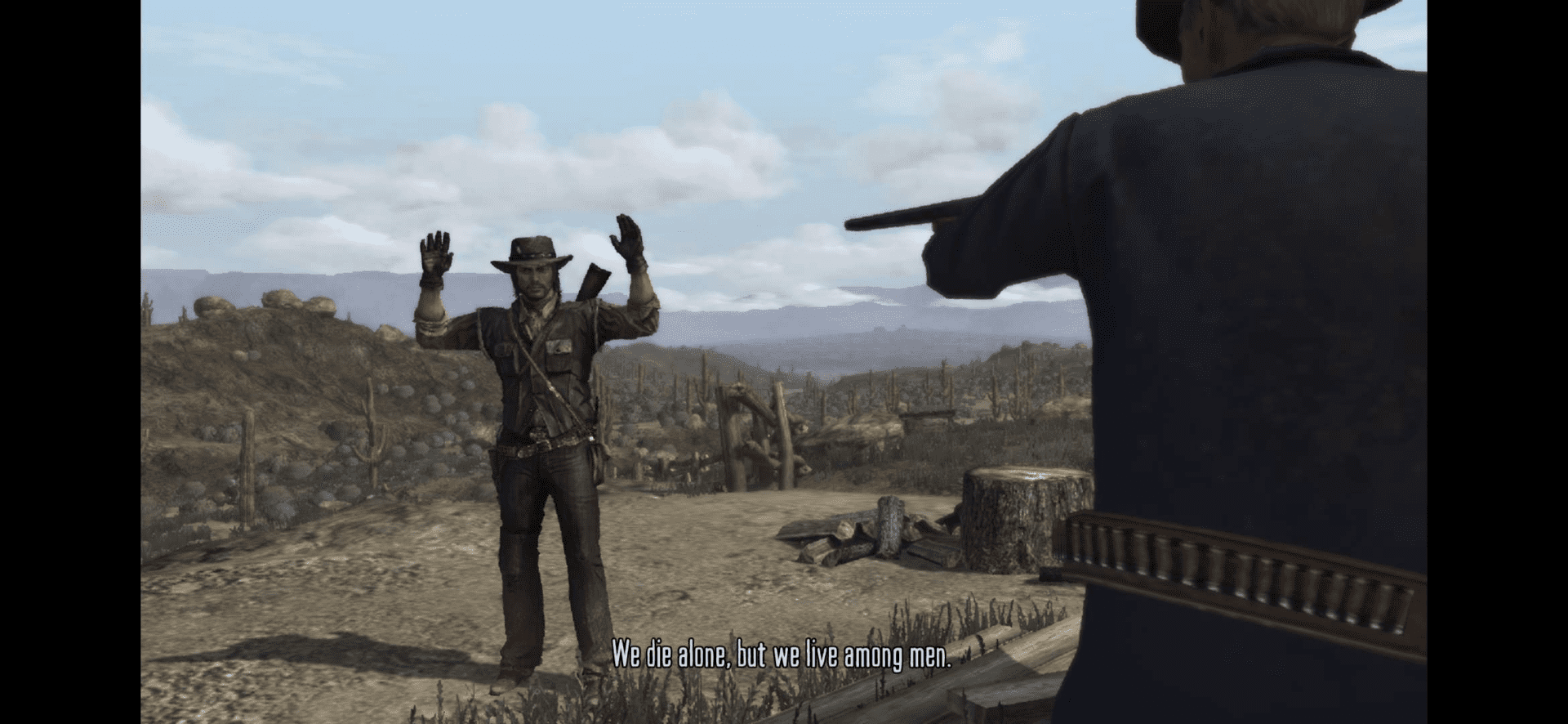
The characters are all fleshed out and real – very few feel like caricatures, which I feel is an issue with other Rockstar games of the time. John takes a while to unfurl his whole backstory, which might hamper a first playthrough. I remember back in the day not caring much for Abigail or Jack, because for about half of the game you’re barely aware they exist. But those characters work much better for me this time around. Having played Red Dead Redemption II also helps.
Graphically the game is still very enjoyable. Sometimes the characters look a little clay-faced and ugly, but it works well enough. The environments are still gorgeous. Riding your horse at sunset is enough to make you want to quit your desk job and strike out west.
The atmosphere is Western distilled to its purest form. Every location has its unique musical leitmotifs, visual cues, and different peoples to populate it. That sense of identity for each world region makes for a memorable journey. You only need one of these cues to identify where you are on the map, and that clarity of purpose serves the story and the game very well. The fact that it does this while remaining grounded and realistic is very impressive.
The story is absolutely the best part of Red Dead Redemption. We’ll get into more details later on, but the dialogue is funny, realistic, and introspective in a way most games aren’t. There’s a human element that’s hard to capture that it does well. It discusses politics, philosophy, and faith deftly, while still sounding like real people. There’s still a healthy amount of pulp, but it doesn’t sink the overall message.
THE BAD
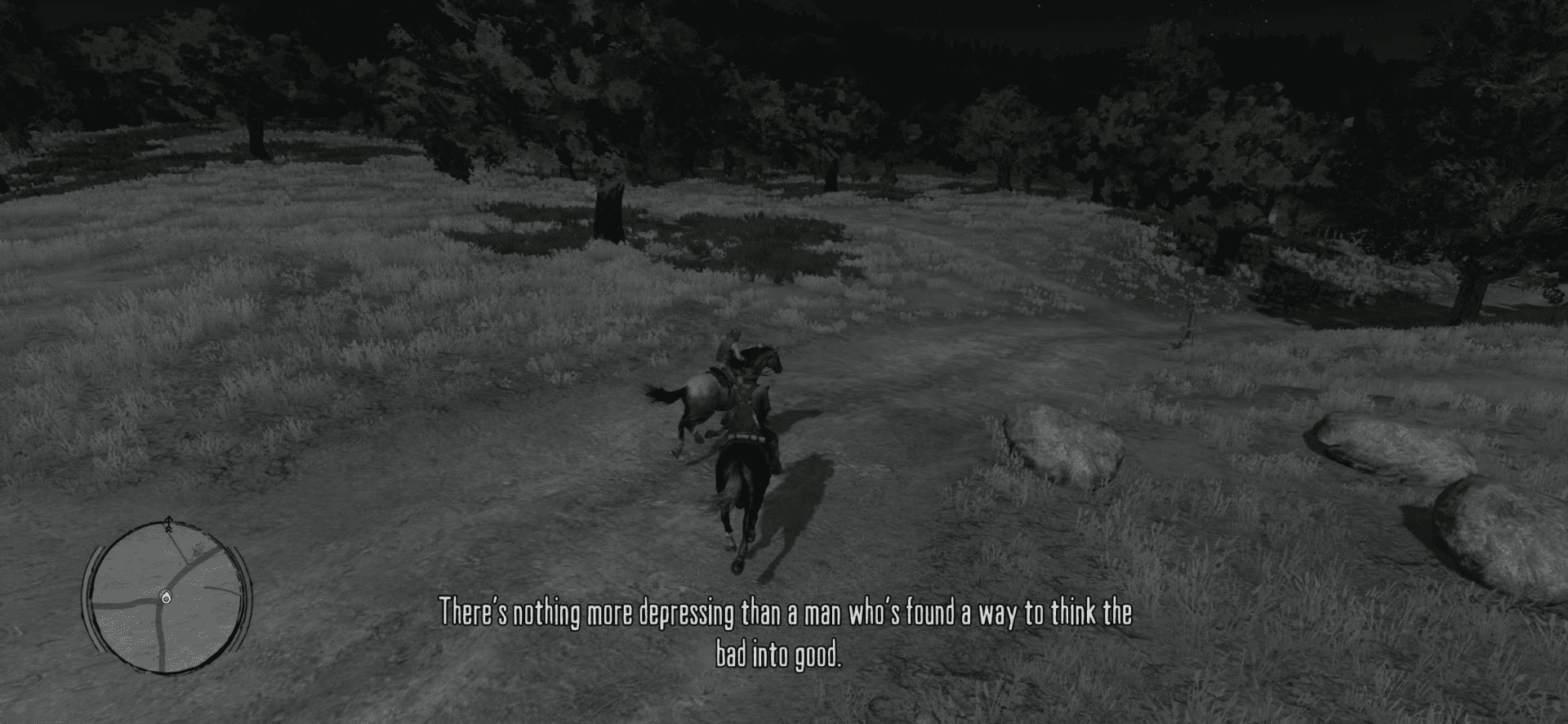
Mission variety isn’t the greatest – most of the time, your job is to shoot people. There are some variations on this that make for a creative break. I enjoyed peddling snake oil with West Dickens, even if John didn’t. The dialogue and story does a lot of heavy lifting to compensate for the lack of gameplay variety.
THE UGLY
The thematic sectioning and the rule of threes demanded I find something ugly here, but to be honest the only thing that I can say is totally ugly are the tobacco stains in Uncle’s beard. The other character models, as mentioned, are in some quantum / limbo state, where they are ugly sometimes and perfectly reasonable at other observations. 2010 was an awkward time for us graphically, so I suppose it’s to be expected. But even after all this time, there’s not much to criticize in this game.
Oh, except for the touchscreen controls. Those suck.
CHANGE, AND REDEMPTION
From here on out we’ll be in spoiler territory, as much as that can be said for a 16-year-old game. Better to give you the courtesy than drop you right into it though. You can skip to the scoring and morality warnings at the end if you want to go in blind.
In one late game mission, John is talking to his son Jack and says that every man has a right to change, that the good book says so. Jack questions the provenance of this, retorting that his father never did read much from the good book. While Jack is right that that exact wording is never used, John absorbed the key message of the Gospels: metanoia. Metanoia is the call to change one’s life for the better, often going in the opposite direction of where you were initially headed. Literally it means to change one’s mind, but not in the circumstantial sense that that phrase suggests to a modern mind. It is to take off an old way of thinking and to put on an entirely new mode, to see and act differently. It is a profound change solidified by new actions. John is right: the Bible does say we have a right to change our way of life. More than that, we are directly called to repent and believe in God’s good news that redemption is at hand.
However, metanoia does not ignore justice. It can be pardoned with mercy, but to indicate true change, one still has to make amends to those they have hurt where possible. And there’s the rub – some hurts can never be redressed in this life. While John is forced to make amends by the government due to his wife and son being held ransom, I do think there’s a part of John that recognizes he needed to reckon with his past, even if he can’t make up for all of it. While rounding up Bill and Javier and hunting Dutch was reparation for his crimes, there’s still much John could never undo. But the noble and virtuous thing about John Marston is he keeps trying to.
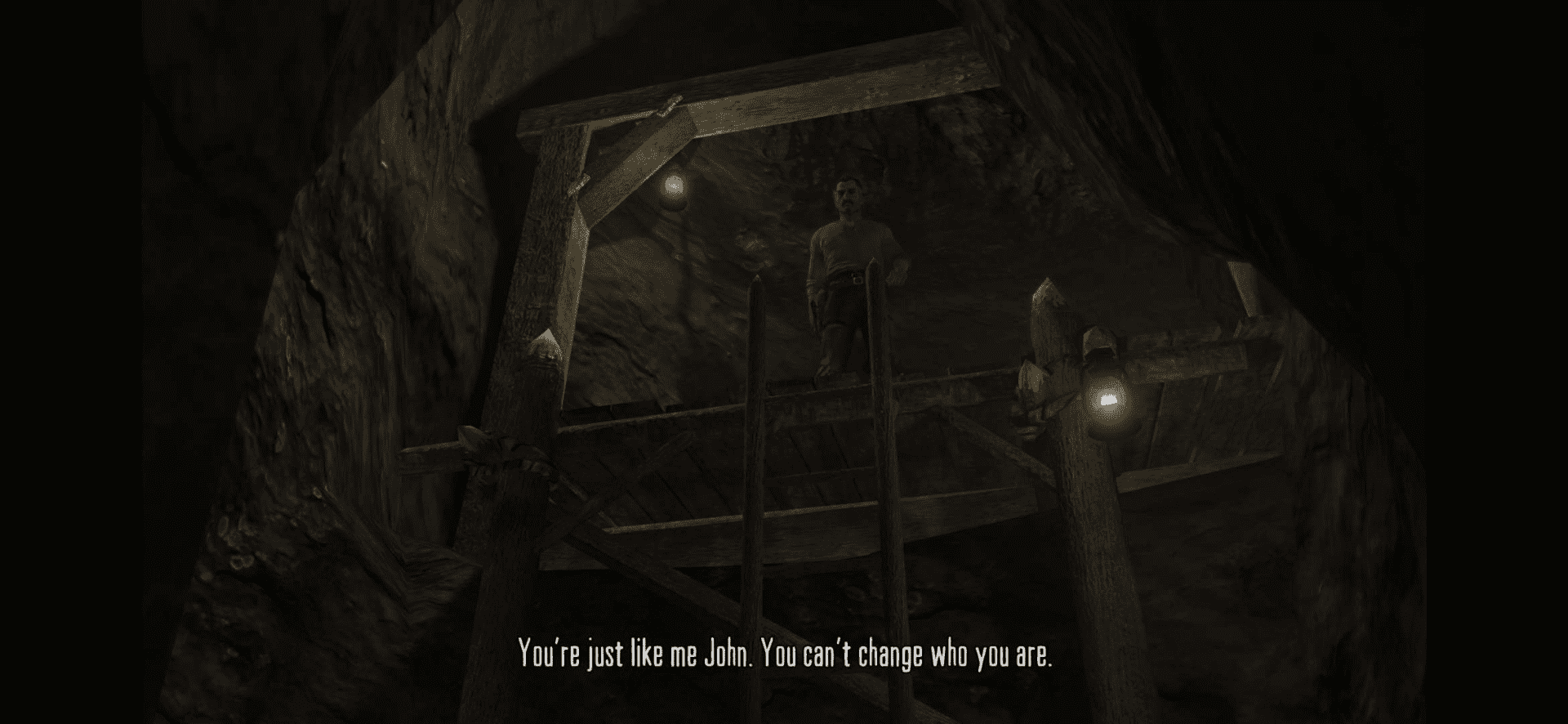
Dutch is an interesting counter-example. He simultaneously holds the belief that he and John cannot change, and also that change cannot be stopped. In the latter sense he’s referring to one’s environment changing, and the world moving on while you’re left behind. But Dutch is ignoring his free will in the matter. He doesn’t have to keep choosing evil. At any point he can drop his guns and face justice. But change makes demands of us that can be hard to reconcile with our current frame of mind. Sometimes it can feel so incongruous with our perspective so as to be impossible. That’s where despair and pride live. Sin distorts your vision like that. But the call you’re feeling to something greater is real, and it’s worth surmounting those obstacles to live the better life God wants you to have.
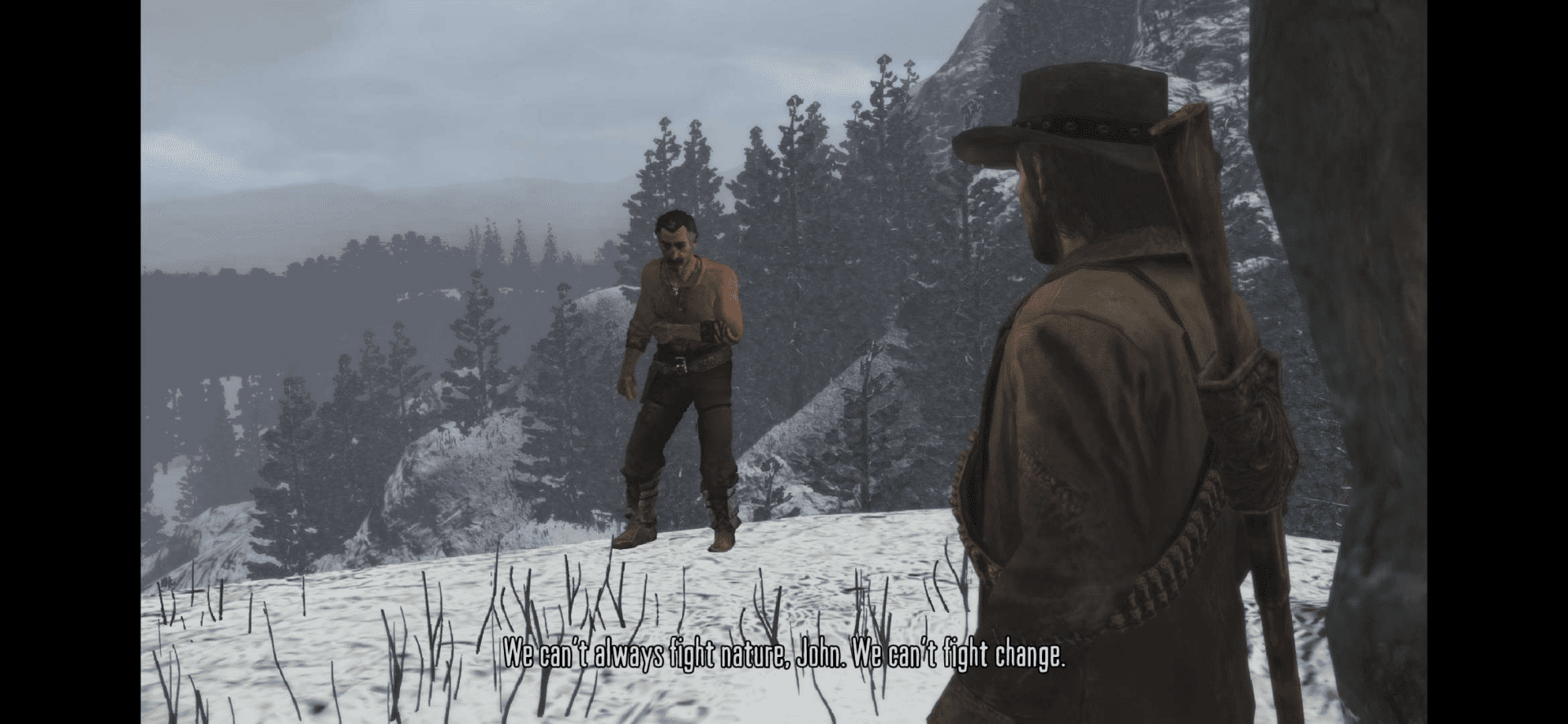
Dutch’s mistake is a common one, one many of us have been guilty of at various points in our lives. Earlier I said he only has to drop his guns to face justice…but why would he want to face justice? If he thinks he can’t change, he’s acknowledging he’s at fault, but he’s telling himself he’s not responsible for being better. To someone in that position, what’s the appeal in voluntarily undergoing pain and judgement? But if you can’t accept that, you’ll never be fully yourself. Justice is the growing pains we need to undergo to become spiritually mature. You can’t reach redemption if you refuse to change.
So what is redemption? It’s living life in light of God, accepting the change that will come your way with that decision. John is willing to accept his past and willing to give up his vices for new life. He’s put on a new way of being. But despite all this language around change, it’s important to reinforce that this doesn’t mean his identity is effaced at all. Living a moral life makes John Marston (and all of us) more ourselves, not less. It’s how we’re supposed to live – a change towards a better, more authentic us. There’s a lot of cynicism in Red Dead Redemption, and plenty misses the mark. I do not think its outlook on humanity is generally true, at least in this entry. But there is an enduring hope that change is possible. Such change might not be allowed in this valley of tears. But if redemption isn’t found in this life, it might be found in the next.
Scoring: 90%
Art: 8/10
Music: 8/10
Story & Writing: 10/10
Gameplay: 8.5/10
Design: 10/10
Morality/Parental Warnings
Sexual Content & Nudity: there are prostitutes in-game who proposition you, but John automatically declines. There is a cutscene where two characters are having sex, and we see female nudity.
Violence: there is gun violence a-plenty. Blood and gore are present. You can skin all the animals in-game, and viscera are used to decorate certain areas. There is a cannibal early on in one of the side-quests.
Language: plenty of profanity. There are very colorful descriptions of violence throughout.
Drugs: one of the NPC’s shoots up in front of you.